
War & Militarism taz
Attempts to negotiate peace in Ukraine: Hopes for a ceasefire are growing
Historical monologues and maximum demands from Kremlin leader Putin are making peace efforts difficult. The Trump camp relies on economic deals. more...
Deutsch (original) ·Auto-translated to English
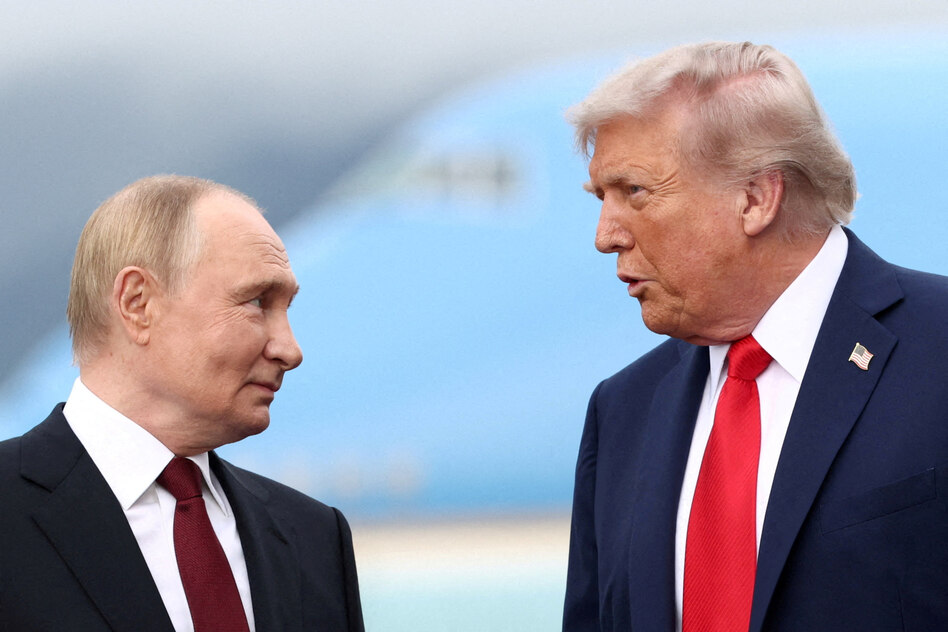
There is movement in efforts to reach a ceasefire in Russia's war of aggression against Ukraine. There are now increasing signs in Washington, Kyiv and other European capitals that there could be a direct meeting between Ukrainian head of state Volodymyr Zelensky and Kremlin ruler Vladimir Putin in the United Arab Emirates at the beginning of November, mediated by US President Donald Trump.
Trump expressed his hope on Wednesday for an early meeting with Putin and Zelensky to resolve the war. Great progress has been made in efforts to resolve the conflict, Trump said.
Zelenskyj appeared to the press for the first time on Wednesday to talk about security guarantees for Ukraine as well as those for Russia. At the same time, he warned against a “re-division of spheres of influence” with a view to a planned three-way summit between the presidents of China, Russia and the USA. “We don’t want Yalta 2, 3 or 4,” said Zelensky, alluding to the division of Europe into spheres of influence shortly before the end of the Second World War. The three heads of state want to meet for the first time since the Russian attack on Ukraine in 2022 on the sidelines of the summit of the Asia and Pacific States (APEC) in China in mid-November.
“It is right that talks with Putin are taking place,” said the chairman of the Bundestag’s Europe Committee, Toni Hofreiter, to the taz. However, it will only be possible to negotiate successfully with Putin from a position of strength, said the Green politician: “Only when Putin realizes that he is not winning the war will he be ready to seriously talk about a peace solution.”
Marie-Agnes Strack-Zimmermann (FDP) also emphasized to the taz that “the decisive factor is not the conversation as such, but whether something comes of it and exclusively for the benefit of the people in Ukraine,” said the chairwoman of the Committee for Security and Defense in the European Parliament.
On Tuesday, top European politicians spoke to Putin by phone for the first time since July 2025, Finland's President Alexander Stubb and Norwegian Prime Minister Jonas Gahr Støre. This earned them criticism from Danish Prime Minister Mette Frederiksen. The approach was not coordinated across Europe and talking to Putin made no sense; he didn't want peace, she said.
Norway's Social Democratic Prime Minister Støre emphasized that it worried him that central Ukrainian and European "messages do not reach him (Putin) when the Americans talk to him." It's now about "what needs to happen so that this war doesn't continue endlessly for months and continue to claim victims."
In the conversation, Putin once again made his maximum demand that Russia must get the entire Ukrainian Donbass. That would also include the fifth of the Donetsk region that Moscow's troops do not control.
According to Reuters and the Financial Times, Putin Støre and Stubb tried to establish Russian supremacy over what is now Ukraine, primarily with a monologue about Slavs in the Middle Ages from Yaroslav the Wise to the Cossack hetman Bogdan Khmelnitsky.
"Unfortunately, the results of the conversation show that Putin is still unwilling to make any concessions. At this meeting, too, Putin only repeated his maximum demands," said Hofreiter. “The AfD’s election successes play into his hands.”
The USA is trying to win Putin over to a peace agreement through economic deals: US companies would like to mine rare earth in Russia and import titanium again, which is not possible because of the sanctions.
In addition, the FT reported from Trump's negotiator Steve Witkoff, Washington wants ExxonMobil to get back into gas production off Sakhalin and US companies to sell Russian natural gas in Europe. Trump recently organized Russian diesel imports, which, however, are to be further criminalized in the House of Representatives.
The acid test for a robust peace agreement is the ceasefire negotiated by the wife of the US President, Melania Trump, in the town of Oleschky, which is surrounded by Russian troops. Around 1,700 of the once 24,000 people are stuck there without food, electricity or water.
The humanitarian ceasefire came into force on the night of October 27th and is scheduled to last until November 1st. Ukrainian residents are to be evacuated from there from Friday. Oleschky is seen as a possible model for a permanent ceasefire.