
War & Militarism taz
School strikes against conscription: Where is the Fridays for Future moment?
The school strikes against conscription movement has been mobilizing for a year, but somehow it doesn't really take off. Why is that? more...
Deutsch (original) ·Auto-translated to English
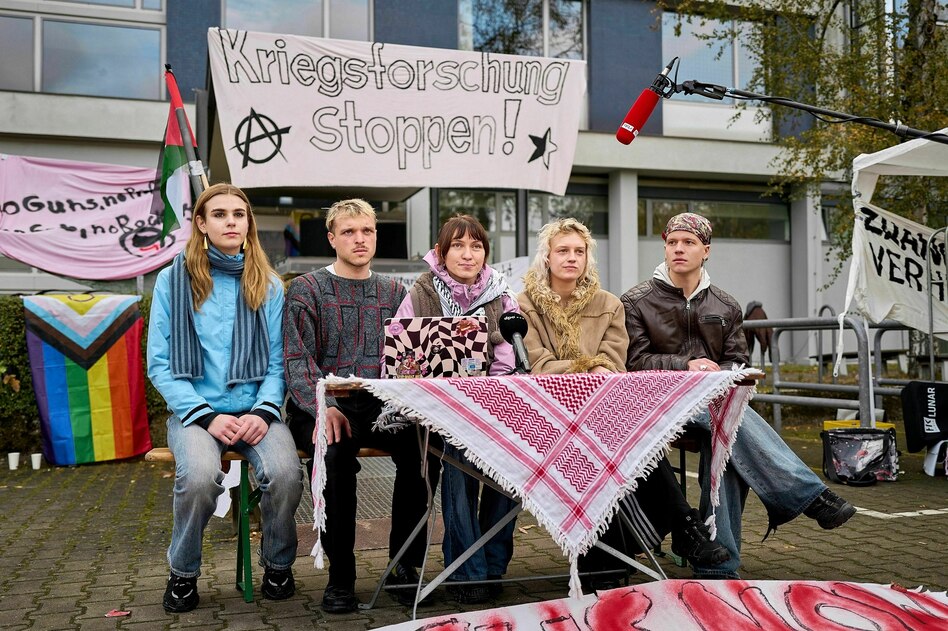
Four weeks until the next strike - and the goal is clear: learn from France. German students look enviously at how many people the young people in the neighboring country bring onto the streets.
In Germany, too, students can mobilize these days. At the end of September, they said they brought 45,000 people onto the streets in over 100 cities nationwide. At the beginning of October, around 20,000 people came to a rally in Berlin under the motto “unforcible”, where the rappers Disarstar and KIZ performed, among others. In Hamburg, the school strike against conscription movement has declared a day of action for November 6th, one day after the planned general strike in France, in order to take the mood from France with it.
The students are not explicitly calling for the “Gen Z rules” protests that are taking place nationwide this Saturday, but at least in Berlin they see themselves as part of the movement. The next nationwide school strike against conscription is scheduled to take place on November 20th. “This has to be huge!” the students posted on Instagram.
But why haven't the school strikes been huge so far? After all, it has been around for almost a year. The school strikes for climate got bigger and bigger in the first year. After a year, the Fridays for Future movement had reached its peak and brought over 1 million people onto the streets across Germany.
The signs for the school strike against conscription movement are actually good: Firstly, the issue affects many people. Second: School strikes as a form of action have proven themselves. Thirdly: It is a left-wing issue that is compatible with middle-class social classes. Which academic mom or high-earning dad voluntarily sends his child to the barracks?
And then there is the situation of the young people themselves: slumping until a meager pension at 70 or dying in the trenches, the future doesn't seem to have any more alternatives for them. The federal government is cutting back on what is not nailed down in the education and social sectors. Housing in big cities is in short supply. The job market is in crisis. No one is talking about climate protection anymore. Why would they go to war for a country that is so failing them? Nevertheless, the school strikes against conscription are small compared to what the climate activists took to the streets back then.
The students against conscription are organized in a similar way to Fridays for Future back then. Anyone can form a local strike committee. On the homepage you will find a starter kit with logos, poster motifs and the instructions “How to go on strike”. The local groups divide their areas of responsibility into WhatsApp groups: communication, social media, questions and support, for example, as well as subgroups for the strike committees of individual schools. The students against conscription have already come together three times at nationwide networking conferences to talk about strategies and get to know each other.
“A lot of things are different than at Fridays for Future,” says Bela Breitner, the federal spokesman for the school strike against conscription movement. The whole form of organization is looser than that of the climate protectors back then. In many cities there are no permanent local groups, but rather committees that were founded on the occasion of a strike and then fell apart again. There are also no regular telephone conferences and no tightly organized nationwide structure like at FFF. The whole way of organizing is much more inconsistent and more DIY (do it yourself).
And then there are factors that the movement itself has no control over. “The social mood is completely different today,” says sociologist Simon Teune from the Institute for Protest and Movement Research. At the height of Fridays for Future, support for the Greens among the population was almost 25 percent, and climate protection was on everyone's lips. “Fridays for Future opened doors,” says Teune. In fact, the students received support from many sides at the time: scientists, trade unions, entrepreneurs and artists supported the Fridays. Even Angela Merkel praised the student protests.
Since then, not only has support for climate protection plummeted, but the entire discourse has shifted to the right. “Every social movement has a harder time today,” says Teune.
The young climate movement was also able to draw on the infrastructure of the traditional environmental movement that had grown over decades. The offspring was a blessing for Greenpeace, BUND and other environmental associations. Both sides benefited from each other's know-how, contacts and reach.
The school strikes against conscription also have a larger, grown movement behind them: the peace movement. But it's complicated with that.
“Peace is no longer just a left-wing issue,” says sociologist Priska Daphi, who leads a research project in Giessen on the peace movement in the context of the Ukrainian war. “We are currently seeing a strong takeover of the issue by far-right groups.” This is also reflected in the fact that AfD voters almost unanimously reject arms deliveries to Ukraine. The same applies to BSW voters. The Greens, SPD and around half of Left voters support arms deliveries to Ukraine and therefore cannot wholeheartedly reject rearmament. Added to this is the threat from Russia's cyber and drone attacks in Germany. “The maximally pacifist demands of the classic peace movement are hardly compatible today,” says Daphi.
Protests about peace and war have been highly fragmented since the start of the Ukrainian war, says the scientist. In addition to the classic pacifist groups, one can distinguish at least three other currents: one for a “just peace” with arms deliveries to Ukraine, the far-right camp and the mixed camp, where old leftists meet right-wingers and tend to conspiracy ideologies.
There are always local start-ups that pursue a completely different focus. However, the connections to the core of the classic peace movement are loose.
It's no wonder that young people prefer to keep to themselves, even if some of them are less afraid of the old peace movement than progressive millennials. Why do you care about the legacy of the boomers? However, it is no secret that authoritarian-communist youth organizations are strongly represented at the strikes. It would be going too far to assume that the red youth had sympathy for Putin. Nevertheless, demarcation from Russia is probably not exactly their core competence. Their foreign policy focus is more on solidarity with Gaza - another point that doesn't necessarily make it any easier to unite the masses behind them.
“Our movement definitely has to get bigger,” says Bela Breitner from the school strikes against conscription. To do this, it is necessary to join forces with other peace policy organizations, youth groups and trade unions. The student from Bochum says that he personally has no fear of contact with the classic peace movement. A red line is definitely the participation of the AfD. Apart from that, demarcation is not the issue. “I think that many who take to the streets with us for peace are our allies.”