
World taz
US philosopher on midterms: “More and more people feel betrayed by Trump”
In the vortex of multiple crises, the power of the MAGA movement is waning, says US philosopher Nancy Fraser - this is an opportunity for a new left. more...
Deutsch (original) ·Auto-translated to English
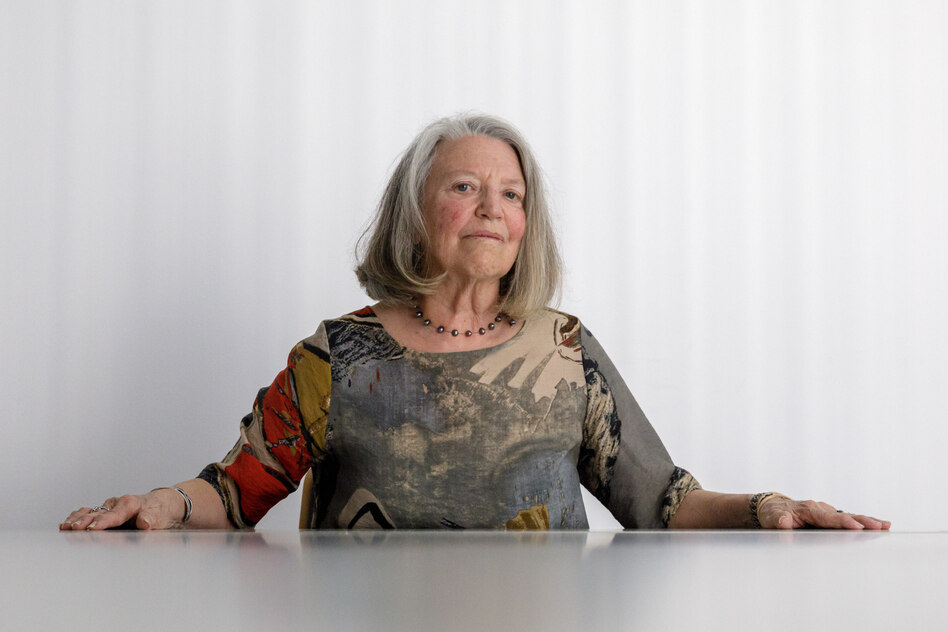
taz: Nancy Fraser, the cost of living is exploding in the USA. As a philosopher, how do you assess this?
Nancy Fraser: We are in an affordability crisis. Many people experience that their living conditions are deteriorating drastically. But this is not just due to inflation. The US government has cut all sorts of social spending, stopped funding many public services and instead increased military spending. Our schools are in a catastrophic state, worse than those in France, where there are currently mass protests. There is also a wage and salary crisis.
Nancy Fraser, 79, taught as a professor of philosophy and of political and social sciences at the New School in New York. Her most recent publication in German was: “The Omnivore – How Capitalism Devours Its Own Foundations” (2023). She is one of the best-known American feminists.
Fraser: The U.S. labor market is very precarious as low-wage service work has replaced safer, higher-paying manufacturing work over the past few decades. Many workers today have to work longer hours, sometimes in multiple jobs, to stay financially afloat. This results in another crisis, that of time. It is incredibly time-consuming to compare prices in supermarkets in addition to wage and care work. Or getting around without a car because you can hardly afford the gas anymore.
taz: And now winter is approaching, i.e. the heating season.
Fraser: That is the ecological dimension. In some places, the ecological crisis means forest fires or floods. In the Northeast, people are expecting an extremely harsh winter and are worried about fuel costs. Many people still heat with oil. All of these crises – affordability, public services, wages, time, ecology – are interconnected. And right now they are condensing into a storm that is making people think.
taz: Donald Trump's MAGA regime is threatened with a bitter defeat in the midterm elections at the beginning of November. The Republicans could lose their majorities in the Senate and the House of Representatives. The Democratic Socialists, on the other hand – a grassroots movement that supports those Democratic candidates who join them in the election campaign – could continue to grow stronger.
Fraser: More and more people feel betrayed by Donald Trump, the Republicans, the MAGA movement. They realize that they are not getting what they voted for. Some are discouraged, others are angry. All of this is reflected in the midterm election polls. Right-wing populism appears to be crumbling as a real new left emerges in the US for the first time in quite some time.
taz: There is also a widespread feeling in Germany that things are only going downhill. Recently, however, the right-wing extremist AfD was able to take advantage of this.
Fraser: We may be one step ahead. We put MAGA in power for the first time in 2016, and again in 2024. Our people have had time to experience what it means to live under such a right-wing government.
taz: The fact that MAGA is apparently disenchanted is surprising, as they have immense interpretive power in the USA through Fox News, Truth Social, X and other media.
Fraser: There's a famous saying by Abraham Lincoln: "You can fool all the people some of the time, and some of the people all of the time, but you can't fool all the people all of the time." At a certain point, propaganda against people's everyday experiences no longer works. In the USA this point appears to have been reached.
taz: Authoritarian regimes usually become more repressive when they lose control. Couldn't this also be a threat in the USA?
Fraser: Some very dark forces within the MAGA movement certainly want that. But that is currently a very small minority. In addition, it is no longer just the left who publicly criticize Trump, but also important right-wing media personalities with large followings such as Tucker Carlson and Marjorie Taylor Greene.
taz: His tech bros are still sticking with Trump so far. Could Musk and Co. also turn away from Trump?
Fraser: They will as soon as necessary. The tech oligarchs are complete opportunists. People like Musk are fundamentally dependent on the state, especially on government contracts. This is mostly ignored in all the hype about the free market.
This text first appeared in wochentaz, our weekly newspaper from the left!
Every week, wochentaz is about the world as it is – and as it could be. A left-wing weekly newspaper with a voice, attitude and the special taz view of the world. New every Saturday at the kiosk and of course by subscription.
taz: So Silicon Valley would come to terms with a democratic government again?
Fraser: If it were dominated by centrists, yes. Silicon Valley, like Wall Street, worked very well with Bill Clinton and Barack Obama. Whether they would also cooperate with a left-wing US government is another question. However, the view of the oligarchs, i.e. the billionaires, is much less exciting than that of the workers in the tech sector and other symbolic industries.
taz: You mean to what extent you could turn to the left?
Fraser: Yes. Many people who expected secure, well-paying careers in journalism, science, administration, the arts or IT are now working as Uber drivers or in other precarious jobs. Our political economy denies them the life they hoped for. Suddenly there is a class problem for them. These people, the highly educated precariat, are a significant part of the base of the Democratic Socialists.
Fraser: They are well educated, have many skills, and can communicate very well. And they now want to fight for the dreams that were denied them politically. In New York last year, the Zohran-Mamdani coalition succeeded in uniting them with other sections of the working class, the huge immigrant population in Queens, and Latinos and African Americans. This is what the left must continue to do: bring different social groups together – and build a counter-hegemony.
taz: Counter-hegemony is something that is often talked about at the moment. What exactly do you mean by that?
Fraser: The term comes from Antonio Gramsci...
taz: ... an Italian Marxist who was arrested by Mussolini's troops in the fight against fascism ...
Fraser: … exactly. The idea of hegemony is simple: In a society like ours, based on class rule, a layer of wealthy and powerful individuals, investors, corporate CEOs dominate government policy - for their own benefit. And to the detriment of the majority of the population. How? Not authoritarian from top to bottom, but democratically legitimized by the consent of the masses. This minority rule is made possible by a common sense that is conducive to it.
taz: That free markets promote general prosperity, for example.
Fraser: Or that everyone always has the chance to become rich. And that the rich earned their fortunes themselves, through hard work alone.
taz: Everyone is the creator of their own happiness.
Fraser: This is the pro-capitalist common sense that has been very effective in the USA for a long time and across parties - from Reagan to Romney, Clinton to Obama. The left was therefore faced with the challenge of creating a counter-hegemony, an alternative common sense. However, the MAGA movement was the first to achieve this. It radically destroyed the old hegemony.
taz: And now she herself is losing credibility.
Fraser: This is an opening for the left, a real opportunity. The centrist Democrats are discredited, and so is MAGA. What comes next is unclear.
taz: Leftists in the USA, and most recently in Berlin, have been successful in demanding an affordable life for everyone. Does this serve as a central narrative for a left-wing counter-hegemony?
Fraser: It's an important starting point. The question of affordable living is a very pertinent one. And it makes it possible to ask further questions and to address problems that go beyond the prices of goods in the supermarket. Why are wages so low? Why do the means to satisfy basic needs—housing, health care, and so on—take the form of commodities rather than public goods? And if the state can't afford this or that social expenditure, why aren't capital gains taxes increased? But all of these questions must also follow.
Fraser: Because otherwise it remains hidden why so many people work more and more and yet can afford less and less. So the systemic causes of the crises we are exposed to.
taz: In your book “The Omnivore – How Capitalism Devours Its Own Foundations” you write that a successful counter-hegemony needs a broad political alliance to fight for it. The centrist, neoliberal Democrats are unlikely to embrace an agenda critical of capitalism.
Fraser: The Democratic Socialists need to push the Democratic Party to the left. There is already a first small split within the centrist wing. The left must therefore continue to move forward confidently and build a strong mass movement. At some point, centrists may be faced with a choice: cooperate or be replaced.
taz: There are conflict lines within the left that have made broad alliances difficult in recent years - for example that between identity and class politics. You have often made critical comments about the former. Movements that fought for the recognition of marginalized groups politicized many people who are still active today. Black Lives Matter, for example.
Fraser: Protests against racist police violence are not really identity politics. It couldn't be more material. But I also don't like the word identity politics per se, because all politics involves the mobilization of identity. The big question is: Do you make identity the main issue or is it driven by what you do? If one only focuses on questions of representation, then identity is the end and not the means.
taz: Zohran Mamdani was sworn in as New York mayor by swearing an oath to the Koran. Wasn't that primarily a representative move?
Fraser: No. Mamdani is class conscious. He integrates representation into the agenda for affordable living for all. The new type of class politics now emerging has absorbed the insights of the feminist and anti-racist movements of recent years. This is no longer about main and secondary contradictions.
taz: What role do the unions play in counter-hegemony?
Fraser: They are very important. If life is to become more affordable, not only do prices have to come down, but wages have to go up too. Feminist or anti-racist struggles against discrimination or sexual harassment can also be enforced through labor law, i.e. materially, through the unions.
taz: Unfortunately, the unions in the USA are not doing particularly well.
Fraser: Our industrial unions are in free fall. In the USA, real industrial action is primarily caused by nurses and teachers in the public sector and workers in the service sector, especially in large companies like Amazon. Recently even sometimes successful. But of course, these unions are far from being a social power like in Germany or France. So the left should support them, help them organize and become stronger.
taz: Let's imagine that the Democrats win the 2028 presidential election, perhaps even led by a left-wing candidate like Alexandria Ocasio-Cortez. Would Trump vacate the White House?
Fraser: He might say the election was stolen. But Trump is actually no longer interested in politics. He will no longer be a factor in 2028, but will fade into the sunset with all the money he makes now as president. He knows that his time is over, doesn't want to work anymore, and is already completely unfocused.
taz: So US democracy could actually survive MAGA and Trump?
Fraser: Not unscathed. But yes, she will.
taz: The crises of our time are a global phenomenon, including the growing right-wing extremism. In addition to the local struggles in communities, cities and nations, is there also an international movement needed against it?
Fraser: Yes. It is time to try to create a new Democratic Socialist International. Not in the sense of a party, but as a platform for more exchange, networking, mutual support and solidarity. And also to push for common policies. If we want to solve the crises we face, we must change the global financial architecture. We need a global carbon tax, a global Tobin tax. And also a new global constitution that puts labor rights and environmental sustainability above profit and so-called free trade.