
Germany · taz · · 2h
Symbolic verdict in Guatemala: Freedom for indigenous activists
Deutsch (original) · Auto-translated to English
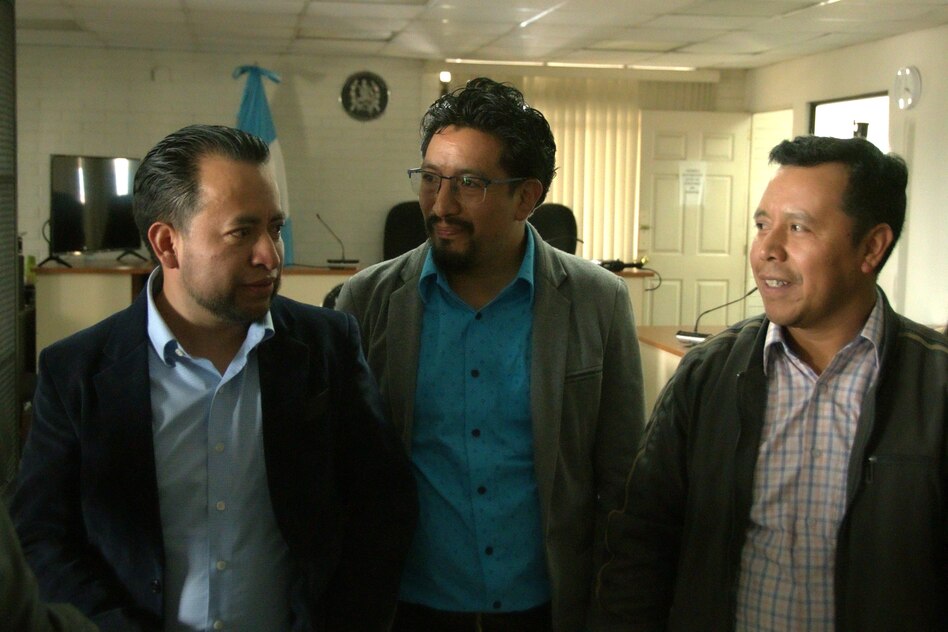
Héctor Chaclán and Luis Pacheco had to spend 16 months in custody. As of Friday, they and their co-defendants Basilio Puac and Estebán Toc are not only free, but also acquitted of all charges. The Guatemalan authorities criminalized them for being among the organizers of the indigenous protests between October 2023 and January 2024. These de facto ensured that the current incumbent President Bernardo Arévalo was able to be sworn in and did not fall victim to legal maneuvers.
The current public prosecutor's office wants to prevent exactly such maneuvers and therefore made a clear decision last Friday. "From the outset, the hearing was about discontinuing the proceedings. Judge Mynor Moto did not want or could not resist this signal from the immediate environment of the new Attorney General, Gabriel García Luna - even if there were doubts for a long time," says Héctor Reyes.
Reyes is a lawyer and works for the law firm “Lawyers Without Borders,” which is funded primarily from Canada. Like his colleague Juan Castro, who defended the four defendants, he is one of the experienced human rights lawyers in Guatemala. For Reyes, the trial was symbolic because the public prosecutor's office was unable to produce any evidence against the four defendants, even after 16 months in custody. As in many other cases.
One woman in particular stands for this: María Consuelo Porras, former Attorney General. She is held responsible for instrumentalizing the judiciary at will with a small circle of employees, including prosecutors, judges, but also technical staff. In the summer of 2023, after the surprising election of Bernardo Arévalo as president, Porras initiated investigations against his party Semillas because of alleged irregularities in registration, but also against Arévalo and Vice-President Karin Herrera. This caused protests and the four defendants helped coordinate them.
“The aim of the trial against my four clients was to criminalize them and silence them,” says Juan Castro. They were charged with terrorism, membership in an illegal organization and obstruction of justice. But the court has classified the allegations as unfounded, the state must apologize to the indigenous activists and their organization, the 48 Cantones de Totonicapán, is recognized as a democratic organization.
The end of such politically motivated criminalization cases could set a precedent. The new Attorney General Luna, sworn in on May 17, is now tackling reforms in the justice sector. Judges like Mynor Moto, who was part of the corrupt establishment under ex-Attorney General Porras for years, criminalized dissidents and put them behind bars, have also recognized this.
“Moto is on the angel list,” says Héctor Reyes. This is the name of the list introduced by the USA on which corrupt opponents of democracy and democratic structures in Central America end up. The name of ex-Attorney General Porras and several other judicial employees are also listed there. The new Attorney General García Luna has already fired a number of them.
What is missing is the initiation of proceedings against the professional perverters of justice in the judicial system. This is advocated by experts such as Reyes, the former prosecutor for human rights Jordán Rodas, who is in exile in Bilbao, and the German justice expert Michael Mörth, who lives in Guatemala. Whether the judiciary under García Luna will be able to implement this will become clear in the coming months.
Read the full story at the source
Source: taz