
World · taz · · 2h
UN summit in New York: Russia rebuffs German attempts at diplomacy
Deutsch (original) · Auto-translated to English
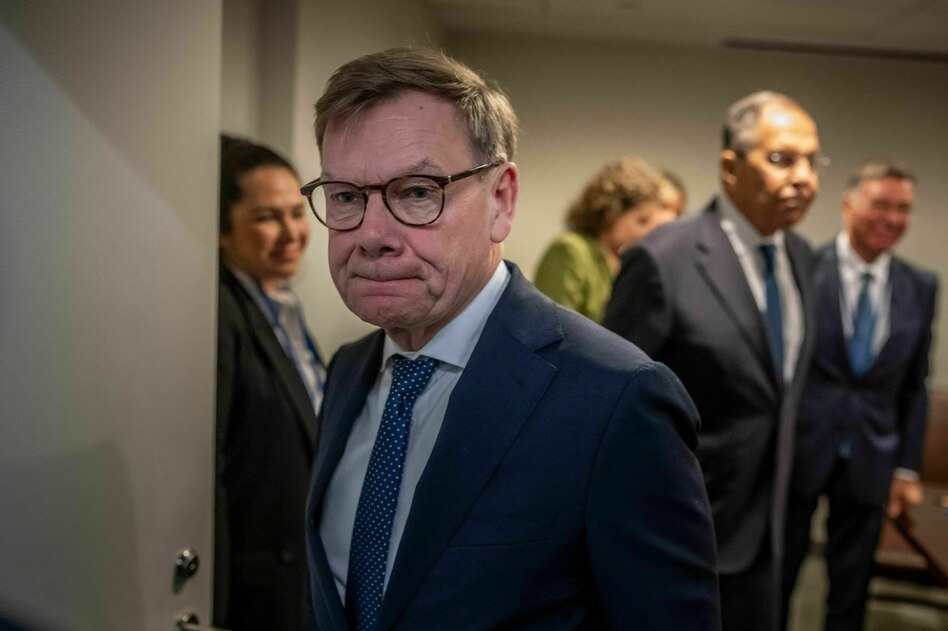
An offer from German Foreign Minister Johann Wadephul to his Russian counterpart Sergei Lavrov was vigorously rejected. Wadephul and Lavrov met on Saturday on the sidelines of the annual UN General Assembly in New York. The CDU politician demanded that Russia leave the dangerous path of escalation against Germany, Europe and NATO, as delegation circles said.
During the meeting, Wadephul is also said to have discussed the recent attempted attack at Leipzig Airport and other hybrid attacks that could be traced back to Russian activities. On the one hand, these incidents further damaged the seriously damaged relationship between Berlin and Moscow and at the same time confirmed Germany's determination to support Ukraine in the fight against Russia.
The meeting between the two foreign ministers was the first of its kind since January 2022. At that time, the then Green Party Foreign Minister Annalena Baerbock traveled to Moscow to meet with Lavrov. Just over a month later, Russia began its invasion of Ukraine.
Lavrov, who addressed the world public shortly after his meeting with Wadephul in the UN plenary session, showed little interest in diplomatic solutions and condemned the federal government's billions of dollars in defense investments. "Does Berlin understand what this could lead to? Haven't they learned from the Second World War?" Lavrov asked from the lectern.
In his speech, the Russian Foreign Minister defended his country's war in Ukraine and sharply criticized the West - including Germany and the USA. He also firmly rejected the idea that Germany or Japan could get a permanent seat on the World Security Council. The USA, however, supports this.
According to Lavrov, the West is trying to “preserve its privileges and impose its own rules on everyone else” as the geopolitical balance of power shifts.
“The dictatorship of a single hegemon has gotten out of control and is simply dangerous for everyone around it,” Lavrov said. He referred, among other things, to the US military action that led to the arrest of former Venezuelan President Nicolas Maduro, as well as the US-Israeli attacks that killed Iran's Supreme Leader Ali Khamenei.
According to Lavrov, Russia will continue its war against Ukraine “until the end” – until the threat to its own security is eliminated.
"The West is pumping weapons into the Ukrainian regime and supporting Kyiv in directing drones and missiles against civilians and civilian infrastructure. The West seeks to inflict a strategic defeat on Russia; but this effort will lead the warmongers to a strategic dead end," Lavrov said.
In his own speech, Wadephul rejected this accusation and declared that Moscow's war would be directed against "the lives of millions of innocent people, against the existence of the Ukrainian state and culture, and against the European peace order."
Previous attempts at talks between Russia and Ukraine have been unsuccessful. Meanwhile, the US government continues to try to reach a compromise solution between the two countries on its own. US Secretary of State Marco Rubio announced last week that the US had invited Russian President Vladimir Putin to the G20 summit in December.
Rubio explained that Putin's participation in the G20 summit would provide an opportunity for dialogue with US President Donald Trump and other leaders.
But the bulk of Wadephul's UN speech focused on artificial intelligence and how to deal with this new technology before it becomes a threat. He warned that the vast majority of all global AI patents are held by companies in just two countries, the US and China.
"This puts enormous influence in the hands of a few. Such power brings with it responsibility - not just to customers, shareholders or governments. But also to humanity. And whenever power becomes global, responsibility must also become global. The United Nations was created for just such a moment," Wadephul explained.
The question of AI and how it should be dealt with at the national and international level is dividing countries. The US government currently does not want any restrictive regulations. In contrast, China advocates for an AI future where people are still at the center.
"We should take a human-centered approach, develop AI for public good and positive purposes, narrow the digital divide and promote development that benefits everyone," Chinese Vice President Han Zheng said on Saturday.
Only the call for reform of the UN was confirmed by almost all speakers. The United Nations must adapt to the new geopolitical and technical circumstances.
“We need an effective UN that plays an active role in resolving conflicts – rather than simply managing them,” said Wadephul.
Read the full story at the source
Source: taz