
Climate taz
UN report on climate crisis: humanity “dangerously far” from 1.5 degrees
The world is heading towards 2.8 degrees of global warming - with dire consequences. Heat kills, forests burn. But there remains hope for a return to 1.5 degrees. more...
Deutsch (original) ·Auto-translated to English
afp | According to a report by the UN environmental program Unep, humanity is “dangerously far” from achieving its climate goals. The current national climate protection measures are completely inadequate and global emissions of greenhouse gases are still “at record levels,” criticized UN Secretary-General António Guterres on Wednesday on the occasion of the publication of UNEP’s so-called Emissions Gap Report. It is a clear reminder just three weeks before the World Climate Conference in Antalya (COP31).
In its annual report, UNEP determines the gap between the expected emissions and the values that would be necessary to achieve the goals of the Paris Climate Protection Agreement.
Even if all countries fully fulfill their latest climate protection commitments, the earth is heading for a serious warming of 2.6 degrees by 2100 compared to the pre-industrial era, the report says. Given the states' current climate policy course, warming of 2.8 degrees can be expected.
Last year the report assumed global warming of 2.3 to 2.5 degrees. In the Paris Agreement of 2015, the international community agreed to limit global warming to well below two degrees, and if possible to 1.5 degrees, compared to the pre-industrial era.
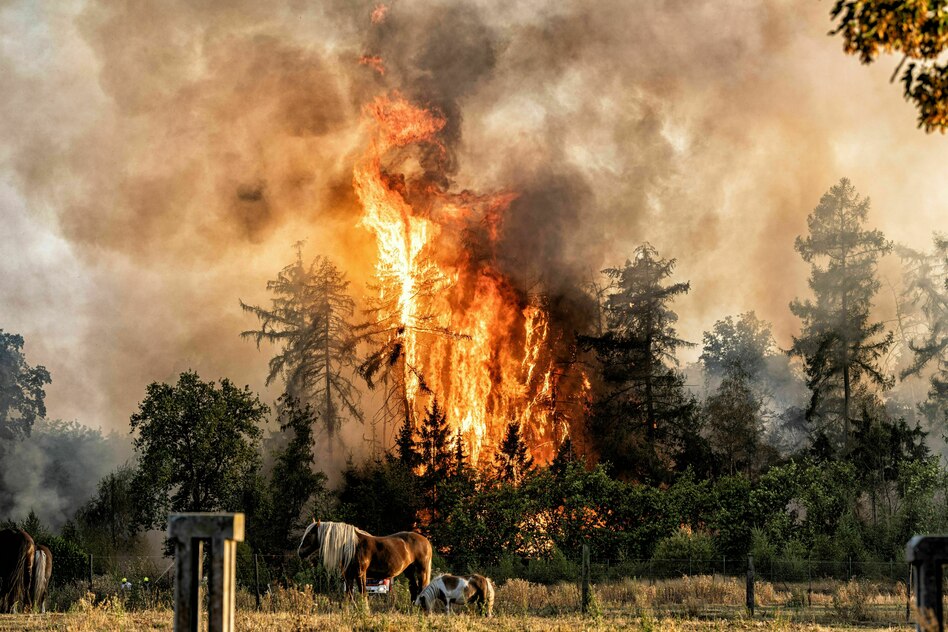
Guterres now criticized humanity for breaking its word. “The world can no longer avoid exceeding the 1.5 limit and the consequences are already devastating,” said the UN Secretary General. “Deadly floods, brutal heat waves, raging forest fires, deaths, paralyzed economies, deepening inequalities, and those least responsible suffer the most,” said Guterres, describing the consequences of global warming.
Nevertheless, emissions from the use of crude oil, natural gas and coal, the biggest drivers of the climate crisis, continued to rise slightly in 2025 compared to the previous year. Emissions from energy-intensive sectors such as power generation and transport were “pointing in the wrong direction,” the Unep report said.
Since industrialization, the earth has already warmed by around 1.4 degrees. Climate scientists warn that any minimal warming beyond 1.5 degrees increases the risk of irreversible negative consequences such as the death of coral reefs and the melting of glaciers and permafrost.
Guterres called on the leading industrialized and emerging countries (G20), which are responsible for three quarters of global greenhouse gas emissions, to lead the fight against global warming. According to the UNEP report, the outlook has worsened, particularly due to the USA's withdrawal from the Paris climate agreement. In addition, the extent of past emissions has been revised upwards, explained co-author Anne Olhoff.
Amid increased electricity demand and increased reliance on coal-fired power plants, the report said the U.S. emitted 133 megatons of CO₂-equivalent more greenhouse gases last year than the previous year - an increase that "far exceeds" the increases of any other country.
UNEP boss Inger Andersen criticized this course. After all, climate change “impacts every country on the planet, including the United States.” Apart from the USA, Indonesia and China in particular emitted more greenhouse gases in 2025 than in 2024. There was a decrease in India, Russia and the European Union.
According to the UNEP report, there is a 50 percent chance that the global temperature increase can be reduced to 1.5 degrees by 2100. To do this, it would have to reach its peak of 1.8 degrees by 2050. In order to further reduce global temperatures, humanity would then have to remove large amounts of greenhouse gases from the atmosphere - either through reforestation or technological methods of CO₂ capture.
According to UNEP, for the scenario back to the 1.5 degree limit, global emissions would have to be reduced by around 6 percent every year until 2035. However, as things stand today, this is not realistic.
Sticking to the 1.5 degree limit is also expected to be a central topic at the World Climate Conference in Antalya, Turkey. The so-called COP31 begins on November 9th and lasts two weeks.