
Germany · taz · · 1d
Controversial award: Münster's second peace prize
Deutsch (original) · Auto-translated to English
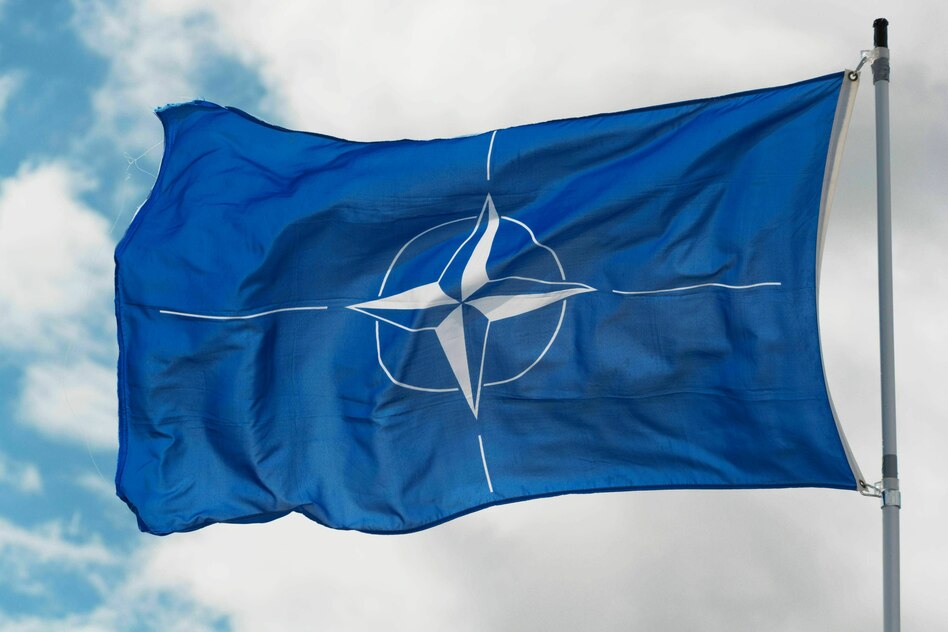
Kurt Masur was there, as were Kofi Annan, Margot Friedländer, the crews of the International Space Station, and Helmut Kohl. The group of honorees for the Westphalian Peace Prize is colorful. This year the prize goes to NATO. A peace prize for a military alliance that is arming itself in an unprecedented manner?
There was immediately horrified criticism. The Catholic organization of the peace movement Pax Christi in the diocese of Münster asked whether “a wine-loving group had allowed itself a joke”. “You don’t have to be a pacifist to see a historical irony in this decision that borders on cynicism,” says Rüdiger Sagel.
The 71-year-old engineer and many other citizens of Münster quickly came together to form an association to honor and promote peace policy initiatives, so that the Alternative Peace Prize was devised. "No long letter of protest, no tired clicking on petitions. A counter-foundation. A price of its own." In short: they are the “civilian response to the scandal”.
The association, which now has a hundred members, will award the prize for the first time on September 25th in order to forestall the bad example. The award winner is the Offenbacher Connection association, which has been working on conscientious objection and desertion worldwide since 1993 - for "people who do not know peace as a rhetorical formula, but as a life's work."
Initiator Rüdiger Sagel is a colorful personality in Münster: He was a councilor and later sat in the state parliament for 14 years, first for the Greens and then for the Left. It was also the free spirit Sagel who suggested in 2013 that the St. Martin's Festival should be renamed the “Sun, Moon and Stars Festival” in a child-friendly and non-denominational way. The proposal sparked angry reactions in conservative circles.
Now Sagel can be happy that his club has turned the bishop's city's CDU against them. “This staging as a counter-event” was “highly problematic and politically naive,” said parliamentary group leader Stefan Weber. The council faction is particularly targeting the Green Mayor Tilman Fuchs: “The city must not submit to a production that is expressly directed against the political and military alliance of NATO,” it said. The true production is our own – with Friedrich Merz as the laudator.
The Peace of Westphalia in 1648 ended thirty years of war. According to the association, it is “still considered a milestone in diplomacy today, a cornerstone of modern international law, proof that even hostile powers can find lasting peace through patience, a willingness to compromise and the will to reach an understanding.” And no longer through further armament and violence.
Prominent laudators on Friday will be former regional bishop Margot Käßmann and Heribert Prantl from the Süddeutsche Zeitung. Both also sat on the jury. Prantl, a trained lawyer and former judge and public prosecutor himself, recently came across a decision from the Federal Court of Justice: According to this, the right to refuse military service may no longer apply in the event of a war. According to the court, “it does not appear a priori unthinkable even under German constitutional law that conscripts in extraordinary circumstances (…) could even be prevented from refusing military service.” According to Prantl, the phrase “in an extraordinary situation” means: in a war.
A fundamental right is therefore rejected by the highest court based on arguments. “Sure,” Prantl told the taz, he would address this in his laudatory speech in Münster. “The sentence is outrageous.”
“No one,” it says in Article 4, Paragraph 3 of the Basic Law, “may be forced into military service with weapons against their conscience.” It's not formulated as clearly as people usually think: you can't force people at gunpoint, but you can without a gun?
By July, twice as many people had officially refused to serve this year as in the entire year of 2025. Prantl quotes law professor Kathrin Groh: "It could therefore be tactically wise to quickly refuse military service." Groh is an expert: She works at the University of the Bundeswehr in Munich.
Read the full story at the source
Source: taz