
Germany · taz · · 3h
Killings of activists: Where environmental protection is life-threatening
Deutsch (original) · Auto-translated to English
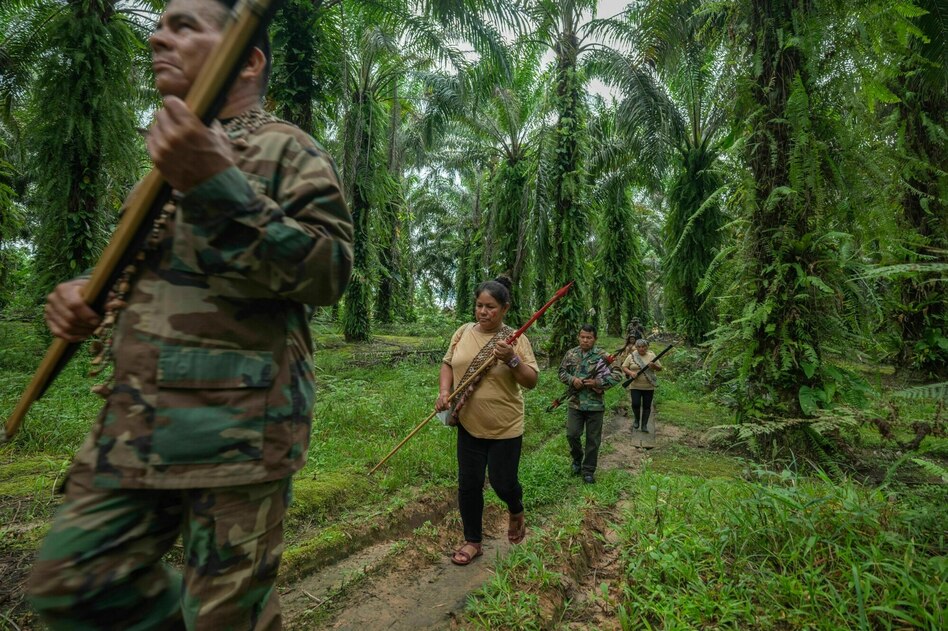
In the Amazon region of Yamino, Peru, the “Indigenous Guard” of the Kakataibo community has made it its mission to protect their land and the rainforest from illegal deforestation. They monitor their country and call state institutions. Since 2020, six leaders of this guard have been killed.
Peru is one of the most dangerous countries for environmental and land protectors. For 14 years, the British human rights organization Global Witness has been documenting killings of people who work for the planet.
According to the latest report, 124 activists were killed in connection with their work in 2025. There are slightly fewer than the year before. But the actual number of human rights activists killed is likely to be much higher. They are not always part of a network that can gain publicity. In addition, victims and civil society groups must expect reprisals if they report abuses, the authors write. Research is particularly difficult in areas with armed conflicts or mass killings.
As in previous years, Colombia is the deadliest country for operations to protect the earth. Global Witness was able to verify 39 killings here last year. In Brazil the number has even doubled: 26 activists were killed in 2025. And 12 murders each were documented in Honduras and the Philippines.
South American countries have topped Global Witness' list for years. One of the reasons for this, however, is that the organization has better access to information there than in African and Asian countries, the authors explain.
Almost three quarters of the documented cases involved indigenous people and small farmers “who were targeted for killing because they were defending their territories and their access to land,” it said.
Land conflicts were the cause of more than half of the homicides, followed by extractive projects - mining was the deadliest sector, with 11 cases in the Philippines, Peru, India and the Democratic Republic of Congo. 8 killings were linked to timber industry interests, such as in Mexico, Honduras, Peru, Guatemala and Brazil. In the context of the expansion of industrial agriculture, 6 killings were counted. Criminal gangs, but also companies or state actors are often behind the murders.
Global Witness calls on governments to better protect the collective land and resource rights of traditional communities. They should also better document acts of violence and murders against environmental activists. Furthermore, protective mechanisms and criminal prosecution need to be improved. Companies should be obliged to punish human rights violations along their supply chains.
Massive cuts in development funding by the United States, Germany and other donor countries in 2025 also slashed the budgets of human rights organizations and led to a “drastic reduction” in global support for indigenous peoples and small farmers as they protect the forests and environments that support their communities and contribute to the stability of the global climate, says Juliana Vélez Echeverri of Global Witness.
Joan Carling, executive director of the Indigenous Peoples' Rights International association, also criticizes in the report that indigenous peoples continue to be excluded from important decision-making bodies: "As a result, the very projects that are touted as solutions - renewable energies, transition minerals - lead to land grabbing, expropriation and violence." Carling, on the other hand, emphasizes the importance of indigenous knowledge for climate protection. “We want to contribute to the joint global effort,” she writes.
Read the full story at the source
Source: taz