
Germany · taz · · 29m
Theater evening about Hannah Arendt: Only stumps remain of trees
Deutsch (original) · Auto-translated to English
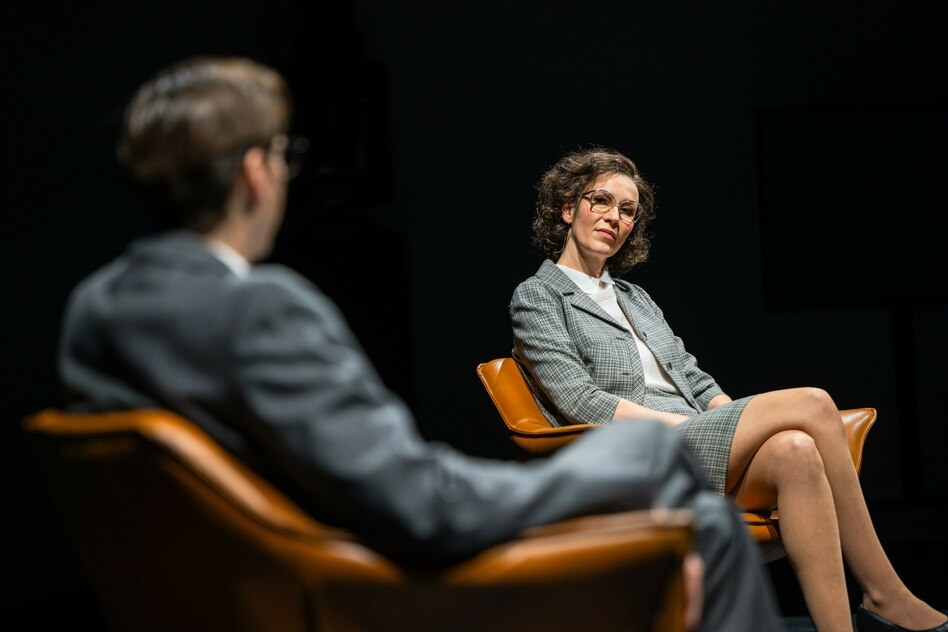
Showing what is and was – the Schauspiel Stuttgart consistently pursues this approach, which reactivates documentary theater, which is wrongly considered outdated. Probably also in order to counter the conspiracy theories of right-wing demagogy with a claim to the truth.
This is also what the life and work of the philosopher Hannah Arendt (1906–1975) stood for, which is why director and artistic director Burkhard Kosminski dedicated an evening in Stuttgart to her with the piece “Between two people, sometimes, as rarely, a world arises”. Strictly speaking, an almost five-hour, multi-part marathon.
After first reenacting one of the author's most famous television interviews, Sylvana Krappatsch and Matthias Leja present the correspondence between her and her academic foster father and temporary lover Martin Heidegger. Sitting on a bench, the two people, who visibly resemble real people, float upwards. Otherwise, the production holds back with effects.
Rather, you give space to the story. In the next scene, Arendt sits at the typewriter while Adolf Eichmann sits in the glass case in the middle of the revolving stage. He is the Nazi war criminal whose trial the intellectual reported on in Israel in 1961. She identifies the banality of evil in the blind loyalty of the perpetrator, whom she describes as a buffoon. This statement made her one of the most controversial and discussed Jewish thinkers of the 20th century.
The second major part of the performance vividly shows that their observations went far beyond the mere analysis of the Nazi regime. Daniel Cohn-Bendit enters the stage. The former Green Party MEP knew Arendt personally and his biography embodies the utopia of a united Europe that she had already envisioned in 1940. The politician movingly draws a line from his parents' history of persecution to the current Gaza conflict and the triumph of right-wing extremists. “I don’t care what they say,” said the ex-politician, “but I don’t care that the others stay silent.”
Elfriede Jelinek's early work "Totenauberg" from 1991, a sharp-tongued reflection of Martin Heidegger's entanglements in the Third Reich, thematized as a brilliant finale in which fascism continues if it is not fought. For example in the suppression of nature. In keeping with the university professor's place of residence, Todtnauberg in the Black Forest, the landscape appears morbid from the start.
All that remains of the trees are stumps that have been hit by lumberjacks and animal trophies in between. In any case, the projections are more important than vital flora and fauna. That's why model trains keep circling on the gigantic screen in the background, accompanied by swaying music and in front of the Alpine backdrop.
A nice idyll for tourists who prefer the tamed wilderness. When one of them (terrific: Felix Strobel) climbs up the area with a rope, we only see him instead of the mountains in the film stills, which play with the Riefenstahl aesthetic. In self-reflection, it is easy to suppress who lies beneath the earth, namely those murdered in the concentration camps. When they later drive up from the ground with dead faces, the assembled, beer-filled tavern sits behind them. In the lovely dirndl, Katharina Hauter then campaigns for a referendum against the influx of foreigners. Paying guests only please!
A highlight of this bilious reckoning with nationalism and racism is the raising of a previously knocked over huge Heidegger figure. The hunters celebrate their death frenzy to the pathetic Wagner music and winter recordings. An indictment of right-wing, Greater German fantasies of victory and oppression could hardly be more stark. Although the spectacular production takes too long, it is convincing across the board. Without becoming ostentatious, it reads as a confident commentary on contemporary authoritarian promises of seduction, to which Arendt would have given an answer: resistance!
Read the full story at the source
Source: taz