
World · taz · · 2h
Xi and Trump's meeting: China's new self-confidence
Deutsch (original) · Auto-translated to English
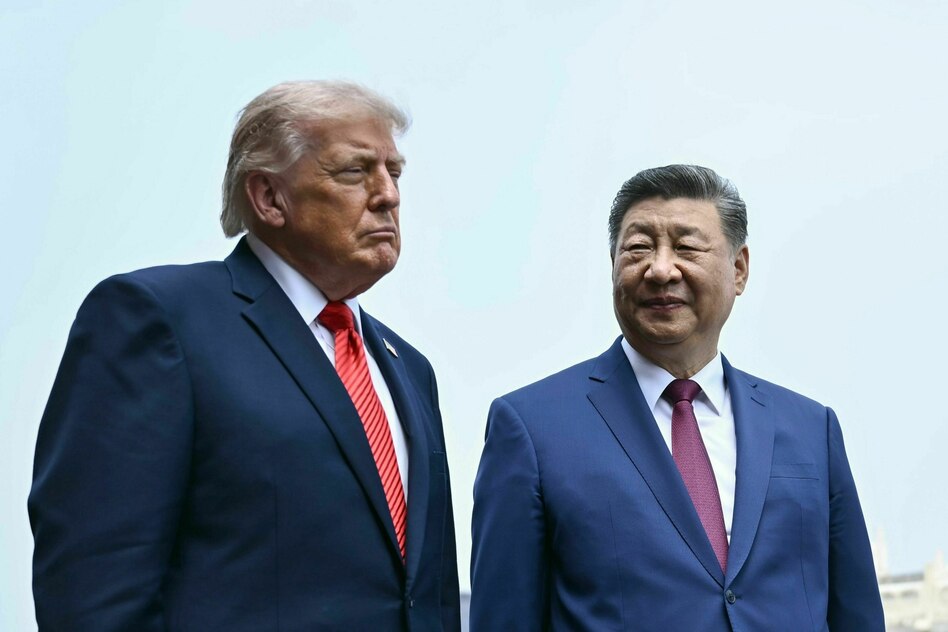
When heads of state fly to Washington, Donald Trump usually doesn't bother going to Andrews Military Base for a personal reception. But the US President is making an exception for Xi Jinping. Before the two most powerful men in the world begin their talks at the White House on Thursday, almost 500 US soldiers will attend the welcoming ceremony. It ends with the flyover of a B-2 stealth bomber and four F-22 fighter jets.
Xi Jinping will travel to the American capital for the first time since 2015. How the leaders of the two world powers explore their relationship has implications for the rest of the world. "It is clear that the visit will be portrayed as a success. President Trump will adopt a warm and welcoming tone towards President Xi," said Kurt Tong, former US Consul General in Hong Kong. At the same time, Tong, now a partner at the strategy consultancy Asia Group, expects that the results of the summit will be “disappointing”: “Especially if you measure them against the multitude of problems and difficulties in the relationships.”
There are many of them: the trade war between the two countries is still simmering. The question of a binding set of rules for dealing with artificial intelligence remains unresolved. China keeps the Russian war economy going. Chinese human rights abuses from Tibet to Xinjiang would be equally relevant. Trump probably won't put it on the agenda.
The meeting in Washington will probably bring at least one concrete result: the so-called “ceasefire” that Xi and Trump agreed to at their meeting last fall in Busan, South Korea, is likely to be extended. The deal stipulates that China will continue to supply US companies with rare earths while the US does not further tighten its tech sanctions against Beijing. It's a fragile ceasefire.
However, it is unlikely that the two technological powers will agree on how to deal with AI. Because anyone who dares to take the first step risks falling behind in the race for global technological leadership.
“China really sees AI as the new Internet and a once-in-a-lifetime opportunity,” says George Chen, former head of the China division at US tech group Meta. “Xi Jinping is now 73 years old, he wants to leave a legacy – and beat America in new technology.” When the conventional Internet took off, the United States set the global standards - from IP addresses to the technical rules by which computers and networks communicate with each other around the world. When it comes to AI, China now wants to set the rules of the game.
"Xi Jinping's confidence in China's strength in technology and innovation is historically high," Chen said. China's most powerful party leader since Mao Tse-tung has advanced the country's industrial production in an impressive way: from electromobility to robotics to the chemical industry, the People's Republic of China dominates many strategic supply chains. If the EU wants to upgrade its military, bring new medicines onto the market or advance the energy transition, it inevitably depends on Chinese companies.
China's overall economic situation is worse than it has been for a long time. Domestic consumption is historically low, youth unemployment is high - and hundreds of millions of Chinese have suffered significant losses in prosperity due to the real estate crisis and salary cuts. But Xi won't let that show when he meets Trump.
Opinions differ as to the consequences of the Chinese leadership's new self-confidence. Hawks in Washington in particular believe that a strong China will become increasingly aggressive. According to Da Wei, a political scientist at Beijing's Tsinghua University, the opposite is true: "When China's leadership is confident that it has its foreign policy environment under control and the country's core interests and development prospects are not threatened, it is more willing to exercise restraint, hold talks and focus on solving domestic problems," he argues in the journal Foreign Affairs.
So far, however, there has been little sign of Beijing's reluctance. China's coast guard is taking increasingly harsh action against the Philippines in the territorial dispute over the South China Sea. China is also increasing military and rhetorical pressure on Taiwan.
For Xi, Trump is a historic opportunity: The US President has instigated a war in Iran that is depleting the country's military resources. He is alienating his allies in East Asia with punitive tariffs and crude rhetoric. At the same time, he has openly questioned his commitment to Taiwan's defense. All of this could encourage Xi Jinping to put his plans to conquer Taiwan into action.
Read the full story at the source
Source: taz