
Germany · taz · · 3h
Fuel discount to reduce fuel prices: an average of 12 euros per person per month
Deutsch (original) · Auto-translated to English
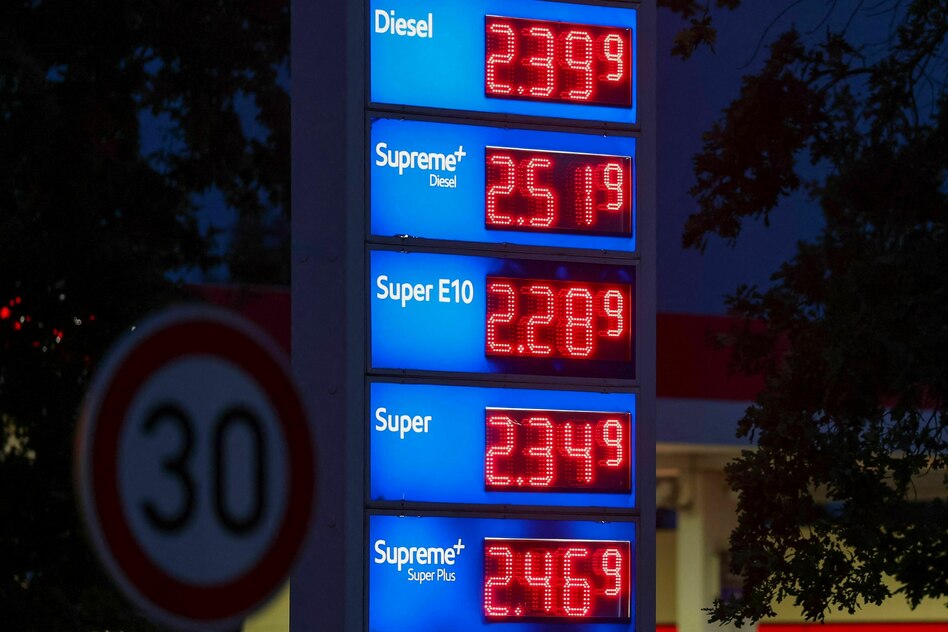
dpa/taz | The Bundestag and Bundesrat are supposed to launch the next fuel discount today. It is intended to reduce taxes on petrol and diesel by almost 17 cents in order to relieve the burden on drivers. What you need to know.
Energy taxes on diesel and gasoline are expected to fall by 14.04 cents per liter on October 1st. The EU does not allow a greater tax cut for diesel - and in order to treat all drivers equally, this value is also used for petrol.
Because there is no VAT on the eliminated energy tax, there is a total tax reduction of 16.7 cents - rounded, this corresponds to the frequently mentioned 17 cents. The reduction should apply until the end of December.
So that the discount can take effect on October 1st, the black-red coalition is proceeding in an expedited manner: on Friday, the Bundestag and then the Bundesrat are supposed to give their approval. The whole thing is slightly hidden on Parliament's agenda - the change is attached to another law that is already far along in the process. This saves you the usual first reading in Parliament and debates in the committees. After the Bundestag's decision at around 12 p.m., the draft goes to the Bundesrat. The law can come into force if the Federal President has no objections.
The gas stations do not have to pass on the tax cut one-to-one. However, based on experience with the most recent, largely identical fuel discount in May and June, it is to be expected that prices will fall quickly on the night of October 1st - often as early as midnight.
This is mainly due to customer expectations. Because at midnight the gas stations don't have any fuel with a tax discount in their tanks. This only applies to fuel that leaves the refineries or large tank farms after midnight.
It may take a few days until tax-reduced fuel is in stock everywhere. However, prices are likely to fall everywhere due to competition - just as they will rise at the end of the discount even where there is still tax-reduced fuel in the warehouses.
No. There's no reason to get up early. On the one hand, because of the requirement that an increase is only permitted at 12 p.m. every day, the price cannot rise again until midday, but can only fall. Typically, late afternoon is the cheapest moment of the day. On the other hand, experience from the last rebate shows that it may take some time before the tax cut is passed on in whole or in large part. If you still have enough fuel in the tank, you can avoid potential queues on the first day of the discount.
This is controversial. When it came to the discount in May and June, the Ifo Institute, the Monopolies Commission and the Federal Cartel Office, among others, only calculated an incomplete pass-on. The oil industry denies this. In principle, the transfer is difficult to measure because the price of fuel fluctuates significantly due to external influences.
Especially at the beginning of the discount, there can be big differences in how it is passed on depending on the gas station. Comparing prices is even more worthwhile than usual during this time.
Barely. On the last day before the outbreak of war at the end of February, according to data from the ADAC motorists' club, a liter of Super E10 cost a nationwide daily average of 1.78 euros and a liter of diesel 1.75 euros - the gap to current prices is therefore much greater than the planned tax discount.
Because the tax discount only applies to fuel delivered after midnight on October 1st, it is attractive for gas stations to enter October with small stocks - similar to a vacationer who no longer fills up shortly before the border when fuel is cheaper abroad. In addition, many drivers will not completely fill their tanks shortly before October 1st. During the last discount, this led to more crowds, but not major problems.
The federal government expects that 2.485 billion euros less taxes will flow into the state treasury. This time, however, the states should bear half of it. In return, the federal government gives them slightly less sales tax revenue than normal. The approach is quite unusual, because the states often only co-finance federal decisions with great pain in the ass.
According to figures from the Federal Motor Transport Authority, the average car in Germany is driven around 900 kilometers per month. Assuming consumption of 7 to 8 liters per 100 kilometers, the average combustion engine driver saves roughly 32 to 36 euros through the discount over the full three months. However, depending on the mileage, consumption and skillful refueling after the start and before the end of the discount, the value can vary significantly.
The vast majority think little or nothing of the measure. The most important points of criticism that were raised in the last edition:
The discount is relatively expensive and not targeted. (watering can)
Fossil fuel producers are likely to “feel like burglars who have the bank manager writing down the safe code,” explained Greenpeace mobility expert Marissa Reiserer. The fuel discount announced on Friday evening “is not targeted, is harmful to the climate and a big chunk of it ends up in the pockets of the oil companies as excess profits.”
He also supports people who don't need the help. On the other hand, it is of no use to people who do not have a car but suffer from high fuel prices due to heating costs.
The German Association for the Environment and Nature Conservation (BUND) called the plans “expensive, unsocial and unecological”.
It dampens the price signal: Normally, scarce goods become more expensive, which dampens consumption. However, this mechanism, which makes sense in itself, is slowed down by an artificial reduction in the price of fuel. There is no guarantee that it will reach the consumer completely.
However, there are other voices too. Manuel Frondel from the RWI Institute recently told Spiegel: "It would of course be better if the state would provide targeted help to needy households. Since it still cannot easily implement such direct payments, I consider the fuel discount to be a pragmatic and fair solution.
Read the full story at the source
Source: taz