
Germany · taz · · 1h
Synchronized figure skating at the 2030 Olympics: Popular bunch
Deutsch (original) · Auto-translated to English
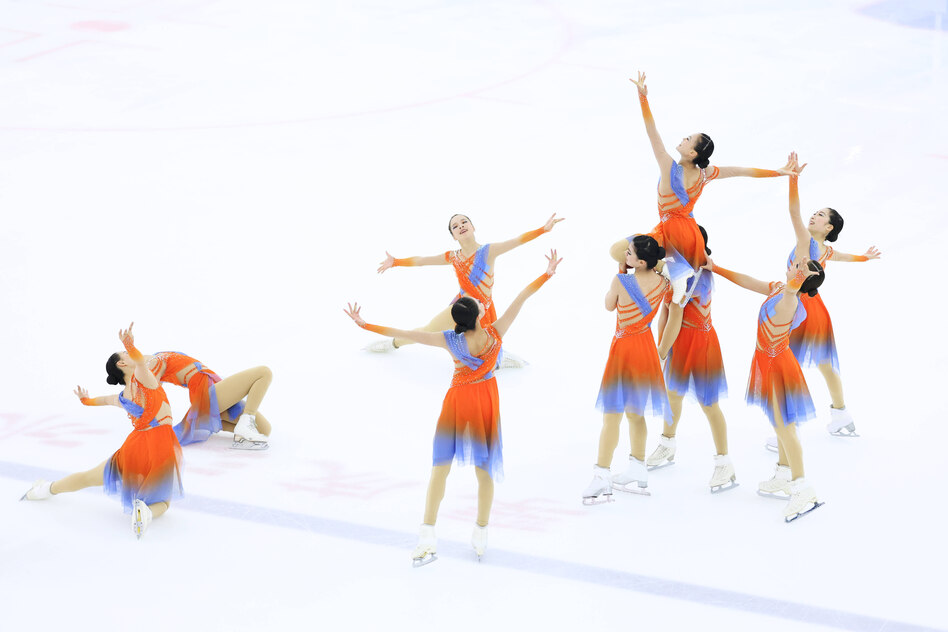
This month, figure skaters will be showing their programs for the new season for the first time at competitions. One discipline is still missing: synchronized figure skating. The youngest discipline in figure skating, which has been recognized since 1994, is scheduled to be included in the Olympic Games program for the first time in France in 2030. This is what the IOC decided in June. Next season, synchronized figure skating will celebrate its baptism of fire at the Youth Olympic Games. “This sport is getting the attention it deserves thanks to the Olympic stage,” says Tatjana Wagner, managing director of the German Ice Skating Union (DEU). The prospect of the Olympics is a huge motivation for the athletes.
Synchronized figure skating has sometimes been called contemptuously by some other ice athletes. The purely amateur teams, which often include athletes who have been rejected in other figure skating disciplines, skate synchronized freestyles with elements such as circles, blocks, wheels and crossing lines, which are carried out synchronously. They also show lifts and jumps that are familiar from individual and pair skating. And: This discipline has proven to be very popular and could help attract more viewers to ice rinks and to the television screens. Young spectators in particular are the hope of the world association.
Traditionally, a synchronous team includes 16 men and women. And this large number was an obstacle to the sport's participation in the Olympic Games. That would have exceeded the capacity in the Olympic Village, explained Finn Ida Hellström, who represents synchronized skating in the International Ice Skating Union, to the media. So the idea of competing with just nine team members was born last fall.
There was a hard fight over the number between the IOC and the technical specialists around Hellström. All elements that are run with 16 team members are no longer possible. There can be new ones for this, for example twizzles, as we know them from ice dancing.
And the new sport that will soon become an Olympic sport, even though there has never been a competition, has a name: Synchro9. “The sport thrives on speed and the clearest possible images on the ice,” predicts Tatjana Wagner from the DEU. This month, a seminar organized by the world association ISU took place in Berlin with over 50 trainers and technical specialists to fine-tune the rules and ratings for Synchro9.
One thing is certain: there will be all-female teams. This goes back to the IOC's desire to enable more women to take part in the Olympic Games. According to its own statements, the DEU was surprised by this, as there have been individual men in the previous teams of 16. The women and girls run three different programs in four competition parts.
The first program has a prescribed theme, the second has a prescribed beat and the third is a freestyle. In order to achieve the goal of being attractive to a young audience, the theme this year will be street dance. According to Tatjana Wagner from the DEU, the defined evaluation criteria show what characteristics female athletes need for Synchro9. For her, this is “extremely good skating skills and strong expression.” Speed, choreography and synchronicity are also important.
The demo teams at the international seminar were the two Synchro9 junior teams from Berlin and Chemnitz that had already been set up in Germany. Berlin coach Vanessa Henke-Hahn says her team is proud to “be able to write a bit of history.” The motivation in the team is very high and the programs have been well received. There was applause from the audience. "There are no senior women's teams in Germany yet. The first international competitions in Synchro9 will probably be held in November in the USA and Finland as purely junior competitions. The highlight of the season will be the World Championships in Nottingham (Great Britain) in March with more than 1,000 participants.
Tatjana Wagner is optimistic that the new discipline will be included in the federal government's funding if the negotiations are ongoing. The aim is for Germany to establish itself among the world leaders in the new discipline. In synchronized skating with teams of 16, Germany is the fourth best nation behind the USA, Canada and Finland. Incidentally, the 16-person teams should continue to exist and continue to compete in international competitions such as the World Championships. According to Wagner, there have been no de-registrations from the 16-man teams in Germany – so far. However, there is still no team of 9 for seniors. If both are trained side by side, it is a huge challenge for the ice rinks in Berlin, Chemnitz, Stuttgart or Mannheim, which are already very busy.
Read the full story at the source
Source: taz