
Germany taz
Study of Youth Politeness: Generation Maybe
A study shows that young people say “please” less. That's why they're not rude. Uncomfortable indeed. more...
Deutsch (original) ·Auto-translated to English
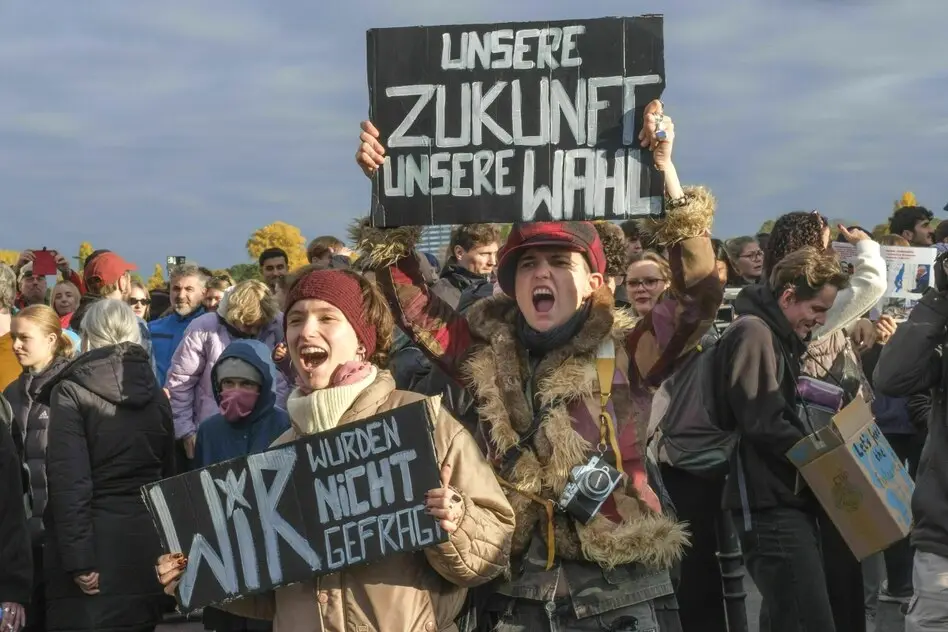
There have been fires on the streets of France for weeks, in Serbia the population voted out the authoritarian ruler thanks to student protests, and in Albania, Spain, Italy, Belgium and also in Germany, Gen Z wants to take their future into their own hands. This requires courage and assertiveness. We all know that if you always ask nicely, you won't get any help. The days of being supplicants are over.
Can this also be seen in the language of Gen Z? Because social change as a whole begins there. That's why the research project at the Free University of Berlin and Bielefeld University tried to find out how the language of different generations differs in an online survey. And, among other things, it is based on one small word: “Please”.
The conclusion: According to the study authors, younger respondents only use the actual word in about every fourth request. Seniors say “please” more easily; they use it almost twice as often.
The taz is an independent, left-wing and opinionated daily newspaper. We have been arguing in our comments, essays and debate texts since the taz was founded in 1979. We often cannot and do not want to agree on an opinion. That's why you'll find some completely opposing positions here - all part of the very broad left-wing spectrum of opinions.
So is Gen Z more rude, rude, disrespectful? Not entirely, she just likes to tone things down, so she has adopted a different form of politeness. And apparently discovered a new favorite word. “Can you maybe bring me a Coke?” “Do you perhaps have time to help me?” “I might need your car tonight.” The “maybe” is in, the “please” is out.
Younger respondents use similar devices, such as the subjunctive, indirect formulations or careful questions, in order not to ask for help too directly. “The directive speech act,” as the research authors call a request, is becoming softer.
Maybe it has something to do with politeness, but maybe it also has something to do with their reality. Climate crisis, corona pandemic, energy shortage, the insecure job market, the expensive cost of living - young adults have experienced uncertain times and will continue to have to go through life on shaky ground in the future, if the established political forces have their way.
They try to keep them small. Young people are placed under general suspicion simply for organizing a demonstration and insulted as lazy or little pasha. Germany is not alone in this: we see how right-wing forces are trying to delegitimize the French school protests and accuse them of being “infiltrated”. There was also little support for the Serbian students from other European governments - of course, for most government parties it would be at least unpleasant to be deposed by their own youth.
It is therefore particularly important that the language in which uncertainty is often heard is not transferred to actions. So don't let yourself be intimidated by repression, network, continue to take to the streets and defend yourself against political power structures. Because politeness doesn't have to mean being subordinate. And radicalism doesn't have to mean treating each other disrespectfully.
By the way: Younger respondents also use first names more. Anyone who shouts that this is a symptom of a lack of respect for their elders should be told: Whether I respect someone, stand up for the person and treat them on an equal level does not ultimately depend on how they are addressed.
A “you, damn asshole” isn’t much more respectful. Or? Although, maybe Gen Z should reconsider. “Merz, lick your balls,” actually comes out quite elegantly.