
War & Militarism taz
Power outage in Schleswig-Holstein: Kharkiv was even darker
After a power outage on the west coast of Schleswig-Holstein, thousands of households were left without power. A refugee accommodation was evacuated. more...
Deutsch (original) ·Auto-translated to English
When electricity, light and heating were suddenly gone, Alina Medvedieva and Alhussein Ali Salih Alkandani remained calm: “We come from a city at war,” says the Ukrainian, and her husband, who was born in Iraq, nods. The couple with their two children are among around 460 people who lived in the state accommodation for refugees near the North Frisian town of Seeth.
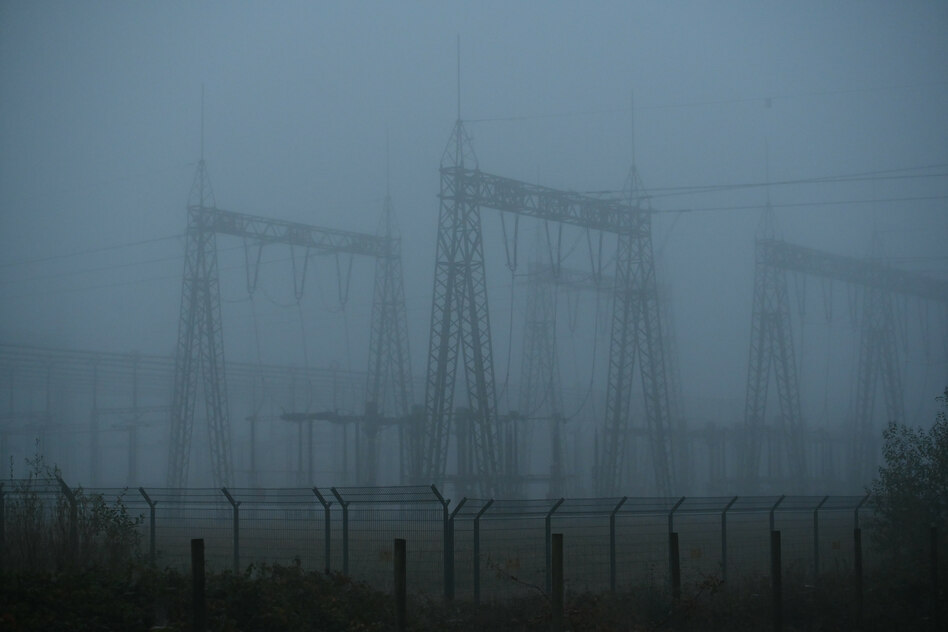
On October 18th, a Sunday, a power outage paralyzed a large part of the Schleswig-Holstein North Sea coast. The refugee accommodation was also affected. All residents have now been moved to other locations, most of them to Rendsburg.
Two surges hit the accommodation in a former barracks, reports Wolfgang Kossert, spokesman for the State Office for Immigration and Refugees. "The fuse blew out on the first one, just as it should. However, a few hours later, the second surge rushed through the network and hit us hard."
The causes of the power outage have not been determined, even days after the incident. Specialists have comprehensively analyzed possible sources of error such as masts, conductor cables, substations, transformers, surge arresters and local network stations, says the energy service provider Hanse Netz. “According to the current state of knowledge, there is no concrete evidence that an attack or an unusually high feed-in from renewable energies was the cause of the disruption event,” it continues. The investigations continue.
It is already clear that the damage is considerable. Devices failed in tens of thousands of private households in the districts of Nordfriesland, Dithmarschen, Steinburg and the neighboring regions, and companies and communities reported damage to control boxes and machines. In some cases there were smaller fires.
The accommodation in Seeth was particularly badly affected, reports Kossert: "No heating, no warm water, no light. We handed out crank flashlights and warm clothing."
That worked out perfectly, praises Alhussein Alkandani. “Everyone did a great job.” His wife reports that warm hats and gloves were immediately provided for the children. And it quickly became clear that all residents should move to other locations.
Alkandani himself drove the family car back and forth between the accommodations several times and transported other people's belongings. "One grandmother had so many suitcases that the car was full of them alone. The Ukrainians have one mistake - they always carry too much luggage with them," jokes the father of the family.
The Iraqi, born in 1985, fought on the side of the Americans in the Second Iraq War and then had to leave the country. “Ukraine was the first country that gave me a visa,” he says. He moved to Kharkiv, opened a store, met Alina Medvedieva. Her son is nine years old and her daughter is four: “She was born ten days before the war started,” says the mother. Meanwhile, their home and business were destroyed by bombs and they could no longer stay in Kharkiv. As an Iraqi and former US fighter, Alkandani is not required to serve in the military.
They ended up in Seeth - an accommodation that made national headlines a few years ago because at times there were more refugees than residents living there. However, the accommodation in the former barracks is so far outside the town that there were hardly any points of contact or conflict. There are currently around 500 people staying in Seeth, mostly from Ukraine. “And despite its location in the forest, Seeth is well-known and popular,” reports Wolfgang Kossert. “We get inquiries because Ukrainians in particular want to go there.”
In view of the falling number of refugees coming into the country, the state office wants to close several of the six current accommodations, including the one in Kiel. But Seeth should stay. Therefore, the accommodation is now being restored after the power outage. The damage is extensive: “We will have to replace a lot of lines,” said Kossert.
The family of Alina Medvedieva and Alhussein Alkandani, which, in addition to the children, also includes the grandmother - Medvedieva's father died of a heart attack during the escape - will not return to the small town in North Frisia. From the accommodation in Rendsburg we continue to Lübeck. Both want to learn German there as quickly as possible and look for work. “We are grateful that we can be here and want to give something back to Germany,” says Medvedieva. “We must look forward and not mourn what has been lost.”