
Germany · taz · 2h
Controversial topic of homework: primary schools are testing the end of homework
Deutsch (original) · Auto-translated to English
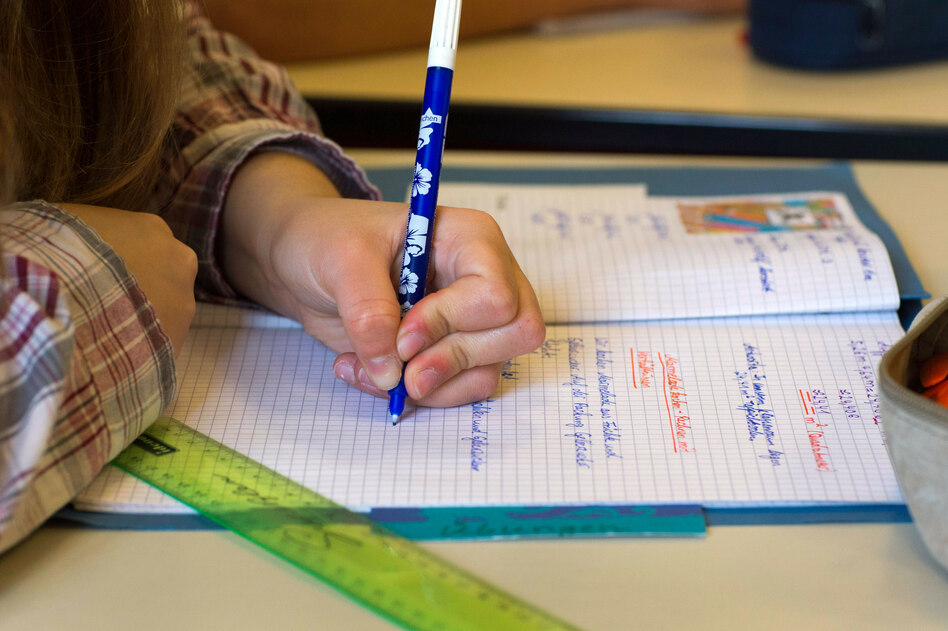
At the Nortorf elementary school in Schleswig-Holstein, lessons start with a free hour of work. They decide for themselves what the children read and what they work on. Headmaster Astrid Krüger recently reported to NDR that there was a long process of debate about the benefits of homework. Since February last year, the school has dispensed with traditional homework because it also contributes to inequality in learning.
The school is not alone in this. According to the Ministry of Education, there are several schools in Schleswig-Holstein that are already working without homework or are planning to abolish it in the traditional sense. The number of these schools is not recorded, and statistics are also missing nationwide. According to a response from the Lower Saxony Ministry of Culture to a small request from the CDU from November last year, nine primary schools in Hanover waived homework, and 13 others were planning to take the step. The main reasons they cite are equal opportunities, because many children do not receive any support at home, as well as the lack of control effort for teachers.
Homework seems to be as natural a part of school as the teacher is in the classroom. The idea is that they should consolidate material, practice independent work and promote responsibility for their own learning. In doing so, they require something that not every child has at home: a quiet workplace, time and, if necessary, support with processing.
Figures from the Federal Statistical Office show how unevenly the spatial conditions are distributed: in 2025, 19 percent of minors in Germany lived in an overcrowded apartment, while for single parents and their children the figure was almost 30 percent. Although this does not necessarily say anything about the learning success of individual children, it does show that a model that requires calm and withdrawal begins for many under difficult conditions.
Whether homework improves learning success has been controversial for decades. The decisive factors are the age and level of performance of the children, the quality and scope of the tasks, and whether they are even discussed in class.
"In 2025, 11.7 percent of the population in Germany lived in an overcrowded apartment. This means that the household had too few rooms in relation to the number of people. For example, an apartment is considered overcrowded if the living room also functions as a bedroom, three or more children have to share a children's room, or a brother and sister, both teenagers, have a shared room."
After a long day of lessons - or a long day at work for parents - homework is experienced as stressful in quite a few families, regardless of the learning effect, says Claudia Pick from the Schleswig-Holstein State Parents' Advisory Council for high schools. What is particularly important is that the material given is also reflected in the lesson. “The possibility of developing the results with AI raises the question of how useful homework still is,” she says.
If the tasks are shifted to school, some conflicts may disappear from families. But parents also lose insight into what their children are learning, some worry. “Many children already spend a long day at school because they are all day,” says Simone Kohl, chairwoman of the Hamburg Parents’ Association. From her point of view, the most important thing is how homework is used: if it deepens what has already been learned, she thinks it makes more sense than if children have to work on new material independently at home.
In any case, many classic tasks can be solved in seconds with artificial intelligence. The President of the German Teachers' Association, Stefan Düll, warned the Neue Osnabrücker Zeitung in April that everything outside the classroom could theoretically have been done by an AI, which teachers could hardly control.
Ultimately, even before the advent of AI, homework was a submitted end product that teachers never knew exactly how it came about. However, AI is increasing the pressure to have a discussion about how performance and competencies should be both defined and evaluated in the future.
Read the full story at the source →
Source: taz