
Germany · taz · 2h
Dispute over the EU defense body: personal vanities and tough politics
Deutsch (original) · Auto-translated to English
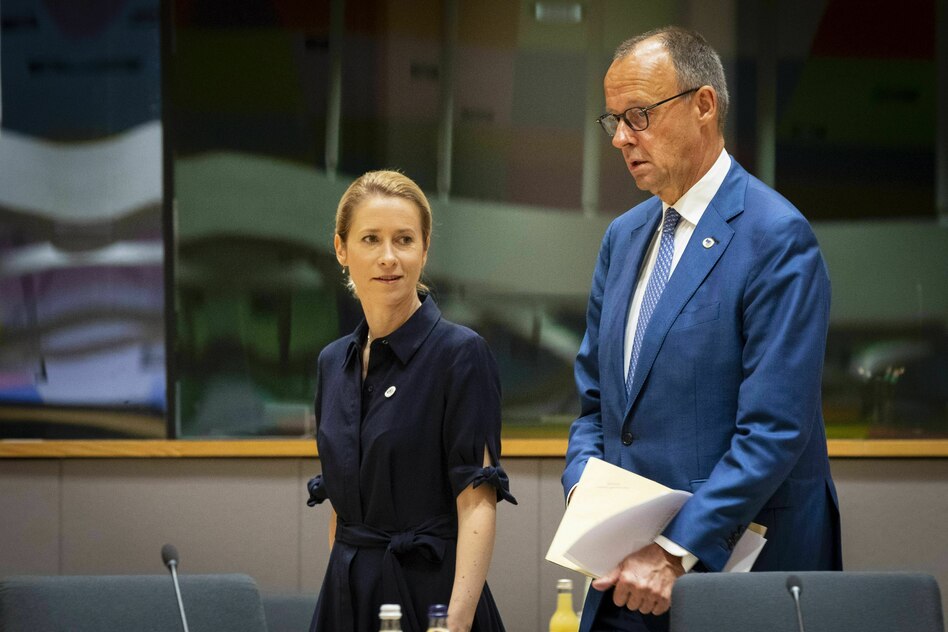
Nobody in Washington takes her seriously, for Moscow she is a red rag, and in Jerusalem she has even been declared persona non grata: Opinions differ about Kaja Kallas, the EU's chief diplomat. So far, the 49-year-old Estonian has not been impressed by this. Kallas explained after the attacks by Israel's Foreign Minister Gideon Saar that she would stick to a constructive dialogue. But now resistance is also coming from Berlin, Paris and Rome.
Germany and France prevented Kallas from setting up a group of defense experts. The advisers, including military experts from Britain and Ukraine, were due to meet in Brussels on Monday for a constituent meeting. But the apparently poorly prepared meeting was canceled at the last minute. It was said that Kallas had exceeded her authority. Defense is the responsibility of the EU states. There has also been a European Defense Commissioner since 2024 – Andrius Kubilius from Lithuania.
And then there is EU Commission President Ursula von der Leyen: The former German defense minister proclaimed the “re-armament of Europe” in 2024. It wants to shape the common foreign and defense policy - even if necessary, alone. That's why a power struggle has been raging between Kallas and von der Leyen for some time. Von der Leyen repeatedly tries to set the tone. She is even planning her own secret service - much to the annoyance of Kallas, who is said to have described her rival as a "dictator".
Recently, the dispute, which evil tongues in Brussels refer to as a “cat fight,” had subsided somewhat. But now a power struggle has broken out between the institutions: the Commission under von der Leyen and the European External Action Service EEAS, which Kallas heads.
Kallas could lose out. The diplomatic service founded in 2011 with around 5,000 employees is to be broken up and largely integrated into the EU Commission. This is what Germany and France have proposed. These plans are justified by a devastating diagnosis: the service has been “marginalized” and its influence has recently declined more and more. This emerges from a paper from the Foreign Office in Berlin, reports the insider portal “Euractiv”.
When asked, the federal government did not want to comment on this. But the thrust is clear: in order to increase the effectiveness of the common foreign policy, departments from the EEAS and the Commission should be merged and duplicate structures eliminated. Kallas would be strengthened, at least on paper: in the future she could also take care of defense, migration and humanitarian aid. De facto, von der Leyen would take control - because the German Commission head would have the final say.
This is not only an institutional problem, but also a political one. When it comes to Ukraine policy and sanctions against Russia, Kallas and von der Leyen are largely on the same page. But there are always disputes, especially in Middle East and Israel policy. Von der Leyen usually represents the pro-Israel German line, Kallas also takes up the concerns of other EU countries and seeks a common line. At the last meeting of foreign ministers in July, she spoke out in favor of sanctions against Israeli settlers in the West Bank.
But although a majority of EU countries were in favor of punitive measures, no decision was made: Germany was against it. Foreign Minister Wadephul (CDU) received support from, of all people, Commission Chairman von der Leyen, who raised legal concerns. This shows that the dispute over the EEAS is not just about personal vanity and institutional interests - but about tough politics. Germany wants more influence and is trying to achieve this by abolishing the right of veto in foreign policy.
So far there has been limited success: at an informal meeting of EU foreign ministers in Ireland, only eleven of the 27 member states spoke out in favor of the initiative. The reform of the Foreign Service was also not met with enthusiasm; the explosive issue was postponed until the autumn. And what will become of Kallas? She wants to stay in office despite the gossip over defense policy. But the Estonian hasn't made any friends with her uncoordinated move, on the contrary: Kallas has become even lonelier.
Read the full story at the source →
Source: taz