
Politics taz
Vote counting after the election in Israel: Netanyahu's bloc in the lead
After half of the votes have been counted, the head of government's bloc is ahead in the Israel election. But a majority is uncertain. more...
Deutsch (original) ·Auto-translated to English
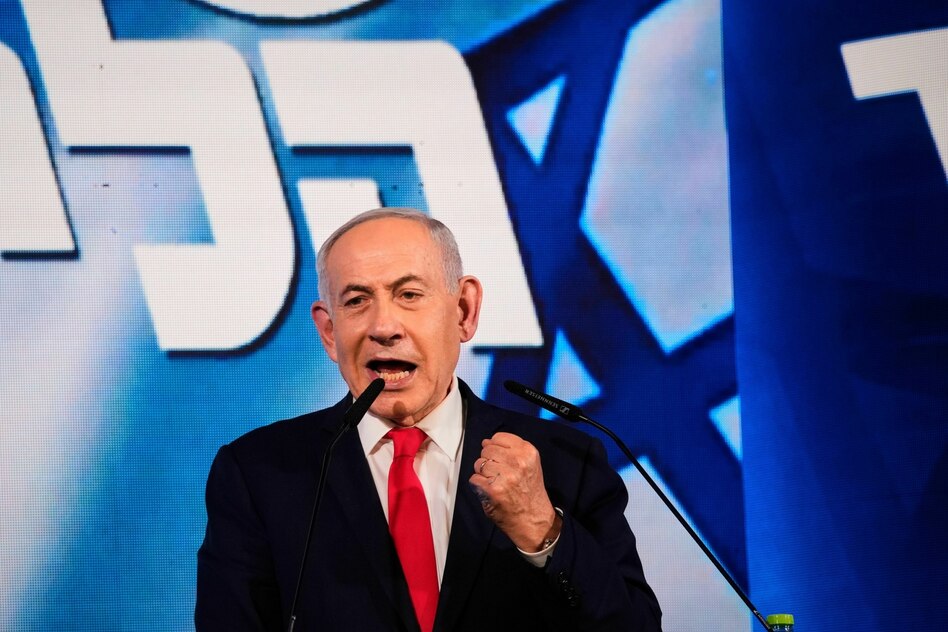
After the parliamentary election in Israel, Prime Minister Benjamin Netanyahu's right-wing religious bloc has consolidated its lead after around 77 percent of the votes were counted. However, the camp does not reach a clear majority. According to Israeli media reports, there are currently 54 of the 120 seats in the Knesset, while the opposing camp of ex-military chief Gadi Eisenkot has 49 seats. 61 seats would be needed for a majority.
Netanyahu's Likud party was reportedly the strongest force with 27 seats in parliament. Behind them is the center party Jaschar von Eisenkot, which has 22 seats. As things currently stand, the Arab parties have a total of 17 seats. Eisenkot would have to rely on the support of Arab parties to form a government, which several opposition parties have so far rejected. Netanyahu, meanwhile, called for the formation of a strong right-wing government without the participation of Arab parties.
The formation of a government and who will appoint the future Prime Minister is still uncertain. (dpa)
An alliance of Arab parties say they are ready to pave the way for the replacement of the right-wing religious government of Prime Minister Benjamin Netanyahu. United List leader Yussef Jabarin said the day after the parliamentary election: "The government of Netanyahu and (far-right Police Minister Itamar) Ben-Gvir has made the life of every Arab citizen hell."
He called Israeli voters' support for Arab parties "historic." After counting most of the votes, the Islamic conservative Raam Party and the United List have 19 of 120 seats in parliament. They could tip the scales because neither Netanyahu's camp nor the camp of his rivals led by former military chief Gadi Eisenkot have yet achieved a majority.
“We will know how to use our political strength to advance the values we believe in,” said Jabarin. “We are ready to pave the way for the replacement of the government of Netanyahu, Ben-Gvir and (Finance Minister Bezalel) Smotrich – and send them home.”
Around a fifth of Israel's population is Arab. Most are descendants of those Palestinians who remained in the country after the founding of Israel and the 1948 war. As Israeli citizens, they also have the right to vote. However, their close family and cultural ties to the Palestinians in the Gaza Strip and the West Bank cause suspicion among parts of the Jewish population. In Israeli politics there is a kind of “firewall” between right-wing Jewish parties and Arab parties. Some see them as a Palestinian fifth column. (dpa)
After the parliamentary election in Israel, Prime Minister Benjamin Netanyahu's right-wing religious bloc has consolidated its lead after around 66 percent of the votes were counted. However, the camp does not reach a clear majority. According to Israeli media reports, there are currently 54 of the 120 seats in the Knesset, while the opposing camp of ex-military chief Gadi Eisenkot has 48 seats. 61 seats would be needed for a majority.
Netanyahu's Likud party was reportedly the strongest force with 27 seats in parliament. Behind them is the center party Jaschar von Eisenkot, which has 21 seats. As things currently stand, the Arab parties have a total of 18 seats. Eisenkot would have to rely on the support of Arab parties to form a government, which several opposition parties have so far rejected. Netanyahu, meanwhile, called for the formation of a strong right-wing government without the participation of Arab parties. (dpa)
The leader of the left-liberal Democrats in Israel, Jair Golan, called for the formation of a coalition with the Arab parties after the election. The right-wing conservative Prime Minister Benjamin Netanyahu lost, said Golan, according to his office. Overall, the opposition has more votes than Netanyahu's right-wing religious camp.
“We have no future here if we don’t stop being afraid,” said the Democratic leader. "And if we don't put an end to racism. We can no longer accept Netanyahu's racist distinction between Jewish and Arab voices." Anyone who tries to erase the voices of Arab citizens is capitulating to Netanyahu and giving up on Israel.
In Israeli politics there is a kind of “firewall” between right-wing Jewish parties and Arab parties. Some see them as a Palestinian fifth column.
“In Netanyahu’s camp are 16 Knesset members from non-Zionist ultra-Orthodox parties who advocate mass refusal to serve in the military while our children fight and die,” Golan said. “We won’t let them lecture us about Zionism.”
He called on the opposition to “form together with the Arab citizens of Israel a government of change – a government that serves all Israeli citizens.” He appealed to the other members of the camp around ex-military chief Gadi Eisenkot: "What we need now is courage. We need leadership. We have to stop being afraid and finally start acting." (dpa)
US President Donald Trump stressed the importance of his support for Prime Minister Benjamin Netanyahu after Israel's parliamentary election. “I think when the support became known, it helped him a lot,” Trump said on Wednesday, referring to Netanyahu, to reporters on board the presidential plane Air Force One. Trump had backed Netanyahu several times before the election, and both are considered close allies. (afp)
In the parliamentary election in Israel, after half of all ballot papers have been counted, according to official information, Prime Minister Benjamin Netanyahu's bloc is ahead of the opposition bloc. According to the Israeli Election Commission on Wednesday, Netanyahu's Likud party and its allies have 56 of the 120 seats in parliament after counting 50.1 percent of the ballots. The opposition alliance under Gadi Eisenkot has 49 seats, the Arab Israelis' lists have 15.
However, these partial results can still change significantly. Several post-election polls had predicted a neck-and-neck race between the two camps, with neither gaining a parliamentary majority. According to post-election surveys by the two major television stations Channel 11 and Channel 13, both alliances won 51 seats each.
The vote is seen as a directional choice in the heavily divided country. The most important topics in the election were coming to terms with the Hamas attack on October 7, 2023, radical settlers and violence in the West Bank, and military service for ultra-Orthodox Jews. (afp)
On election night, Netanyahu declared in Jerusalem that the right-wing bloc with his Likud party had a clear and decisive majority “among the Jewish population and among all those who support the state.” He called for a “right-wing, national, strong government” and warned of a possible alliance between opponents and the Arab parties, which he accused of having an anti-Israel stance.
With regard to hostile Iran, Netanyahu said he was determined to work with US President Donald Trump to end the Iranian threat once and for all. (kna)
Editor's note: This article is continually updated.