
Germany taz
Job application: About plastic words, fries and the location Germany
Business journalists like to use words that obscure the important stuff. In the long run, this is as difficult to digest as fries and burgers. more...
Deutsch (original) ·Auto-translated to English
There are days when I skim through the business section of the newspaper. I ignore “Economy before Eight”, avoid anything on social media that has to do with “stocks”, “markets” or “business location” and turn the radio to a station that only plays music. There are many days like this. Maybe 180 a year. This is bad because I make a living writing about capitalism. Economy is not all of capitalism, but it is a not entirely insignificant part of it. A dilemma. But I have to do this, economic detox. For my mental health.
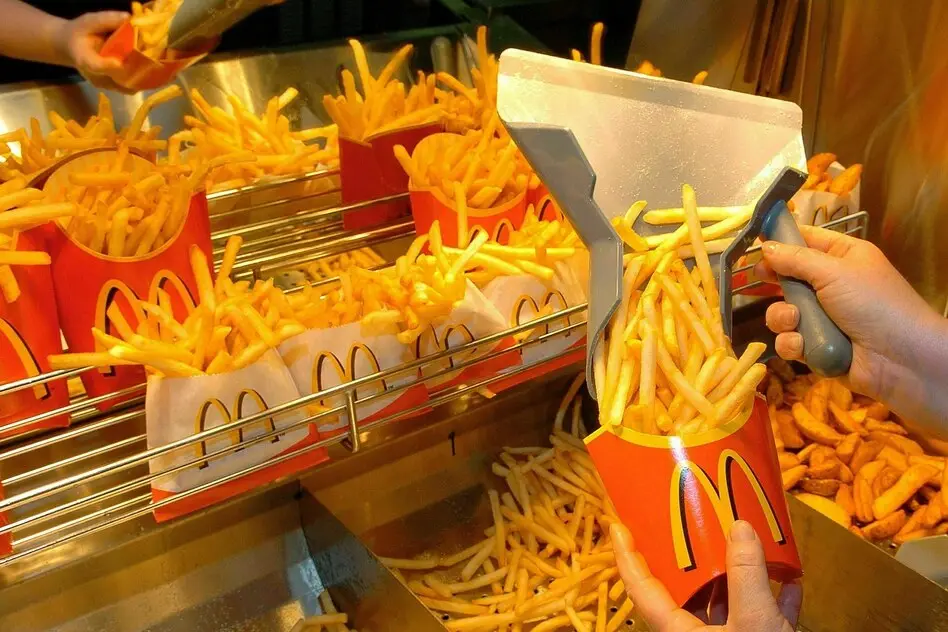
It's a bit like when I worked at McDonald's and had to quit. Not just because the shift leader was a choleric, but because I felt sick. During the lunch break we were allowed to eat whatever our hearts desired, worth seven fifty marks. At some point I grew tired of fries and cheeseburgers. The hot cloud of fat from the deep fryer when getting fries, the hissing steam when turning the frozen meatballs. It didn't work anymore. So I went.
For example, I'm tired of what I had to read recently in the Capital newspaper on a day when I had once again clicked on the economics section. The president of the mechanical engineering association VDMA gave an interview. Germany as a business location, he repeated the mantra of the prevailing politicians, is on the verge of a tipping point. Lack of competitiveness, inflexible labor market, reform backlog, too much bureaucracy. Fries, fries, fries. The answer? Fries: lower corporate taxes, lower social security contributions, an hour more work per week, retirement a few years later. These “requirements for the location” require understanding among the population, he explained, “and a knowledge that this will make things better”. This is roughly what the GDR nomenklatura preached: “The way we work today is how we will live tomorrow.” The head of mechanical engineering would have called that propaganda at the time.
Sabine Nuss dropped out of the twelfth grade, trained as an office clerk, got her high school diploma, volunteered as a journalist at Springer, studied political science and did her doctorate on private property. At the Rosa-Luxemburg-Stiftung she was head of political communications and managing director of Karl Dietz Verlag. Today she lives in Berlin as a freelance author, journalist and podcast host. In her column she regularly guides us through the foggy region of capitalism. It lifts the veil of conditions in which it seems as if we are all free and equal.
As long as there is no way out, I guess I'll have to endure this call. And there is no way out as long as the dilemma of “our economy” is not understood. It is because we have made our well-being and woe dependent on the self-serving increase of capital that we allow the executors of this logic to rush us globally into a race to go faster, higher and further. In the words of the head of mechanical engineering regarding the supposedly increasingly threatening competition from China: “We have a position in China, but two-thirds of it consists of requirements for Germany as a location.”
The biggest hurdle is that capital growth as an incentive and competition as a structure for action are considered natural (by most) and praised as the best of all possible worlds (by the winners).
The language fits that. Markets that are nervous, recovering or ailing, prices that are rising or falling. Economy – an organism endowed with a life of its own. Who is at the bottom, who is at the top and who benefits? Invisible. The linguist Uwe Pörksen called words like growth, innovation and strategy “plastic words”: They sound like expertise, fit everything and never say who is acting. Location and competitiveness are made of similar material. Business reporting is full of plastic. Therefore: detox. Or a new job. No fries please.