
Germany taz
Freedom of the Press in Egypt: Silenced
The conviction of journalist Lina Attalah once again shows the restrictions on press freedom. The EU and Germany should react to this. more...
Deutsch (original) ·Auto-translated to English
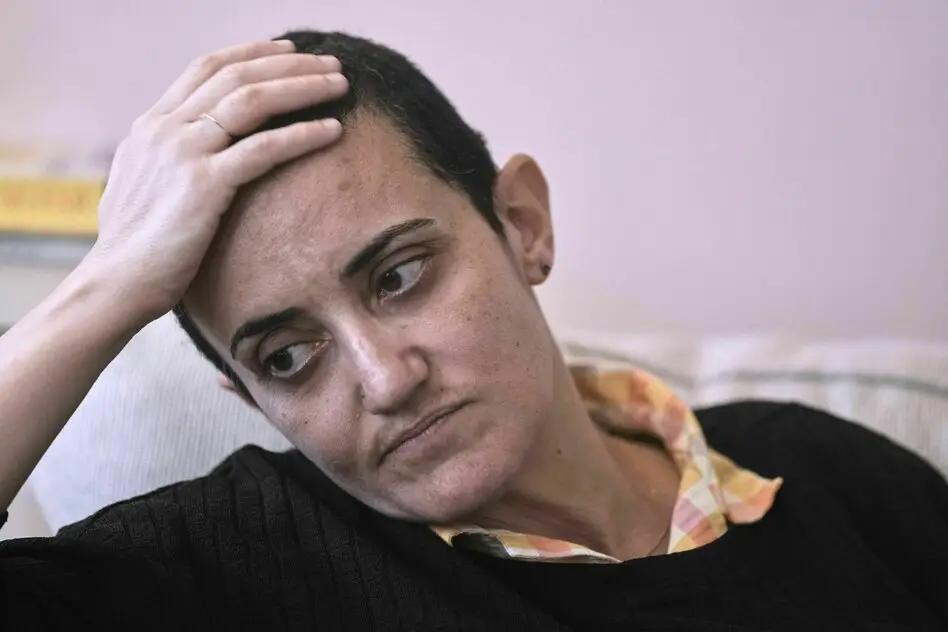
Eight lawyers appear in the courtroom to defend the defendant. But against her wishes, the judge appoints an outsider to defend her. What sounds like a disturbing fiction is what journalist Lina Attalah experienced during her trial in an Egyptian court.
Egypt is one of the countries with the highest number of imprisoned journalists worldwide. In recent years, President Abdel Fattah al-Sisi has steadily restricted the already limited freedoms. He has journalists arrested and influences the media to suit his line. But even by Egyptian standards, the imprisonment of an entire editorial team at the end of September was a low blow. It met six journalists from Matsadaash, an independent Egyptian platform for fact-checking and investigative journalism. They are accused of supporting terrorism – a common accusation that affects many critics.
is a consultant for North Africa at the Heinrich Böll Foundation and is responsible for Egypt, Morocco and Tunisia. Since 2022 he has been working at the party-affiliated Alliance 90/The Greens Foundation and previously worked in the foreign and security policy department.
In order to protest against this step together and – what is new – across countries, six platforms joined forces to form the “Joint Newsroom Initiative” – a “joint editorial team”. In addition to the Syrian al-Jumhuriya and the Lebanese platforms Daraj, Megaphone and Sifr, there was also the Tunisian platform Nawal and three Egyptian media outlets - the most prominent being the online newspaper Mada Masr.
A week later, on October 27th, Lina Atallah, co-founder and editor-in-chief of Mada Masr, was indicted. The accusation: She would spread false news in order to “disturb public peace”. Egypt is using its media law to punish independent journalism and further intensify one of the worst repression campaigns in recent years.
The taz is an independent, left-wing and opinionated daily newspaper. We have been arguing in our comments, essays and debate texts since the taz was founded in 1979. We often cannot and do not want to agree on an opinion. That's why you'll find some completely opposing positions here - all part of the very broad left-wing spectrum of opinions.
According to Amnesty International, the online magazine Mada Masr has been considered the “last bastion of independent journalism in Egypt” for years. They report on Egypt in Arabic and English. Insights and analyzes instead of purely current events. Critical reports about the Sisi regime appear regularly. For her work, editor-in-chief Lina Attalah received the Press Freedom Award (2020) from Reporters Without Borders.
The responsible court, on the other hand, convicted the investigative journalist for running an unregistered website - the medium had applied for registration several times - and imposed the highest possible fine of the equivalent of almost 50,000 euros. The court also ordered the confiscation of Mada Masr's property. Lina Attalah will be back in court on November 18th.
The timing of this drastic repression is not coincidental. As the authorities silence the country's independent media, the Egyptian parliament decided to stand by Saudi Arabia in the fight against the Houthi rebels. Egypt is not doing well economically, and the more the Houthis control the Bab al-Mandab Strait, the more this threatens shipping through the Suez Canal further north - and Egypt is feeling the effects of this through a decline in revenue.
Even if President al-Sisi emphasizes that the support for Saudi Arabia is purely defensive in nature, the arrests pave the way for important political decisions that the authorities can now carry out without critical questions from the media. This is not just about Egypt's possible entry into war in Yemen. There is also the question of who will inherit President Abdel Fattah al-Sisi. Because he recently announced that he wanted to step down in 2030.
Despite the blatant human rights violations in Egypt, the EU maintains that it sees Egypt as a stabilizing anchor under al-Sisi. It was not until June 2026 that both sides strengthened their partnership - even though the human rights situation is catastrophic and the economic situation is extremely unstable.
At the beginning of the strategic partnership, Brussels explicitly linked agreed loans of 5 billion euros to progress in human rights, democracy and the rule of law. But instead of improving, the situation is getting noticeably worse - the money is still flowing. Does Europe want stability at any price? The use of arbitrary mass detention in appalling conditions continues unabated, as does the crackdown on media freedom. There are currently more media professionals in prison than in any other North African country, including an above-average number of women.
Freedom of the press is under massive pressure worldwide, and increasing authoritarianism in many regions of the world is questioning not only free media but also universal human rights. Independent journalism is a thorn in the side of autocrats. The pressure is growing from all sides, but so is the resistance. The criminalization of Lina Attalah's work triggered a wave of solidarity from national and international civil society.
In a joint statement, over 130 human rights organizations call on the Egyptian authorities to allow Mada Masr to operate unhindered and to stop using media licensing laws as a means to arrest and prosecute journalists.
The EU and the Federal Government should join in: clearly demand that freedom of the press, independent journalism and the rule of law must be fully respected in Egypt. The Mada Masr team did what they do best: they published an article on their site to explain why the attack on them is an attack on all journalists.