
Germany · taz · · 3h
Sheikh's state visit to Berlin: trade volume beats human rights
Deutsch (original) · Auto-translated to English
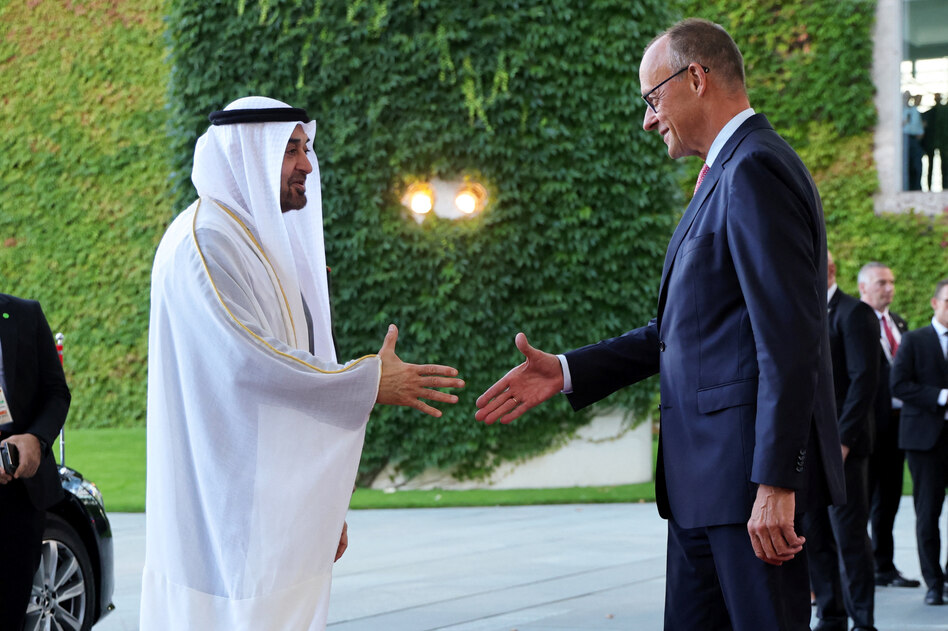
Large-scale helicopter surveillance, extensive barriers in the center of Berlin and protests: the state visit of the President of the United Arab Emirates (UAE) to Germany aroused emotions far beyond the fame of the Arab Gulf state. In any case, opinions differ about Sheikh Muhammad bin Zayid bin Sultan Al Nahyan.
While Federal President Frank-Walter Steinmeier and Chancellor Friedrich Merz underlined the importance of the UAE for the stability of the Middle East in their meetings with the head of state from the Gulf, human rights organizations sounded the alarm. Both sides made it clear in advance that they wanted to take their relations to a new level - despite human rights violations in the Emirates and allegations of genocide in Sudan.
The UAE is even more economically important for Germany than the larger Saudi Arabia: According to the federal government, the bilateral trade volume was 13 billion euros last year - with a significant export surplus in favor of German companies. In 2025, the UAE delivered more oil to Germany than Saudi Arabia.
On Thursday, the United Arab Emirates also announced that it wanted to invest 40 billion euros in Germany. So far, the Gulf state has invested around 34 billion euros in the German economy.
The Mubadala sovereign wealth fund is planning to develop modern technologies for the production of green hydrogen with Siemens Energy. The state-owned Emirati oil company Adnoc has taken over the Leverkusen-based specialty chemicals company Covestro. Further billion-dollar deals, for example in data centers and in the defense sector, are to be signed at an economic conference in Munich on Friday. Emirates, the airline from Dubai, is to be given landing rights in Berlin after years of resistance from Lufthansa.
A stronger relationship between the UAE and Germany could help “connect Europe’s industrial and technological strengths with capital, energy and growth opportunities across the Gulf, Asia and Africa.” Lana Nusseibeh, Minister of State in the Emirates' Foreign Ministry, said this in Berlin.
But it's about more than just economics, says the State Minister: "The Emirati-German strategic partnership is developing from shared intentions to joint action." In addition to a German-Emirati investment council, a strategic dialogue on foreign policy issues, energy, economics and the environment should also be permanently established.
Human rights organizations don't get caught up in fine words. Instead of closer cooperation, Germany should “state unequivocally that it is prepared to impose sanctions on Emirati actors who provide weapons and fighters in support of atrocities in Sudan.” This is what Philipp Frisch, Germany director of Human Rights Watch, calls for.
“Germany is courting a regime that finances the Rapid Support Forces (RSF) in Sudan and equips them with weapons,” says Sarah Reinke, human rights director at the Society for Threatened Peoples (STP). The STP organized a demonstration against Al Nahyan's state visit on Thursday afternoon - because of the extensive cordon around the Chancellery, it had to take place in front of Berlin Central Station on the other side of the Spree.
The UAE-backed rebel militia RSF is accused of genocide, war crimes, serious human rights violations and forced displacement. “Without the support of the UAE, the RSF militia could not continue the war with this cruelty and to this extent,” said Reinke. At the same time, the Emirate of Dubai in particular receives large amounts of gold from Sudan.
In addition, according to Human Rights Watch, the federal government must demand the release of human rights activists and dissidents, some of whom were tried in mass trials. The UAE is also in focus because of “modern slavery” due to migrants working in sometimes scandalous conditions, for example as housemaids or cleaners. Migrants and guest workers make up the overwhelming majority of the UAE's 11.6 million population, numbering more than 10 million people.
MbZ, as the ruler of the UAE is usually called for short, is pursuing an increasingly assertive foreign policy. This often puts the Emirates at odds with Saudi Arabia, the previous hegemony of the Arab Gulf states.
The UAE has left the OPEC oil cartel, which is dominated by Riyadh. In January, the UAE had to bow to Saudi political dominance and stop supporting the separatists in Yemen, who in turn are helping Iran in its war against the US. In Libya, the Emirates are supporting the rebel General Khalifa Haftar, who is fighting against the UN-recognized government in Tripoli. In contrast to Riyadh, the UAE concluded a peace treaty with Israel by signing the Abraham Accord.
Read the full story at the source →
Source: taz