
Germany · taz · · 1h
Season opening Komische Oper Berlin: Only a few survive
Deutsch (original) · Auto-translated to English
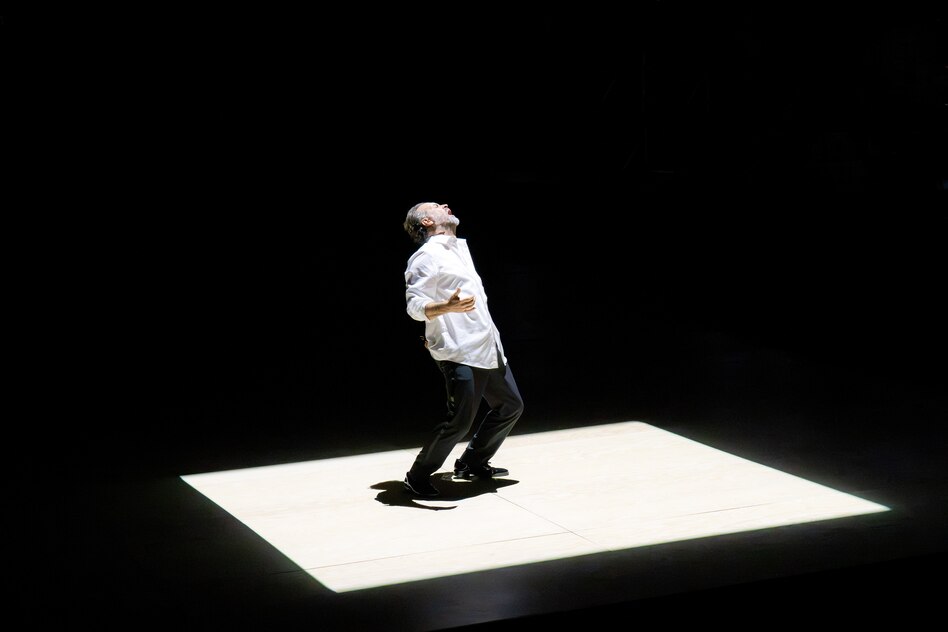
A strange feeling of surprised relief arises when, during the final applause, all the singers turn back into normal people, smiling broadly at the audience. Phew, luckily, it was all just an act! In reality, the world and people are not like that at all; That's true, isn't it?
It is a powerful piece to start the opera season with this work and this production; because if you want to have a nice evening at the opera, you've come to the wrong place. William Shakespeare's “Lear” is a drama that couldn't be blacker. Giuseppe Verdi once failed to translate the dark tragedy into music; Aribert Reimann succeeded almost a century later on the basis of Claus H. Henneberg's dramatically condensed libretto. Reimann's “Lear” had its premiere in 1978 and, although not very often, has appeared on stage quite regularly since then for a 20th century opera.
A huge stage has spread out in the hangar at Tempelhof Airport, which remains almost painfully unfurnished throughout the evening. Barrie Kosky's production uses almost no props, apart from a chair here and there. In contrast, the stage (by Rebecca Ringst) itself lives - and thus reflects the restless mental landscape of the characters.
A narrow upper stage can be moved across the entire width of the podium as a movable long catwalk. If necessary, square panels open up in the stage floor, with abysses yawning beneath them. The huge percussion apparatus was removed from the orchestra and placed on the other side of the hall, where each musician has his own cell in two tower-like scaffolding. This has a fantastic surround effect. There is no escape from the acoustics either.
The isolation of the figures in space is an overarching concept of the production, evident in the first scene in which King Lear (Scott Hendricks) divides his kingdom among his three daughters and, of all people, rejects his favorite daughter Cordelia (Penny Sofroniadou) because she is the only one unwilling to embellish her love for him with flowery words. During this event, everyone stands at the maximum possible distance from each other, and even afterwards, where possible, the Corona distance is always maintained at multiple times.
This makes the effect all the stronger when later, when the confused old king meets the unjustly rejected Edgar (Aryeh Nussbaum Cohen), son of his friend Gloster, on the heath without recognizing him - that is, when these wretches support each other physically. Edgar (spoiler: one of the few survivors of this bloody tragedy) is by far the most interesting character in Reimann/Henneberg's version of Shakespeare's material; among other things because it is a part for a countertenor. On the one hand, this can be seen as a wink towards the baroque opera tradition, in which the hero role was usually played by a castrato. At the same time, Edgar clearly sets himself apart from the other male leads vocally.
Vocally, this opera must be an enormous feat for everyone, and it would be inappropriate to highlight individual performances from the great ensemble. Most of the time the singing parts are as violent as the action, and it is puzzling how the singers manage to memorize the seemingly arbitrary lines and jumps. On the other hand, hardly anyone would notice a wrong note - perhaps not even the conductor, Nicolas Carter, who explains in the program booklet that even after months of studying the score, it is still difficult to recognize which range of notes the composer has assigned to certain figures.
But that doesn't matter, because Carter lets the orchestra roar, rage, whisper, and complain, so that despite all the brutality of what's happening on stage, it's a great musical joy. What the singing characters cannot say, the instruments take over, playing the troubled human subconscious from the side into the scene. Or is it nature, bigger and smarter than people in their delusion, but condemned to act in the background? There is no hope this evening. But that is impressively consistent.
Read the full story at the source
Source: taz