
World · taz · · 2h
Spanish wine: Sherry, Sherry, Lady
Deutsch (original) · Auto-translated to English
The Alcázar, a fortress with towers and battlements made of light sandstone, towers over the city of Jerez de la Frontera. The 12th century building is reminiscent of the time when the Moorish culture shaped Andalusia. Nowadays, Vinoble, one of the few sherry fairs with international resonance, takes place here every two years. And this year there is a spirit of optimism within the old walls.
Or is it an especially now mood? A young generation of winemakers is in the process of dusting off sherry's image. Sales figures have been declining since the 1980s and the area under cultivation has also shrunk significantly. Sherry has a reputation for being good only for cooking or for being drunk primarily by older women and retired English officers who cling to traditional customs.
It is also considered by many to be a dessert wine. Sherries have an enormous range, from bone-dry to raisin-sweet. There are probably few drinks that are as misunderstood and polarizing, adored and quickly forgotten as a fleeting romance. “I know many people who swear they love sherry and then drink half a glass of it once a month,” says Raúl Moreno.
The 46-year-old looks far beyond his own bodega. He spent over 20 years traveling in London, Australia, Burgundy and California, first as a sommelier and then as a winemaker. Today he belongs to the Unión de Vinificadores Artesanos, an association of small, independent wineries that are looking for ways out of the crisis with unconventional views.
Sherry is one of the alcohol-fortified wines, which are also called liqueur wines. Andalusian sailors took it with them on great voyages as early as the 14th century: The region's white wine was enriched with distillate to make it more durable. To this day, sherry is fortified with brandy - from 11 to 13 to up to 18 percent alcohol.
Other well-known fortified wines include port and Madeira. However, they differ in their origin, the grape varieties and the cultivation. For example, port wine is usually based on red wine, but sherry is always made from white wine grapes. Sherry can also only be produced in the Andalusian province of Cádiz, in the Sherry Triangle, which spans only around 100 square kilometers between Jerez de la Frontera and the Atlantic coast. Incidentally, sherry also gets its English name from the city's Moorish name, Sherish. In Spain it is simply called: Jerez.
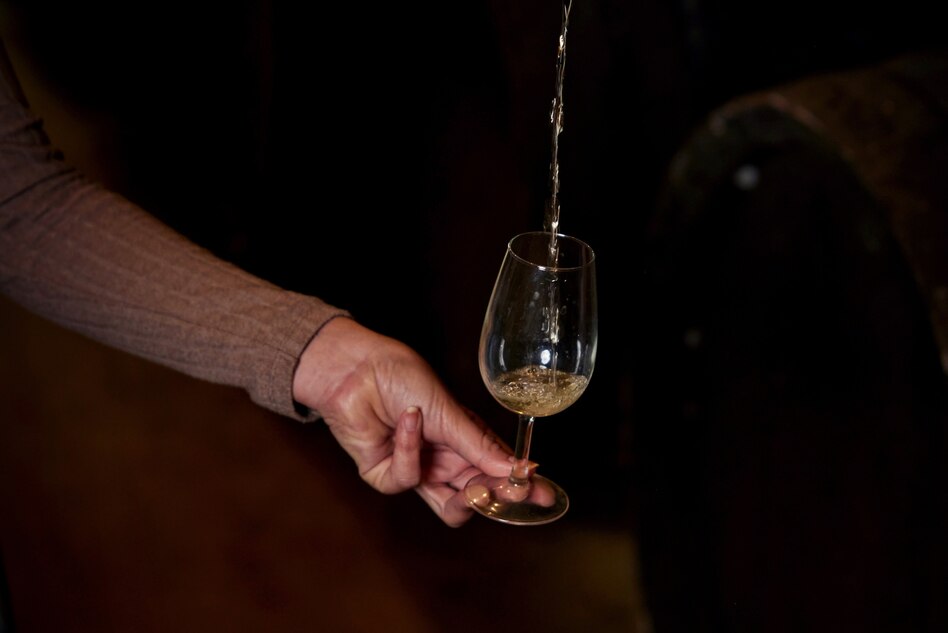
Another special feature of sherry is that it is matured using the solera process, a sophisticated system in which old vintages are combined with younger ones. In the winery cellars around Jerez, huge staircases with several hundred barrels are piled up; the bottom row is called solera.
Every year the Solera wine is taken and bottled. The barrel is filled with sherry from the next floor up, which in turn is filled with the one above. This cascade of wine blends guarantees consistent quality as weaker vintages are balanced out by better ones.
The Palomino Fino grape variety is grown for dry sherries, while Pedro Ximénez and Moscatel are used for sweet sherries. When it comes to dry sherries, there are two main styles: the brutally dry Finos and Manzanillas, matured organically under a veil of yeast, and the spicy, smoky Olorosos, aged oxidatively with oxygen. In between lies the nutty Amontillado and the more complex Palo Cortado, which initially develop under flor yeast and later oxidatively. Sweet sherries used to be one of the export hits and often adorned British coffee tables with their beet syrup-like consistency and engaging honey sweetness.
This text first appeared in wochentaz, our weekly newspaper from the left!
Every week, wochentaz is about the world as it is – and as it could be. A left-wing weekly newspaper with a voice, attitude and the special taz view of the world. New every Saturday at the kiosk and of course by subscription.
The fact that it encompasses such a variety of styles is one of the reasons why Sherry struggles so much. Complex wine is difficult to grasp and explain in a world that no longer has time to listen and understand. “Although aromas such as saltiness and bitterness fascinate connoisseurs, they can be stressful for many,” says Thomas Götz, lecturer, journalist and expert in the Spanish wine world. That's why many younger Spaniards preferred fruity, unfortified white wines - which is also due to the general trend towards alcohol-free or lower-alcohol drinks.
Many wineries in Andalusia are responding to this. “They have a two-pronged approach and produce wine and sherry,” says Götz. “But it’s crazy to charge less for a sherry that requires five times as much effort and aging time.” Sherry as a model of loss: This is also a symbol of his Janus-faced appreciation.
After a long wrangling, the EU has now approved lower alcohol levels for sherry in order to give it more chances in the already highly competitive market. Centuries-old traditions and rules are now hesitantly being weakened. The younger generation is using the resulting freedom with unconventional, handcrafted sherry.
The innovators focus on the terroir - i.e. the specific properties of the cultivated soil, the microclimate and the slope - and limit rework in the wine cellar to a minimum. Some even forego the complex solera mixing process in order to express the characteristics of the individual vintage. This results in less standardized wines. Sherry in a new interpretation.
In the vineyard itself, the young winemakers work with a lot of manual labor according to organic guidelines - including Raúl Moreno. He wants to do something to counteract the “industrialization of viticulture,” he says. And consciously breaks rules. For example, in Andalusia, Moreno plants unauthorized grape varieties such as Pinot Noir and Chardonnay, from which he is only allowed to make table wines, which are harder to market. Moreno does it anyway “to break the monopoly of 99.9 percent Palomino and allow new possibilities.”
If you drive through the vineyards, the white soils immediately stand out. It looks like a huge sack of lime has been spilled. They are chalk soils, known as albariza, with an enormous proportion of limestone. They are the real treasure of Andalusia, especially today. Albariza has an enormous ability to store water, explains Thomas Götz, and absorbs it like a sponge. Despite climate change and scorching hot summers, the sherry region “doesn’t have to worry too much”.
Vino de Pasto, a non-alcoholic white wine made from the Palomino grape, has become a trump card for the countermovement. Vino de pasto has always been a silent companion of sherry, now it is becoming increasingly important in the new interpretation and is also in demand in the natural wine scene. Like sherry, many Vinos de Pasto mature under flor yeast, but only for a few months. Nevertheless, they are unmistakable and at the same time more contemporary in style: gripping, salty, mineral.
“The solera system may have made Andalusia famous, but we are proving that exceptional soils also produce unique wines,” says Raúl Moreno. “Sherry would be dead without vino de pasto.” Thomas Götz, on the other hand, considers white wine to be “a supplement that helps stop the downward trend”.
And Sherry herself? “It will never be a mass-produced wine, it will remain a connoisseur’s drink,” says Götz. He observes a tense market situation, but “also an increase in quality”. The crisis has also sharpened the profile of sherry; in Japan, for example, it is reaching a new, young clientele. And something else, says Götz, gives him confidence: Sherry is still a subject in Spanish school books.
Read the full story at the source
Source: taz