
Germany · taz · · 3h
Sookee about her birthplace: Mecklenburg. Liver sausage. Thirst for life. Just talk
Deutsch (original) · Auto-translated to English
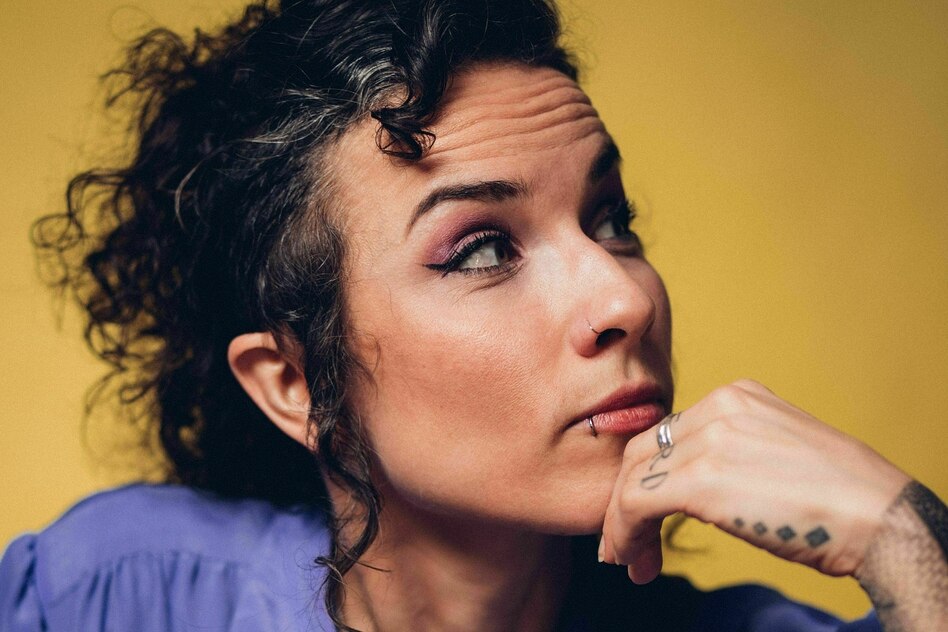
Pasewalk. coniferous forest. penitentiary. Bellows. The place where I was born in 1983, in a hospital that, according to my mother, looked like a factory, was barely suitable for finding rhymes or making fun of people throughout my life. Pasewalk – try saying that in English, it’s funny.
I have no connection to this place in Western Pomerania. But I often entered it on government forms. I spent a little over two years of my life there until my parents moved over in 1986. No Pasewalker would understand me as a daughter of the city.
I also don't think that real Pomeranians see me as part of their group. People from Mecklenburg don't even care. Not least because my mother, who comes from Brandenburg, and my father, who can still hear the Saxon they grew up in, don't use the long e in the first syllable. I took it from them incorrectly and my body memory settled on “Mäcklenburg”. Worse still, sometimes I affectively shorten the entire federal state down to Meck-Pomm. Mecklenburg. Liver sausage. Thirst for life. Just talk.
After the elections in Saxony-Anhalt and Mecklenburg-Western Pomerania, there is a threat of an AfD government for the first time. The taz reports what is at stake - and who is now defending democracy. All texts about the series can be found here.
Dear people who live there in the northeast: forgive me. I was born in your area under bad circumstances, most by chance. And after my parents left the country, who were then listed as recognized Soviet zone refugees in the West, I never returned. Pasewalk is written on my person and on two exit signs on the A20. I'm ashamed of it, but I've never found my way back there.
My parents met in Braunsdorf, Thuringia, where, under the protection of the community led by Pastor Schilling, all sorts of oppositionists gathered to dream their way out of real socialism. Or to offer concrete resistance. If that was possible in this unjust state.
My mother left the youth organization of the Socialist Unity Party when she was a teenager and had to accept that her further education and career path would be limited. When my father followed his convictions and refused to serve as a reservist, the military court in Halle sentenced him. After the following one-year prison sentence, my parents initially lived in Thuringia again.
But my sister was constantly sick as a baby because of the miserable industrial air. The physically difficult work in a nursing home became a strain for my father, and so my parents asked their church employer for a change of location. The Greifswald regional church offered a job, so we came to Pasewalk. A place with better air, but still dictatorship.
When my parents' application to leave the country was approved, we had twelve hours to finally leave the GDR. We ended up in West Berlin, where I grew up and lived with my mother for over 30 years until I moved to Brandenburg. Although without regional connection to Pasewalk or Mecklenburg-Western Pomerania patriotism, but with the growing connection to the East. An East in which down-to-earthness, pragmatism, creativity, warmth, cockiness and - sigh - solidarity were part of many people's everyday lives, even without party doctrine. You have a hammer, he has a nail, I have a board - come on, let's build an arbor. To be honest, I don't care a bit whether it's called Bernau, Demmin, Burg, Döbeln or Gera.
There is certainly a lot of romanticizing, unifying glorification involved, but ultimately the people from the East were protected from capitalist destruction for over 40 years. And at the same time the GDR imprisoned them, spied on them and banned them from thinking. As a mid-forties woman who grew up in West Berlin, I can confirm that such experiences are passed down through generations.
For my parents, the questions of what freedom was, what bondage was, and how individuals could live well in and for the collective were always of great importance. The dinner conversations about the experience of real socialism and the disappointment about the not-so-social market economy were an important part of my political socialization. They made me become an anti-fascist when I was young. Through them I learned to understand capitalism as an exuberant and unlimited illusion of progress.
Over the years, I have watched the West exclude and then laugh at the East. There is nothing that the Wessis have copied and adopted from the Ossis with recognition and respect. The Ossi was first the stupid farmer and then the no less stupid and also thugging Nazi.
This text first appeared in wochentaz, our weekly newspaper from the left!
Every week, wochentaz is about the world as it is – and as it could be. A left-wing weekly newspaper with a voice, attitude and the special taz view of the world. New every Saturday at the kiosk and of course by subscription.
The fact that right-wing and right-wing extremist parties have taken advantage of the humiliation of these attributions is only logical in an authoritarian logic. The fascistation of the East is like this accident where everyone stares and then denies that they weren't looking ahead at the street. Until they drive themselves up somewhere. The AfD may not be as strong in numbers in the West, but Mölln and Hanau are not in the East German provinces. And right-wing ideologies could also be reliably found at Bavarian and Swabian regulars before 1989.
The narrative about the East along the lines of the mouthy loser and the empty-headed boot Nazi was never a lie, but to its extent it has become a self-fulfilling prophecy. And now we have the shit. The whole world is watching Mecklenburg-Western Pomerania and Saxony-Anhalt. Either hoping or fearing.
I have certainly often fantasized about what would have become of me if my parents had settled in Pasewalk and stayed. Would I have moved to a big city at some point like so many women? Or whether I would have remained connected to my place of birth and would now not watch the state parliament thriller from further away, but would be directly affected as a voter and resident. I would probably have been annoyed by the sensationalism that surrounds the world's view of my birthplace.
Soon after the election, the media attention will disappear faster than you can say “coalition talks.”
It's time for me to travel to Pasewalk again. Away from the media hype. Aside from the German homeland survey that the AfD is forcing us to do. Because of my family history. And to see if the hospital factory where my mother gave birth to me is still standing. And to see where I can join forces with people who didn't grow up relaxed in Berlin-Tempelhof. Whose families stayed. Despite the vilification from the West and the invisibility and despite the effort of having to prove again and again that not everyone over there is Nazis.
People who share political positions and cultural interests with me. They know even better than me what it means when your family comes from a country that no longer exists.
People I almost belonged to.
Read the full story at the source →
Source: taz