
World · taz · · 57m
Swedish-Finnish maneuver: Visiting the NATO northeast flank
Deutsch (original) · Auto-translated to English
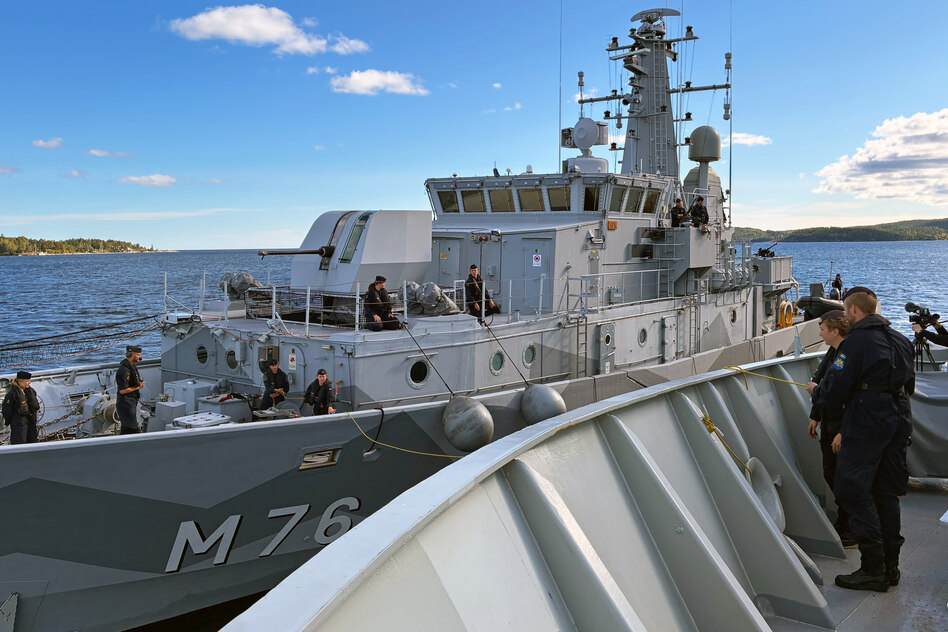
Slowly, looking powerful, she approaches the quay, the “MS Trossö”. A warship in the city center! Unmissable for the people who go about their everyday civilian life on this September day in Sundsvall. The newspaper of the city of 100,000 inhabitants explains on its portal any eyewitnesses who may still be unsure: It's just an exercise.
Gustav Thörnblom doesn't mind getting so close to the civilian population up here on Sweden's east coast. “We like to show off,” says the chief of the Second Marine Base Battalion. You could probably guess that, because the reason for his ship's trip to the city was to pick up the press. In addition to the taz, a reporter from Swedish television and one from the regional newspaper Sundsvall Tidning are going on board. There you will find coffee, safety instructions and information about the purpose of the exercise.
Mine clearing is being trained – for the first time together with the Finnish Navy. The sea route from here to its neighbor on the other side of the Gulf of Bothnia should remain open and safe under all circumstances. In a military emergency around the Baltic Sea it would be an important supply line. Around 300 people take part in the ten-day maneuver: officers, the crew and conscripts.
They are spread across four minesweepers, three reconnaissance boats and the “HMS Trossö” – the accompanying supply ship. In addition to fuel and food, it even has a small operating room on board - although this time there is no one there who could operate in an emergency. In peacetime, they rely on medical care on the nearby coast.
These days, conscripts in particular should be prepared for their role in a potential war. Vilma is one of them. She is familiar with sea life, she says on the bridge of the “HMS Trossö”, and her family has their own boat. When the 20-year-old was drafted, the Navy was her preferred placement. She now spends six of her eleven months of service on the supply ship, where she has to report special observations to the captain, for example. She also has duty on deck, for example when docking and casting off.
She doesn't feel like she's in the minority as a woman. Everything is very equal, especially in the Navy, she says. The reporter also sees small signs on the toilet doors on the ship as an indication of this: “This toilet is prepared for menstruation”. Inside there is a cabinet with tampons and pads.
This “Mine Clearance Exercise North 2026” is led by Commander Anders Barrestedt. When he joined Sweden's navy in the 1990s, he did so because he wanted to work at sea. This is what the head of the 42nd Mine Clearance Division says after switching from the large “Trossö” to the much smaller mine clearing boat “HMS Ven”.
The transfer: Put on your life jacket, secure it to the supply ship with a hook, transfer over a small gangway, take the hook off again. Luckily at least the sun is shining. The temporary connection maneuver between the two ships at sea is also one of the things that conscripts learn here. Barrestedt has always liked his job, but a lot has changed in recent years: Not only are the civilian population more interested, they themselves also have a much more clear idea of what they are doing it for when they work. This exercise, for example, together with Finland, strengthens the joint capabilities and thereby those of NATO in Northern Europe.
Because that's the difference: Russia's attack on Ukraine in 2022 forced all of Europe - the countries individually as well as the EU - to reorient themselves in terms of security policy. This marked a particularly stark turning point for Sweden when the country gave up its long-held neutrality and joined NATO in 2024 - shortly after the other new member Finland.
Since then, the mission of the Swedish naval force has no longer been just to defend its own coast. Now it's about common security across the entire Baltic Sea, about protecting NATO's northeastern flank, which has been significantly extended with Finland. Only since then have their maneuvers taken place this far north of Sweden again. The population is slowly getting used to the sight.
Sweden and Finland have decades of defense cooperation. A common situation report on their region, exchange of information, cooperation in surveillance - all of this was common practice. Joint maneuvers, like this mine-clearing exercise on the Swedish coast, are still new. Sweden not only joined NATO - it also significantly increased defense spending and began rebuilding its own armed forces, which had been reduced over decades. This includes steadily increasing the number of conscripts drafted every year. According to official information, the current vintage is now the largest in decades at 9,000.
Mia is one of them: She stands on the deck of the “HMS Ven” with a view of the water. Land is in sight, green with colorful wooden houses, a scenery like a Swedish late summer trip. The recruit works with joysticks. It's like driving a remote-controlled car, she laughs, born in 2006. What she's controlling remotely is a large underwater tracking device. It will use sonar technology and a camera to provide information about objects on the seabed.
Mia learns this from someone almost the same age who has already completed her military service and is now traveling as part of the team. Learning objective today: How to get the valuable tracking vehicle to its place of use - i.e. under water. A technical officer then takes over in the operations center below deck. Whether a mine is easy to discover depends on many factors: where they are, what the weather is like, and what the soil is like. Even the fresh water that flows from rivers in this area into the Baltic Sea influences the sonar device. Commander Barrestedt explained at the beginning that it was all the more important to get to know the different conditions on the long Swedish coast.
They set out dummies to practice. Stones, bulky waste and other militarily insignificant finds are also observed. However, it is unlikely that they will still find mines from one of the two world wars so far up north. But they also play a role for the Swedish armed forces, for example when they take part in an annual NATO exercise further down in the Baltic Sea, says Anton Holmberg in front of a row of monitors in the operations center. The captain of the “HMS Ven” also emphasizes that mine clearance is not the only task. In these times, when acts of sabotage, the Russian shadow fleet or other inconsistencies continue to cause unrest on the Baltic Sea, they are responsible for keeping an eye on Swedish waters as a whole.
The “MS Ven” and the “Trossö” were parked for press work that day. The three other minesweepers, including the one from Finland, stayed further out with the reconnaissance boats. They are also practicing how to deal with drone attacks there these days. However, this was done behind closed doors to the public. Their representatives are finally picked up by a surprisingly small dinghy. Life jackets back on, but this time only human hands hold the ring at the top while the landlubbers climb down a rope ladder from the minesweeper. The dinghy captain completes her task at breakneck speed, the spray is spraying. First she takes the guests into the city, then she and her boss Gustav Thörnblom back to the “MS Trossö”.
Before saying goodbye, Thörnblom explains that the changed security situation has contradictory consequences for him. Actually, she is no reason to be happy at all. But from a professional perspective it is positive because they get more opportunity to practice and improve their skills. Would he also have the impression that the population valued their work more than before? “Yes, absolutely,” says Thörnblom. Then he goes back to his workplace, which is also his home during the exercise. The “HMS Trossö” is no longer visible from the city center. But it's there, people know that now.
Read the full story at the source
Source: taz