
Politics · taz · · 2h
Sweden before the election: Rough tone in the far north
Deutsch (original) · Auto-translated to English
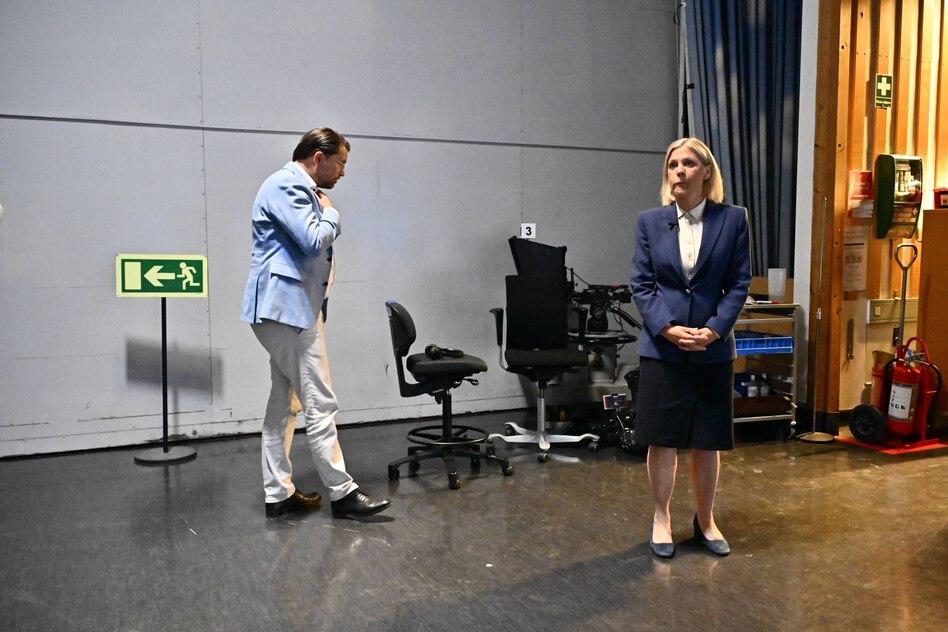
Right or left? Sweden will elect a new parliament on Sunday. The question of which side will win has become particularly explosive since “right” in Sweden no longer just means classic conservatives, but also includes the Sweden Democrats. After advancing to the center of political power in 2022, the right-wing populists could now have their own ministers for the first time.
So far they have been on the sidelines, but as the government's official majority procurers they have already had a strong influence on its politics. The name Tidö government refers to the place where this cooperation was negotiated. It is led by Prime Minister Ulf Kristersson's Moderates, in coalition with the Liberals and Christian Democrats.
After four years, the opposition, led by Magdalena Andersson's Social Democrats, seemed certain to return to power. But in the final stretch of the election campaign, the center-left bloc's lead, which at times reached double-digit percentages, continued to shrink. According to the latest survey commissioned by Swedish broadcaster SR, the right-wing spectrum is only 3.2 percent behind. Accordingly, the Tidö parties together come to 47.6 percent, the red-green side with the Social Democrats, Center Party, Greens and Left Party together to 50.8 percent.
However, there is no agreement on this side about how to properly deal with a victory - the Social Democrats actually do not want to continue to govern with the Left Party. There is speculation about possibilities in the middle. With just under 29 percent, the Social Democrats are still the largest party in Sweden. The second strongest force, with around 20 percent, has long been the Sweden Democrats, to whom many former social voters have switched.
The Tidö government took office in 2022 with the aim of eliminating gang crime - “law and order” is the watchword. At the same time, the problem was repeatedly linked directly to the migrant population. The second major goal was to “clean up” migration policy.
The number of murders by organized crime fell during the mandate period. Criminologists actually see improved police work as the decisive factor, rather than legislative measures such as significantly harsher punishments. The fact that criminal foreigners should be deported is not a controversial issue in the country. There is also broad consensus that Sweden should not return to its previously very generous admission policy.
But the Tidö migration policy had more far-reaching consequences. In combination, several changes in the law led to many people who had long been integrated and working suddenly losing their residence permit. Critics warn that the Sweden Democrats are essentially trying to get rid of as many “non-ethnic” Swedes as possible. And that they would become more and more radical the more power they got.
If the right-wing bloc wins the election, SD party leader Jimmie Åkesson is demanding at least twelve ministerial positions. For a part of society, the main issue is that this is prevented. In the days before the election, many cultural workers spoke up on social media and recalled that the Sweden Democrats repeatedly denigrated journalists, wanted to shrink public broadcasting and treated scientific findings as opinions.
Opposition leader Magdalena Andersson says Sweden would be a completely different country if the Sweden Democrats – “a far-right party founded by neo-Nazis” – dominate the next government. Among the population, the health system and the Swedish economy are high on the list of the most important election issues. The current government has failed to combat unemployment, but it has lowered gasoline prices.
There are a lot of complaints in Sweden these weeks about the harsh tone that also characterizes the seemingly endless number of party-political television debates. For many, this is another reason to look forward to election day. True to the motto: Then it's finally done and we can talk about something else again. Polling stations are open on Sunday from 8 a.m. to 8 p.m. In addition to parliament, the political leadership of the regions and municipalities will also be re-elected on Sunday.
Read the full story at the source →
Source: taz