
Germany · taz · · 54m
Sweden before the general election: on the move
Deutsch (original) · Auto-translated to English
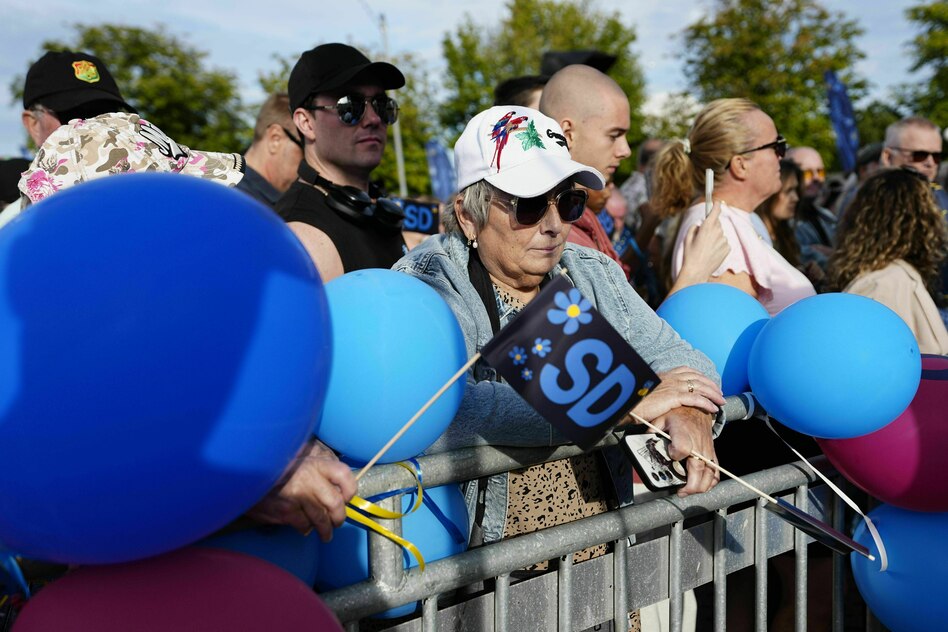
"Are you longing for Mogadishu? The return bonus will help you get home." They have come a long way, the Sweden Democrats with their roots in the white power movement and with neo-Nazi sympathizers among the early leaders. In 2026, with such a campaign message, they will no longer be a small, right-wing fringe party, but the second strongest in the country, with around 20 percent of voters' favor. And they want to rule.
They have already helped shape government policy over the past four years, as contractually guaranteed majority sources for the liberal-conservative coalition. During this time, Sweden turned financial support of 1,000 euros for foreigners who want to return to their country of origin into a 30,000-euro return bonus. This was done at the instigation of the Sweden Democrats - even though independent experts had warned that it would achieve little and would instead contribute to dividing society.
In August, this Mogadishu message suddenly appeared on buses in Skaraborg, western Sweden. 20 bus drivers with Somali roots called in sick in protest - they were afraid of attacks and insults. The transport company finally had the election advertising removed and the Sweden Democrats spoke of censorship.
In its early days, after its founding in 1988, the party was not liked by many Swedes, says political scientist Anders Sannerstedt from Lund University to the taz. They were called racists, shunned by the established parties and had hardly any voters. “In order to grow, they had to get rid of that neo-Nazi stamp.” This took a considerable amount of time, but the party ultimately largely succeeded.
In 2010, the Sweden Democrats made it into the Reichstag for the first time with 5.7 percent. Sannerstedt sees the 2014 election as the first turning point for the political landscape across the country, in which they suddenly became the third strongest force with 12.8 percent. “It sent like a shock wave through the other parties.” The effect intensified in 2015, when a large number of refugees arrived in Sweden.
“The fact is,” says the political scientist, “that the generous view of refugee policy that was long held in Sweden never had the support of a majority of the population.” The growing success of what was previously the only party that stood for an end to open migration policy had caused social democrats, moderates and Christian democrats to rethink their thinking. “If they hadn’t changed anything, they would probably have lost even more voters.”
A “tighter” migration policy has not only been implemented since the current government started in 2022. But then it really started - both in the areas of crime and migration: a sharp increase in penalties, prison even for young people, more surveillance options for the police, higher minimum salaries to obtain a work permit, more difficult family reunification, the obligation of some authorities to report people without valid papers, the abolition of the concept of "permanent residence permit".
Last but not least, lawyers criticize the high pace of the legislation and the ignoring of common investigations and comments from independent authorities. Political scientist Sannerstedt doesn't even believe that the other parties on the liberal-conservative side would have to bend very much to work with the Sweden Democrats. They aren't that far apart from each other.
The Sweden Democrats are now hoping for the next political career leap under their long-time leader Jimmie Åkesson: If the conservative-right camp wins the race, the Sweden Democrats will have their own ministries for the first time.
That's how it's discussed. If they win the election, the Sweden Democrats are demanding at least twelve ministries. Among the applicants are those who still say today that there are too many people in Sweden who are not part of the ethnic Swedish population.
Read the full story at the source →
Source: taz