
Germany · taz · · 41m
Netanyahu and Radical Settlers: Radical Ignorance
Deutsch (original) · Auto-translated to English
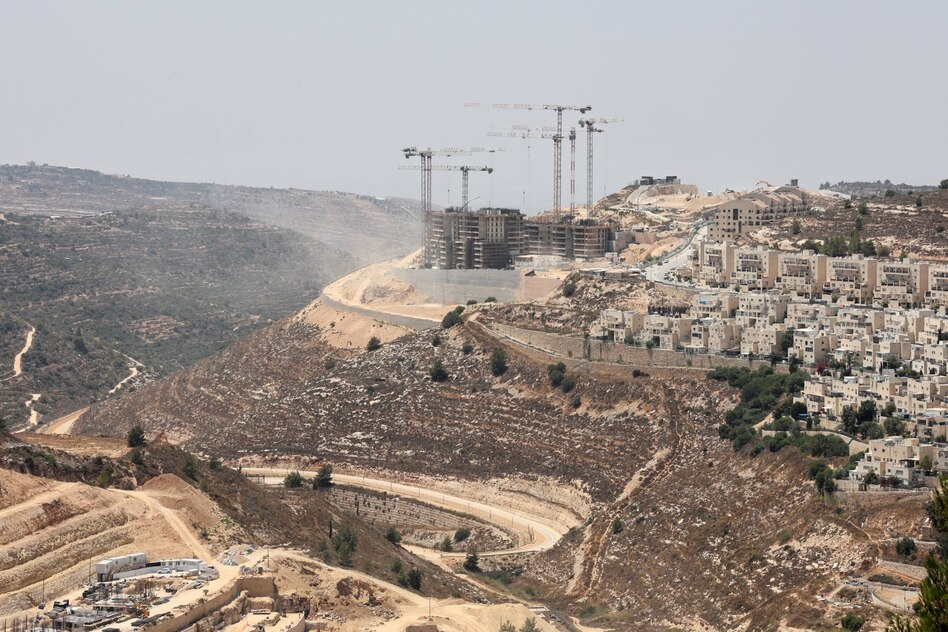
The Israeli prime minister rarely condemns settler violence, and when Benjamin Netanyahu does, it is usually grudgingly - and only after incidents that attract global attention. This statement at the end of August was unusually strong: “I strongly condemn the criminal acts of violence that were committed in the villages of Kusra and Jalud by a handful of rioters and violated the law,” he said, while Israeli settlers, the “handful of rioters,” had been besieging three Palestinian families for weeks.
But apart from the sharp words - little action. When the Israeli military arrests someone during settler attacks, it is often Palestinians.
But now more and more countries want to boycott products from the settlements: Great Britain, France, Canada, Denmark and other countries recently published a joint statement on Tuesday. Israel responded by closing the British consulate in East Jerusalem. The violence is also uncomfortable for the USA because it is increasingly affecting US-Palestinian dual nationals. US Ambassador Mike Huckabee, himself an advocate of the settlement project, recently spoke of “terrorism”.
It is no wonder that Israeli politicians shy away from direct confrontation with the settlers. The coalition agreement stipulates that the Prime Minister will “work toward the development and promotion of policies that extend sovereignty to Judea and Samaria.” In official language: annexation. And for this the government needs the settlers.
Settlements are illegal under international law. In Israel, however, not under national law - except for the outposts, such as farms built without a license, where the most radical settlers often live. The current government has pushed the expansion of the former and the subsequent legalization of the latter more than any government before. Before 2022, according to the NGO Peace Now! 127 settlements in the West Bank, in the last four years the administration has approved 104 new ones.
Not every settler is prepared to use violence. When taz was in three settlements and one outpost in 2025, the residents gave different reasons for choosing their place of residence - which was illegal under international law. The Bible often served as justification.
There are even settlers willing to meet with Palestinians to launch peace initiatives and those who support a Palestinian state. But most see the West Bank as Samaria and Judea – as Jewish. The head of the sanctioned settlers' association Amana publicly admitted that farms can occupy more than twice as much land than settlements. Shepherd outposts also often displace Palestinian communities.
Now, however, Netanyahu has surprisingly announced that he wants to dismantle outposts. Because the violence of the settlers is becoming increasingly difficult to ignore or to dismiss as the work of a “handful of rioters”. According to a recent survey by the Israel Institute of Democracy, 46 percent of Jewish Israelis think the state treats violent settlers too leniently. Before the Knesset election, the Israeli parliamentary election at the end of October, this is a size that should interest Netanyahu, who wants to be re-elected.
So the question lingers: Can the radical settlers become a political problem for Netanyahu? At the moment it doesn't look like it. Most Jewish Israelis fear a third intifada in response to rising violence but reject a Palestinian state. And the settlements prevent exactly that with their presence. And if Netanyahu occasionally puts the most radicals in their place, the rhetoric is satisfied without seriously jeopardizing the interests of the settler community.
When and how the demolition work on the outposts will begin is still unknown; we are talking about around 100 hamlets in areas A and B, which are under the civilian administration of the Palestinian Authority. Peace Now! currently has 390 outposts in the West Bank. However, the farms often consist of simple caravans or barracks that can be rebuilt in a short time.
For Netanyahu's right-wing religious coalition partners such as Finance Minister Bezalel Smotrich, who is himself a settler, the demolition work is a nuisance. However, it was only on Tuesday that an Israeli court rejected an urgent application from human rights organizations that wanted to prevent the “E1” settlement project: 1,200 residential units east of Jerusalem can continue to be built.
For political scientist Peter Lintl, the situation could even turn into a win-win situation for Netanyahu. "Netanyahu can use this step in electoral terms: He signals to center-right voters that he is doing something about settler violence - and Smotrich can make a name for himself by protecting them. This is important in order to increase the chances of the right-wing bloc, because Smotrich's party is currently struggling with the percentage hurdle for entering parliament." In the latest polls, the government bloc and the opposition are in a stalemate, meaning neither camp would achieve an absolute majority.
If the forecasts come true, it will come down to the smaller parties. Violence in the West Bank remains a marginal issue for most non-left-leaning Israelis.
What is still completely uncertain is how the scoop from the left-liberal daily Ha'aretz will affect Netanyahu. In a research published on Tuesday, the prime minister is accused of having been warned by a high-ranking representative of the United Arab Emirates in September 2023 of an impending attack by Hamas - without subsequently sharing this warning with security circles. Netanyahu announced a lawsuit against Ha'aretz on Wednesday. The “false story” was “part of the left’s election campaign,” Netanyahu’s statement continued. Whether he can calm down his critics who accuse him of irresponsibility remains to be seen.
Read the full story at the source →
Source: taz