
World · taz · · 46m
Student protests in France: A lot of money and little results
Deutsch (original) · Auto-translated to English
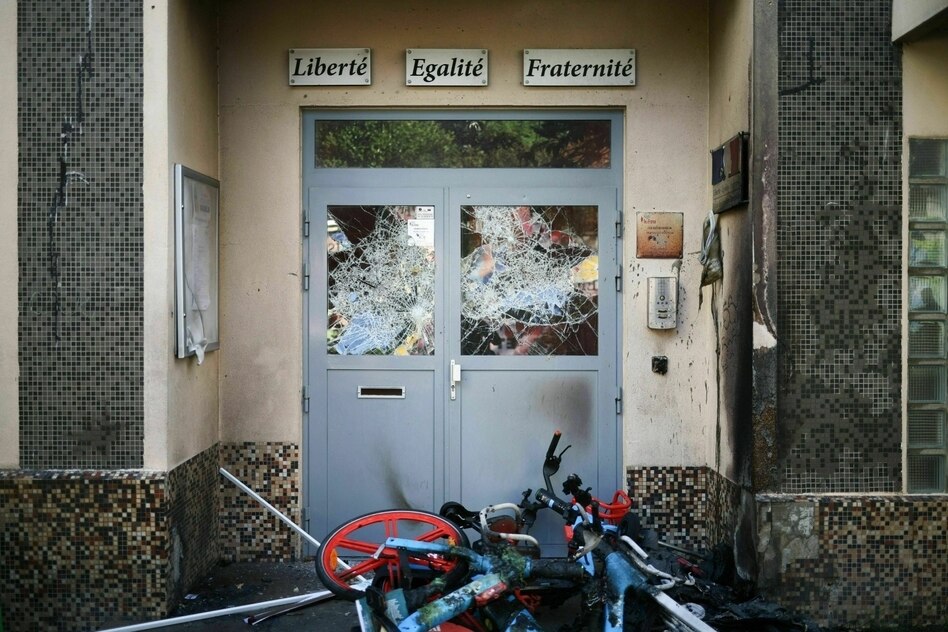
One of the most important demands of the student movement can be summarized with a frequently heard slogan: “More money!” When there are protests about neglected classrooms, broken heaters, toilets or sports equipment and a lack of replacement for teachers on sick leave, the school management responds that they simply don't have the money for it. But is France particularly stingy with its students?
Several media outlets, such as Atlantico and Reuters, have come to an astonishing conclusion in their research: While spending per primary school student in France is in the middle of the OECD compared to the OECD, France spends 24 percent more per middle school student than the average of other OECD countries. So are the protesting middle school students actually more privileged than the younger ones?
Atlantico sees one reason for the higher costs for middle schools in France in the particularly wide range of elective subjects and vocational secondary schools, which are intended to prepare young people for jobs in various sectors of the economy. Nevertheless, youth unemployment in France, at more than 20 percent of the 15 to 24 age group, is well above the OECD average of 11 percent. And in the PISA study, France came in 27th place this year.
The national education system is the first item in the state budget with around 90 billion euros. But what are these resources for? More than a quarter, 25 billion a year, are used to finance civil servants' retirement pensions, as the state pays 82 percent of the contributions to the pension fund of its teachers.
Teachers’ salaries consume around 70 percent of the rest. Nevertheless, these public education officials are comparatively poorly paid. Tensions also regularly arise in secular France because, according to the contract, the Republic has to divert 8 to 9 billion annually for the staff of (mostly religious) private schools. The fact that the government wants to deny all civil servants the cost-of-living allowance in the discussion about the 2027 national budget despite inflation currently at 3.4 percent is seen as a “declaration of war”.
What money is left over to improve the teaching conditions of young people in the public education system is apparently spent very unequally. Equal opportunities suffer as a result. In a lycée in the center of Paris, the conditions are much better than for their peers in the banlieue. Missing teachers are less quickly replaced by substitutes. New teachers with no teaching experience are also systematically sent to the lycées in the outlying districts, while the more senior ones are able to choose where they work.
The cause of the problems can also be found in decentralization that was stopped halfway. Officially, the lycées belong to the regions (comparable in size to German federal states). The regional authorities are also responsible for maintenance and renovations. But there is no efficient coordination between the central state and the regions. And the budgets of the regional authorities, who set different priorities depending on their political leanings, are increasingly lacking the financial resources for tasks that the central state has delegated to them without financially compensating for this.
Read the full story at the source
Source: taz