
World · taz · · 4h
Brussels and Budapest: It's about money, a lot of money
Deutsch (original) · Auto-translated to English
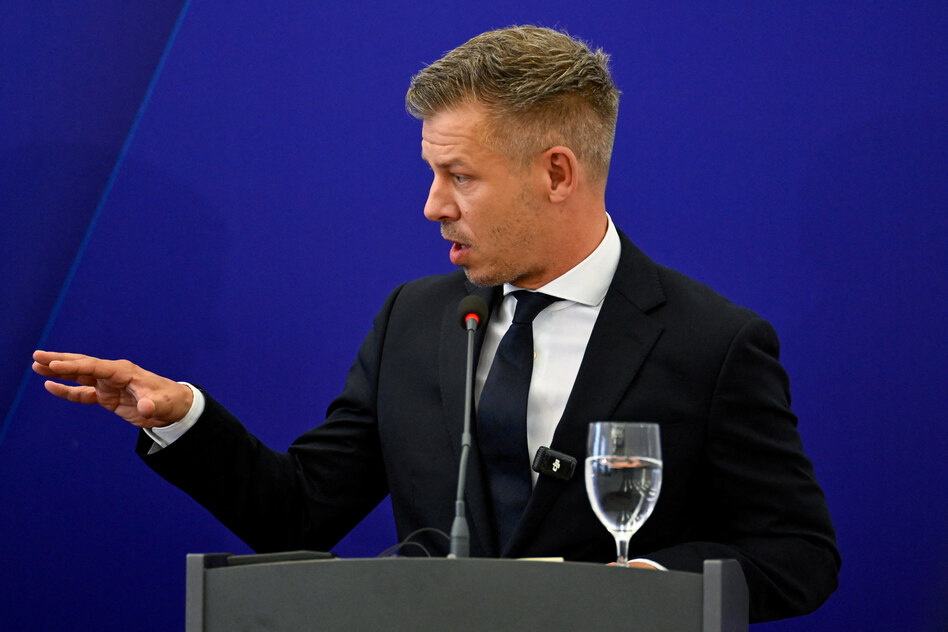
It was not a warm welcome that the new Hungarian government led by Prime Minister Péter Magyar gave the European Parliament. Three MEPs traveled from Brussels to discuss progress on reforms following the fall of Viktor Orbán. But in Budapest they found themselves in front of closed doors. Neither Magyar nor his ministers or MPs from the ruling TISZA party were willing to meet with MPs from Germany and France. Daniel Freund (Greens), Moritz Körner (FDP) and Jean-Marc Germain (Socialists) therefore did not find out first-hand what the state of law and corruption are like in Hungary.
“We had agreed appointments with the government and parliament, but they were canceled again,” says Freund, who organized the trip. Freund also received a rejection from CSU MP Monika Hohlmeier. She is responsible for the EU budget in the European Parliament, but refrained from checking on things in Budapest. It's about money, a lot of money. Under the Orbán government, the EU temporarily withheld up to 19 billion euros from the EU budget due to rule of law violations and corruption. After the change of power in Budapest, the EU Commission announced that it would release up to 16.4 billion euros if reforms are implemented.
At the end of September, the Brussels authorities gave the green light for the payment of 4.2 billion euros. If the 27 EU states agree, the money could flow into the Hungarian state coffers in October. It would be a decisive success for Magyar: before his election, he had promised to get the “frozen” EU funds back. It would also be a reason for joy for the conservative EPP group in the European Parliament. EPP leader Manfred Weber (CSU) announced shortly after Magyar's election that EU money would soon flow. In contrast, the Social Democrats, Greens and Liberals had insisted that the agreed reforms had to be implemented first.
As the visit to Budapest showed, this demand was only met to a very limited extent. Most of the reforms have so far only been on paper, it was said at a meeting with civil society. “Nothing has been definitively settled yet,” said Márta Pardavi from the Helsinki Committee. There are mixed results when it comes to the rule of law. “Magyar wants to have everything under his control,” criticized Sandor Lederer from the think tank K-Monitor. Kim Lane Scheppele, a Hungary expert from Princeton University in the US, also complains that there is a lack of transparency. Neither the government nor the EU Commission have listened to them since the spring election, say Amnesty International and other non-governmental organizations.
The MEPs also painted a mixed picture. Hungary has regained freedom after Orbán's fall, said French parliamentarian Germain. However, the “regime change” to a liberal democracy is not yet complete, warned the Frenchman. The EU must continue to be vigilant. Judgments of the European Court of Justice on asylum law and minority rights (LGBTQ) have not yet been implemented by the new government. This is a problem, said the Green politician Freund. However, after the talks in Budapest, in which the MPs also met entrepreneurs and diplomats, the positive impression outweighs the negatives.
After the election of a pro-European government, it is politically impossible to stop the payment of EU funds, says Freund. “We see enough progress to release funds,” explained Körner. However, this is not a blank check. “The reform process in Hungary is not yet over,” is Körner’s conclusion. The EU must continue to closely accompany this process in the future. However, the European Parliament is no longer likely to play a major role in this. For years, committed EU MPs like Freund and Körner had played a driving role in the new European rule of law mechanism and, despite resistance from the EPP, had EU funds frozen for Hungary and later also for Poland.
But the MPs are not allowed to decide on the release of the financial resources. The EU Commission and member states decide this among themselves. When it comes to implementing the reforms, they are no longer in demand, as the visit to Budapest showed. Magyar has duped parliament, but money is likely to flow from Brussels soon.
Participation in the trip was financed by the Greens in the European Parliament.
Read the full story at the source
Source: taz