
Germany taz
Satellite Internet: EU is looking for alternatives to Bezos and Musk
When the rocket was launched, 40 Internet satellites from Jeff Bezos' Starlink competitor were destroyed. The EU is currently working on a sovereign satellite network. more...
Deutsch (original) ·Auto-translated to English
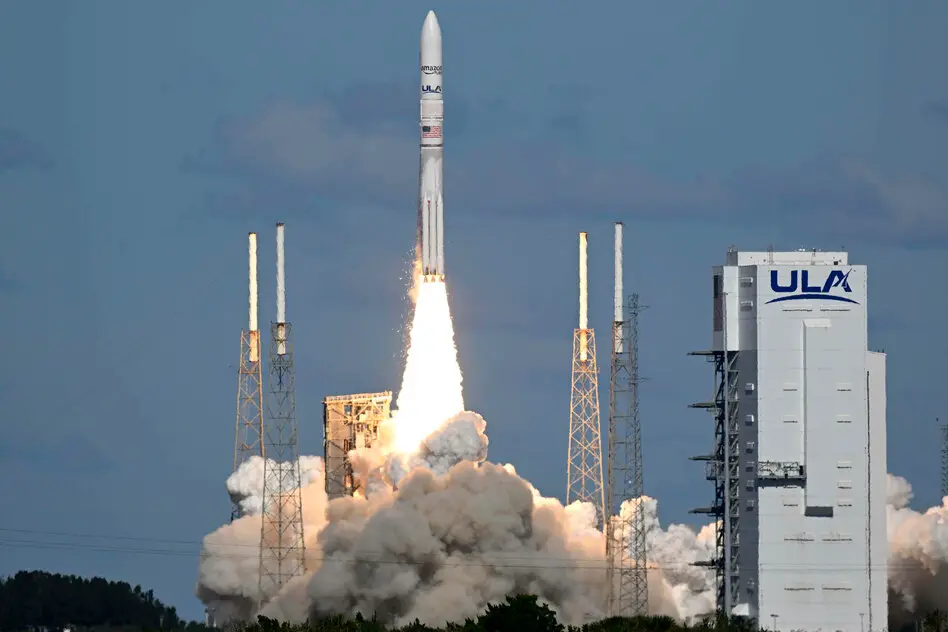
While Elon Musk's satellite launch vehicle "Starship" successfully landed back on Earth for the first time, Amazon boss Jeff Bezos suffered a setback for his satellite internet on Sunday. About ten minutes after launch, an “anomaly” occurred in the “Vulcan” rocket, rocket operator United Launch Alliance reported. As a result, 40 satellites on board the “Vulcan” were lost.
These satellites are part of the Amazon Leo project. They should be transported into low earth orbit (Leo) in order to provide Internet for companies and private customers from there in the future. Amazon Leo is not yet in commercial operation.
Since April 2025, the project has launched almost 400 such satellites into space, with a goal of over 3,200. Musk's market leader Starlink uses comparable technology. Starlink already operates over 9,800 satellites, according to satellite tracker Orbital Radar.
The technology doesn't just provide internet to individuals in remote areas. It also acquired military significance at the latest with the Ukraine War. Ukraine uses Starlink and its military variant Starshield for military communication or to control threats. However, according to Ukrainian information, the services are often not reliably available, including at the behest of boss Musk.
In order to be less dependent on them, the EU is looking for a sovereign alternative. In Europe, the French company Eutelsat operates a Leo satellite network called OneWeb with over 600 satellites. However, due to the lower network density, older transmission technology and cumbersome receiving devices, OneWeb cannot replace Starlink in Ukraine.
The EU is now relying on a new project: Iris2, which is being implemented by a consortium of three European companies, which also includes Eutelsat. 384 satellites in low and medium Earth orbit are intended to enable sovereign Internet for defense, security and political institutions, but also to provide commercial services to companies and citizens.
Once this system is ready for use, it is unlikely to do much in Ukraine: the first satellites are scheduled to be launched into space in 2029.