
Germany · taz · · 52m
Non-fiction book about the housing crisis: development program for populists
Deutsch (original) · Auto-translated to English
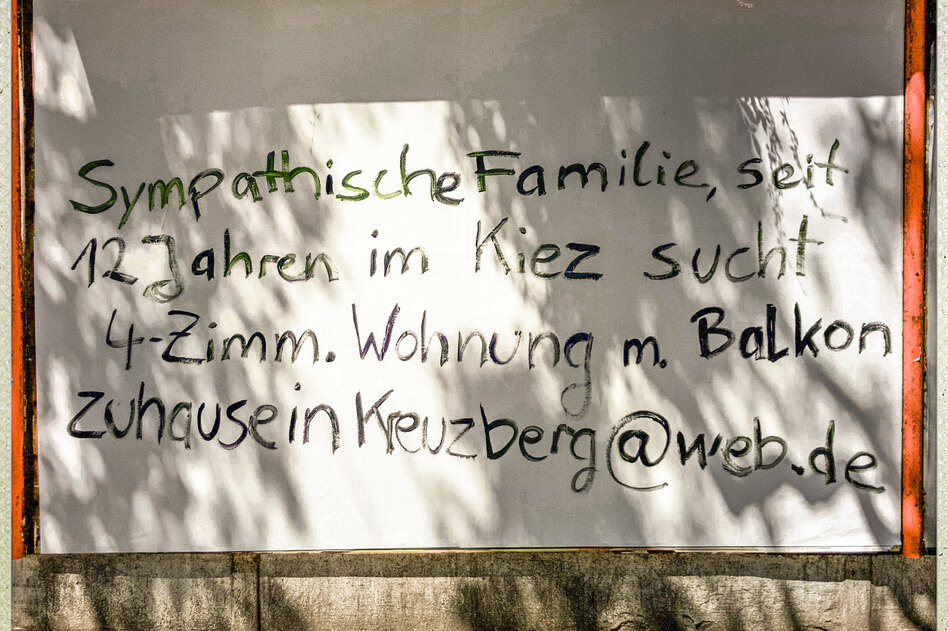
On September 26, 2021, 58 percent of voters supported the Berlin referendum “Expropriate Deutsche Wohnen & Co”. What was expected to be a close decision ultimately turned out to be clear. The broad approval of the referendum was nothing less than a loud cry for help from an urban society that is being choked off by the housing market.
A call that was ignored ignorantly and without empathy. The energy that came from the result was first channeled into a commission of experts by the Giffey government and finally dissipated by the next governing mayor, Wegner. This will probably fall on the governing parties' feet, because the housing crisis is the social explosive whose fuse has burned the furthest away. The book “The Housing Crisis” by Bochum scientists Rolf G. Heinze and Sebastian Kurtenbach shows the causes and tries to explore perspectives.
The two authors see the causes primarily in incorrect prognostic decisions: Until recently, politicians and urban planners assumed that the population would shrink. The demographic kink seemed inevitable and the scenario was vacancy, not housing shortages. The blindness to this development can also be explained by the fact that German society has always experienced immigration, but has never wanted to acknowledge it.
Rolf G. Heinze, Sebastian Kurtenbach: "The housing crisis. How it threatens democracy and cohesion". KiWi, Munich 2026, 272 pages, 24 euros
In addition, it was believed that the already shrinking population was increasingly on the way to the suburbs, which explains the neglect of urban housing construction. And finally, with the neoliberal shift in the 1990s, the determination to promote social housing disappeared. While in 1980 there were still four million socially linked apartments in West Germany alone, in 2024 there were fewer than one million in Germany as a whole. The cities and municipalities stopped building and sold off the silver. The authors recall Dresden's total sale of its 48,000 city apartments to a US investor.
The results of these misjudgments are felt by the vast majority of people on a daily basis: the rental housing market is merciless in many cities and communities. Rent is making up an ever-increasing share of household income, people are clinging to their existing rental agreements, meter-long queues are forming in front of the few affordable (and unaffordable) apartments during public viewings. Heinze and Kurtenbach use the word “pessimism about the future,” a feeling of no longer being able to escape from the circumstances. The housing crisis restricts social mobility, thwarts life plans and makes people sick. It shakes trust in parliamentary democracy because it is no longer efficient enough to create living space. And it is a stimulus package for what the authors describe as populist forces.
However, two other figures show that the problem is more complex than poor political planning: 43 percent, in large cities over 50. This is how high the proportion of single households is now. This is the sociological component of the housing crisis. Social fragmentation has created a situation in the housing market in which fewer and fewer people are claiming more space for themselves. That is everyone's right, but the single society has not been built for decades. These include people who have decided to live alone. However, it is primarily older people who spend their last years in apartments that are often far too large after their children have moved out or the loss of their partner. These are people for whom moving would not be worthwhile because even a significantly smaller apartment would be more expensive.
The authors do not offer any hope for an improvement soon: “The housing crisis is real and can no longer be prevented.” But they see ways in which the consequences of the housing crisis can be mitigated in the medium term. They see one means in repositioning the public sector as a cooperative state that brings together private sector and civil society forces in order to stimulate housing construction. The authors also envision a land policy that curbs speculation. Short-term effects could result in the possibility of making rental costs tax deductible.
“The Housing Crisis” makes it clear: Housing is a social problem that has long since reached the broader population. But it is also one that will determine the relationship between people and the state. The fact that the authors state this so clearly is the great merit of their book. Unfortunately, they are less clear elsewhere: the question of socialization is not even discussed, and when they discuss the tool of apartment exchange, they do not mention that this often fails, mainly because of landlords who prohibit the exchange. Despite all the scientific objectivity, Heinze and Kurtenbach fail to mention the horse and rider by their names. This means they are not doing justice to their self-identified problem.
Read the full story at the source
Source: taz