
World · taz · · 3h
Russia against Bremen Research Institute: “We want to defend ourselves”
Deutsch (original) · Auto-translated to English
taz: Ms. Schattenberg, since August the Bremen Research Center for Eastern Europe (FSO) has been considered an “undesirable organization” by the Russian state - why only now?
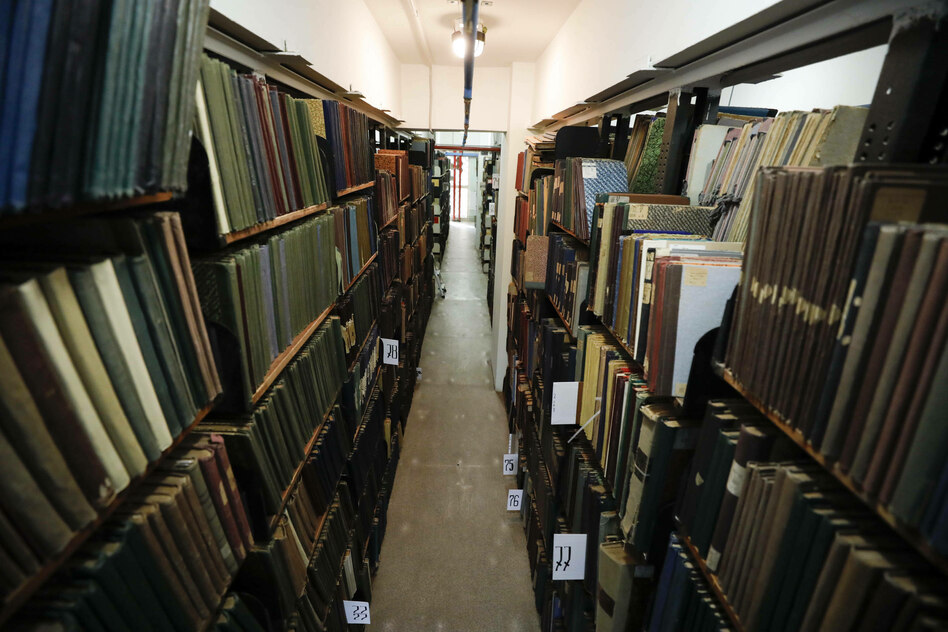
Susanne Schattenberg: We're actually surprised about that too. As a research center and archive, we document and research authoritarian regimes and all forms of protest against them in the post-Soviet space. Our country analyzes also regularly report on Russia's war against Ukraine. But as an institute we never had a location in Russia - perhaps that's why we were less annoying from a Russian perspective than institutions that were also represented in the country itself.
taz: You belong to the German Society for Eastern European Studies (DGO) – which has even been classified as an extremist organization for two years. On the other hand, isn’t the classification as “undesirable” already harmless?
Schattenberg: It is absurd that we first belonged to the extremists and are now “unwanted”. But it's not harmless: it's now clear that the Russian justice system is keeping an eye on us as an institution. This classification particularly alarmed our colleagues with Russian passports. Für sie bedeutet das mehr Unsicherheit: Wagt man es noch einmal, nach Russland zu reisen? Should you visit your old parents again – or would you rather not? Are relatives still safe in Russia? This is heartbreaking.
taz: You want to sue against the decision, and you will also receive financial support from the Bremen Senate. The State Councilor for Science speaks of a “sign of protest”. Is the lawsuit primarily symbolic?
is Professor of Contemporary History and Culture of Eastern Europe at the University of Bremen and Director of the Bremen Research Center for Eastern Europe.
Schattenberg: All of us, the senator, the university, we as an institution, are of course aware that the lawsuit in Russia will be dismissed. But we want to defend ourselves and not let the Russian defamation campaign go unchallenged. It has always been the practice of dissidents to pretend that Russia is a constitutional state and to exhaust all legal remedies. And the lawsuit is not purely symbolic – we do expect something from it.
Schattenberg: Information. So far there has been no statement from the Attorney General's Office about the reasons why we ended up on the list. Through the lawsuit, the Russian justice system will hopefully reveal why we are being declared undesirable. Of course we could figure something out; but if we learn what the trigger was, we may be able to deduce who will be “undesirable” next.
taz: In the Senate's opinion, the FSO's scientific work is massively restricted by the classification. What are the effects in research?
Schattenberg: For us as an institute they are no longer that big. Russia's full-scale attack on Ukraine has prevented us from traveling to Russia since 2022: initially as a sign of solidarity with Ukraine, then institutional cooperation was also prohibited by Germany and finally Russia no longer issued visas to people from "unfriendly states". But that actually didn't affect us much either.
Schattenberg: Most of the people we worked with have already left Russia or are in internal emigration. We have actually always cooperated most intensively with “Memorial”. The Moscow human rights organization was officially closed in 2022, and several of its archive employees have been here in Bremen under the same roof with us since then. We also often worked together with a sociology laboratory that conducted critical opinion research. The people from there are now all here in Germany. Nothing has actually changed in terms of the collaborations, just the location of the people.
taz: If you mainly work with exiles: How much insight does the FSO have into current Russia?
Schattenberg: Actually, communication is hardly possible anymore. When “Memorial” was declared extremist in April, we asked our Russian colleagues here at the research center what the situation was like on site. The answer: “We don’t know.” And: “We don’t dare to ask or call because we don’t know what is being listened to.” On the other hand, there is the exile media with a still large network of journalists in Russia.
taz: Then the classification doesn't change the status quo?
Schattenberg: Yes, as I said: for the feeling of security of our colleagues who come from Russia. And what I'm slowly realizing is that it can make a big difference to the situation in Russia itself. We don't know what's really happening: Will the libraries be cleaned again? Will our books and writings end up in the poison cabinet again?
Schattenberg: In any case, it will practically mean that Russian colleagues will no longer be able to safely cite our work. You haven't had access to our sources in the archive for a long time. But if they can no longer receive and use our research results...
Schattenberg: Then we will split the scientific community in half again. Artificial divides are created; neither side has access to the other's knowledge. Now, after the election, some feared that the Internet would be shut down completely. But that may not even be necessary to control what knowledge is disseminated.
taz: What are the next steps for you now?
Schattenberg: We have to have our powers and our statutes translated into Russian; Everything must be submitted by mid-November. We sought advice from Russian human rights lawyer Kirill Koroteev, who has been representing organizations and people who have been deemed undesirable, extremist or designated foreign agents in Russia for 20 years. However, Koroteev no longer lives in Russia. A lawyer from Moscow represents us on site.
taz: And the mandate is not a danger for him?
Schattenberg: In any case, he has already represented similar cases and can still practice. Of course, this only applies until the opposite occurs.
Schattenberg: We can only start from experience. The next step is probably that we will be upgraded to an extremist organization. At least that's what happened with the DGO. And then we also have to expect hacker attacks.
Schattenberg: Yes, that is the next level of escalation that usually comes. Whether it's a coincidence or not, the University of Bremen actually just had a cyber attack on the university's own cloud. This wasn't against our institute, but the university management had previously supported us.
taz: How can you prepare for this?
Schattenberg: To some extent you just wait and see: it feels like we are standing on an escalator that is now going up - you can't go down anymore, whatever comes. But of course we do everything we can to control our data flows. We want to at least notice quickly if someone sneaks in.
taz: Do the hackers want to paralyze the institute?
Schattenberg: In similar incidents in the past, there was obviously an attempt to extract personal data through cyber attacks: compromising material was collected that could be used to put people under personal pressure.
Read the full story at the source
Source: taz