
World · taz · · 2h
Russian Shadow Fleet: The creeping oil spill off the coast of Oman
Deutsch (original) · Auto-translated to English
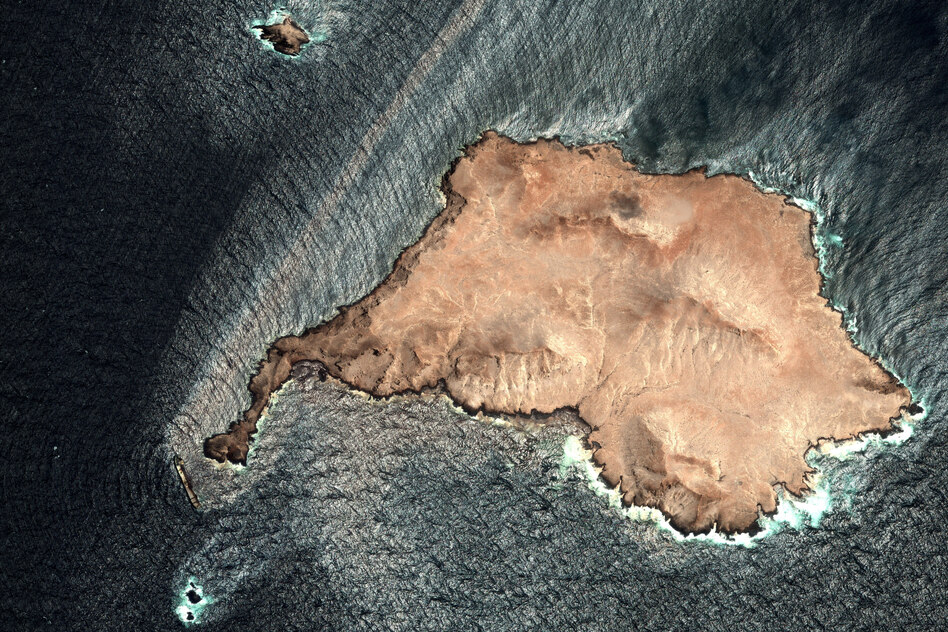
Oman relies on the Charif season: The heavy rains and winds of the monsoon season known as Charif are intended to clean the sea off the coast of the Sultanate of oil slicks. They have been polluting the Arabian Sea ever since the stranded tanker “Caroline Begenzi” was stuck there with a leak.
The 25-year-old tanker was carrying 110,000 tons of crude oil, which it had loaded in the Russian port of Novorossiysk on the Black Sea. It is unclear how much of this the 274 meter long ship, which is now under water with the entire left half, has already lost. Satellite images now showed a 2,000 square kilometer oil slick, an area the size of Berlin, Hamburg and Cologne combined.
Because of the monsoon rainstorms, there are now only 200 square kilometers left, says Nina Noelle, an expert on environmental disasters at Greenpeace, referring to the latest satellite images. “We are observing a natural disaster lasting weeks, in the middle of a maritime nature reserve,” said Noelle.
The images are not of such high resolution that oil-smeared seabirds can be seen. Environmental activists cannot form their own picture because they do not go to the scene of the accident. The tanker struck submerged cliffs in late June, in the middle of the Al Hallaniyat Islands environmental protection area off Oman's coast, following an attack on June 8. There are important coral reefs, sea turtle nesting areas, Arabian humpback whales and rare birds live here. The resulting situation is “fatal” for the entire ecosystem there, says Noelle.
A month ago, the Omani Environment Agency and the Ministry of Transport, Communications and Information Technology (MTCIT) considered the situation to be so threatening that urgent action was required. Around 60 kilometers of their coastlines have already been affected by the oil spill.
The government commissioned the British specialist company Ambrey to combat the oil spill. The companies Oil Spill Response Limited and Oman Pesco were hired to prevent further oil spills and to clean up the affected areas.
However, neither satellite images nor data service companies for shipping traffic show that numerous ships would try to prevent the approximately 130 million liters of oil from leaking from the leaking tanker or to pump the oil out of there.
Here Khareef does not support, but rather disrupts - the MTCIT speaks of "extremely difficult weather conditions": While the rain makes the deserts and mountains bloom there, the deep water of the Indian Ocean rises, there are strong winds and waves up to four meters high.
Oman is so far alone with the oil spill. Attempts by the country to hold the ship's owner responsible failed. Officially, Rentoor Ship Management, based in Shanghai, is considered the owner, but Western experts consider this company to be a shell company because the address is in an apartment block.
The “Caroline Bezengi” was built in 2001 at a South Korean Hyundai shipyard as “SCF Altai” for the Russian state-owned merchant fleet Sovcomflot. Since then it has been renamed at least three times and reflagged five times. The barge currently sails under the Cameroon flag as part of the Russian shadow fleet and is sanctioned by the EU, Great Britain, Canada, Switzerland, the USA and others.
The Russian shadow fleet consists of well over 1,000 outdated tankers that Russia hastily bought up after the imposition of Western punitive measures to transport sanctioned crude oil. The crew was rescued from the ship alive after the explosion.
Since the USA attacked 8 Iranian oil tankers at the beginning of September, further danger has loomed: so far, no oil leaks have been officially confirmed. But the risk of serious ecological damage - particularly in the Gulf of Oman and the Strait of Hormuz - is extremely high, as 6 of the 8 tankers attacked were said to be carrying crude oil.
Read the full story at the source →
Source: taz