
Politics · taz · · 52m
Conflict over the direction after the election in Berlin: Jewish support for the left-wing alliance
Deutsch (original) · Auto-translated to English
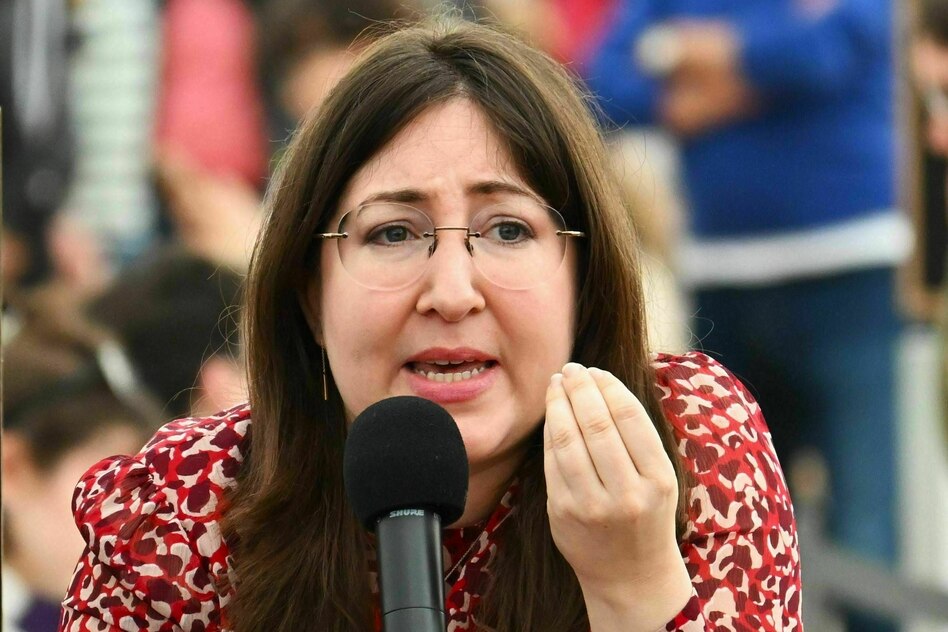
More than 150 Berlin Jews supported the Berlin Left Party in an open letter published on Thursday and available exclusively to taz. Their call is entitled “For a social and safe city”. The signatories contradict the claim that the left is a danger to Jews and that a government with it poses a security risk for Jewish communities.
It was signed by 150 individuals, including the writer and former chair of PEN Berlin, Eva Menasse, the musician Merrill Nisker alias Peaches, the poet and essayist Esther Dischereit, the philosopher and director of the Potsdam Einstein Forum, Susan Neiman, the American videographer Arun Chaudhary, the filmmaker Udi Aloni, the writer Irene Dische, the historians Adam Raz and Ben Miller, the international lawyer Itamar Mann, the political scientist Emilia Zenzile Roig, the journalist Deborah Feldman and the social scientist Vered Berman. They all live in Berlin.
On the evening of the election, the Central Council of Jews in Germany expressed “concern” about the Left’s election victory. He had already described the party as “unelectable for Jews”. After the Left's election victory in Berlin, he appealed to the SPD and the Greens not to form a coalition with her: Anyone who paves the way for her to become a state government in Berlin "endangers our social cohesion and Jewish life in the capital," said Schuster on Monday. Israel's ambassador Ron Prosor even described the Left's election victory in Berlin as "a concrete and immediate threat to the existence" of the Jewish community in the capital.
The signatories contradict this: "We are Berlin Jews and come from different backgrounds; we pray in different synagogues or not at all; we vote for different parties," it says in the open letter. They accuse high-reach media and important parts of “our own Jewish community” of shirking their responsibility “if they continue to act as if the left represents the greatest threat to Jewish security” – at a time “when a partially openly fascist party is on the way to power across Germany.”
Anti-Semitism, like other resentments and prejudices, is widespread in all parts of society and is “most dangerous where it coincides with right-wing extremist ideology and with the anti-democratic tendencies and conflicts that sometimes break out violently on our streets.” Constantly accusing the Left Party of anti-Semitism is “a cynical political instrumentalization” that equates “almost any criticism of Israeli politics with anti-Semitism.” The “flood of accusations” aims to “suppress other opinions and undermine international law.” This distracts attention from other dangers.
Like all other Berliners, Jewish families are also affected by rising rents, precarious employment, overloaded schools and an overwhelmed health system as well as a growing social divide. These created “exactly the social tensions that also promote hatred of Jews.” Anyone who ignores social injustices leaves the field to those “who are always the first to look for scapegoats”.
The signatories therefore appeal to “the future governing mayor and her coalition partners” to take this concern “as seriously as those of all other Berliners”. They advocate a red-red-green coalition, which they hope will “address the material causes of social tensions.” Not because they share all positions in the left or any other party. But because “a continuation of the status quo or a shift to the right would only exacerbate these tensions,” says the appeal.
In the election for the Berlin House of Representatives on Sunday evening, the Left was the strongest force with 25.7 percent. She could form a government with the Greens and the SPD and appoint the governing mayor; together they would have a broad majority in parliament. However, there are strong reservations about such a coalition in both parties, and there is also sharp criticism of it from the Greens and the SPD in the federal government. An alliance of the CDU, the Greens and the SPD would also be possible, but it would only have a comparatively narrow majority in the Berlin House of Representatives.
Read the full story at the source
Source: taz