
Germany · taz · · 3h
Repression in Tunisia: lack of water and freedom of the press
Deutsch (original) · Auto-translated to English
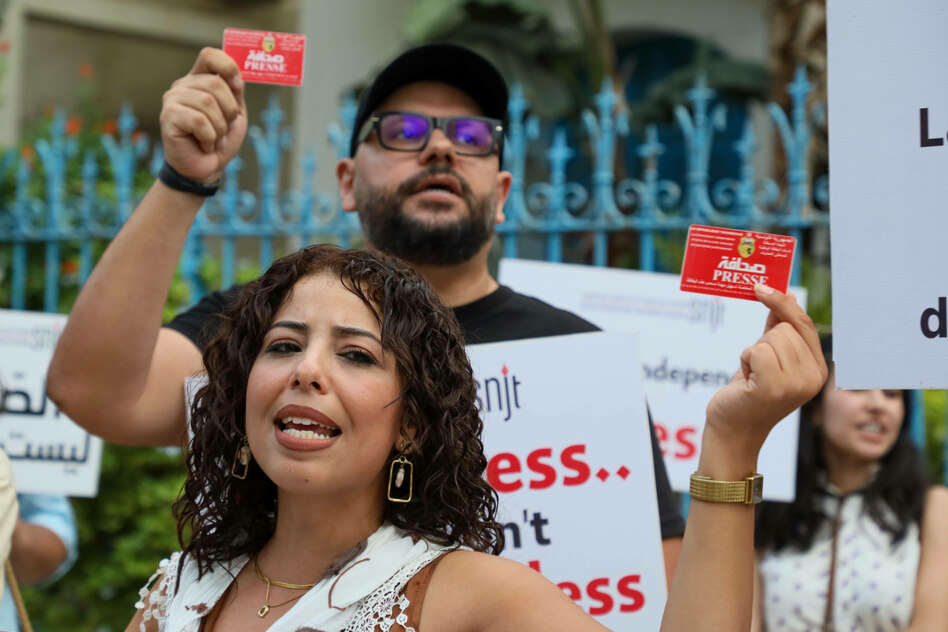
The Tunisian summer was characterized by temperatures of up to 50 degrees, regular power outages, repeatedly interrupted water supplies and a lack of mineral water bottles. In many places, citizens responded with street protests and angry complaints on social media.
Across the country, family and friends are discussing how the consequences of the noticeable climate change can be mitigated. Dozens of people died of overheating in hospitals and prisons alone. But there is hardly any public criticism of the inadequate infrastructure for fear of repression.
When the journalist Mohamed Yousfi wanted to enter the building of the radio station Express FM in the center of Tunis at the beginning of September, his mood was good. The country's currently best-known podcaster and editor-in-chief of the investigative magazine Al Qatiba wanted to talk about the summer of crisis, which seems to many in the country like a kind of historical turning point.
As part of the “Democracy needs many voices” action week, over 150 media outlets in Germany have joined forces - the taz is there. Because “freedom of the press, a central pillar of democracy, is in danger,” as taz editor-in-chief Katrin Gottschalk writes. The week of action is intended to draw attention to the fact that free, professional, responsible media are necessary for democratic cohesion. The organizer is the BDZV, the Federal Association of Digital Publishers and Newspaper Publishers.
Although Yousfi is known as a critic of President Kais Saied, he is not someone who wants the system to be overthrown. The conversation on Express FM was intended to be an analysis of the situation. But several police officers intercepted him in front of the building and took him to the Mornagia detention center.
The allegations against him are similar to those against dozens of other journalists and activists who have been arrested and convicted in recent months. According to estimates by human rights organizations, 50 prominent media professionals in Tunisia have been investigated, and at least 5 are currently in custody or have been sentenced to long prison terms. Nobody knows how many citizens were prosecuted because of critical statements.
In 2022, President Saied introduced the so-called Decree 54. This allows courts to punish the spread of false reports and personal defamation with years in prison. Since then, the fear of being targeted by the investigative authorities due to criticism has increased enormously. Human Rights Watch, the International Committee to Protect Journalists and Amnesty International are calling for the decree to be ended or at least reformed.
The arrest of activists who campaigned for migrants or social minorities has been viewed with indifference in recent years. Many Tunisians continue to prefer a president who has a reputation for being non-corrupt and who is a critic of the powerful economic cartels. He makes up for the lack of many of the economic reforms he announced with populist appeals and warnings about dark forces.
State television Watania takes over the narrative. Footage of a broken door and a cloth found next to a power transformer were taken as evidence that unknown third parties were behind the series of power outages. Experts from the state-owned electricity producer Steg, however, say that the authorities were warned in the spring about existing technical problems and a lack of maintenance.
But the arrest of Mohamed Yousfi could be a turning point similar to the collapse of infrastructure during the six-week heat wave. The population's outrage at not being allowed to talk about an obvious problem that affects every family is increasing significantly.
Human Rights Watch sees the case as the culmination of a wave of repression. In a report published at the beginning of September, they describe dozens of cases of state action against NGOs. Accordingly, 47 Tunisian activists were taken into custody and 10 have been in prison for more than fourteen months.
These include respected and nationally known representatives of civil society. The political commitment of many committed citizens made the country a beacon of the Arab Spring. Women like Sadia Mosbah and Sonia Dahmani are also known in Beirut and Baghdad and have inspired fighters for women's and minority rights. In recent years, Mosbah had worked on the implementation of an anti-discrimination law and campaigned for the rights of migrants.
Mosbah, 66, was sentenced to eight years in prison in March for receiving funds from abroad and financial irregularities. Five employees of migrant advocacy organizations have been sentenced to lengthy prison terms, according to Human Rights Watch, while international and Tunisian journalists are denied permission to independently report on migration and the tent cities near Sfax.
Many lawyers believe that journalists and observers are being targeted as disruptors of the official narrative. Bassem Trfi, one of the lawyers for convicted TV commentator Sonia Dahmani, sees the trial as a “blatant injustice” and an attempt to “silence criticism of the treatment of migrants from sub-Saharan Africa.”
The death of the Lebanese businessman Ali Qasim Qasab, who died under unclear circumstances after two months in custody in Mornaguia Prison, also received media attention. The Tunisian League for Human Rights (LTDH) documented the deaths of 23 prisoners this summer who are said to have died as a result of exposure to the heat in their cells.
The situation of Wael Naouar and four fellow activists, who have been on a hunger strike since August 16, is said to be increasingly life-threatening. The activists in custody had organized two Sumud aid convoys to Gaza and mobilized thousands of supporters. They are also accused of financial irregularities, although details have not yet been made public.
The radio presenter Haythem el Mekki had to experience that even celebrity does not protect. He had complained about conditions in the Sfax hospital morgue during the height of the migration crisis last year. Bodies of migrants who died in the Mediterranean on the way to Italy were stored there. On July 15, he was sentenced to one year in prison. Before the appeal process, he fled abroad - like so many before him.
Weeks earlier, the investigative journalists Zied el Heni and Khaoula Boukrim had been convicted without the possibility of appeal. Boukrim will spend four years behind bars for critical Facebook posts. The International Journalism Federation and other organizations are calling for her release, as well as that of TV commentator Sonia Dahmani, who was sentenced to two years in prison for a comment she made on a talk show.
Dahmani only pointed out that Tunisia's youth are fleeing and that it is not just migrants who are responsible for the tense economic situation. Their condemnation undermines the EU's anti-migration strategy in North Africa. Because more and more committed Tunisians only want one thing: to leave.
Read the full story at the source
Source: taz