
War & Militarism taz
Reportage book DR Congo: Everyday life alongside the war
In her book of reports from the DR Congo, Judith Raupp talks about absurd everyday situations. However, political backgrounds are neglected. more...
Deutsch (original) ·Auto-translated to English
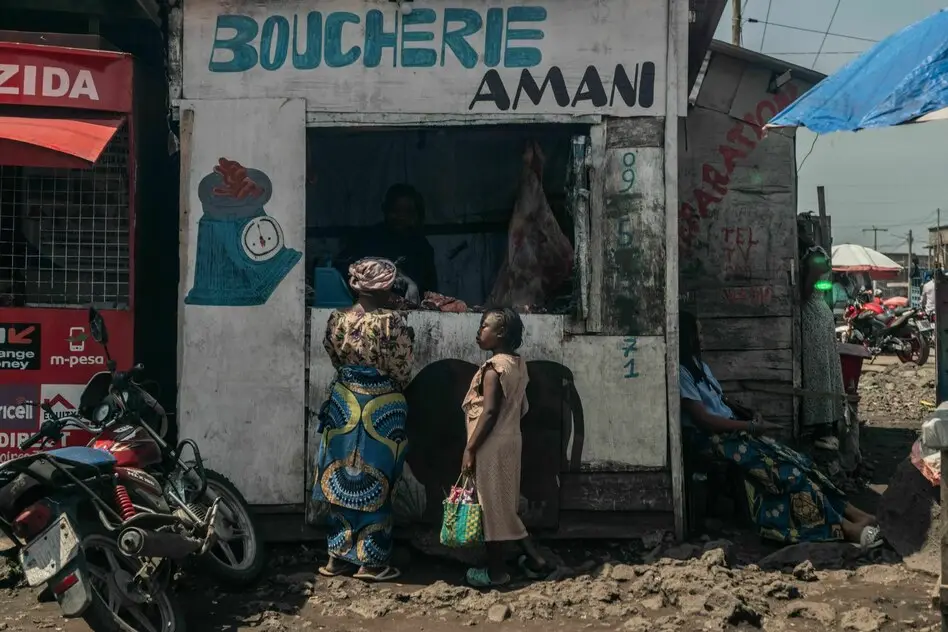
What does a vegan say when there's crocodile for dinner deep in the Congolese rainforest? “Thank you very much, but the doctor forbade me to eat meat.” What does she say the next morning when she has the crocodile leftovers from the evening for breakfast and tea for which the water was drawn from exactly where she had previously peed? “Thank you very much, the doctor advised me not to eat or drink anything in the morning.”
Situational comedy is part of life when you're a white person living in the Democratic Republic of Congo. Judith Raupp, who left her job at the Süddeutsche Zeitung to work as a journalist trainer and write reports in the eastern Congolese city of Goma, offers many funny situations in her new book of reports.
She is often simply the reason for this: not only is she a vegan, but she also rides her bike through the city as a white woman in practical clothing and accepts that she will be looked down upon because that is how she gets to know the people around her. Some occasions are forced on her - for example when the secret service ransacks her house in the morning and wants to be paid for their services at the end. When faced with absurd situations, you have to know how to deal with them, and Raupp knows that pretty well.
Judith Raupp: "Tomorrow I'll go shopping if the market is still open. Life and survival in the Congo". C.H.Beck Verlag, Munich 2026, 297 pages, 20 euros
Her book “Tomorrow I'll go shopping if the market is still standing” also provides insights into the functioning of Congolese society and the unwritten, often very hard rules that hide behind the superficial interpersonal looseness. How weddings and funerals work. What constraints women are subject to and why they spend a lot of money at the hairdresser. What strange priorities the white people living in Goma have, for example when it comes to caring for pets.
However, anyone expecting deeper insights into the wars and conflicts that have shaped life in Goma for over thirty years will be disappointed. The opening chapter describes the capture of the city of millions by the M23 rebels in January 2025 as a gripping drama, but completely apolitical, almost as if one had to seek safety from a volcanic eruption. Who these rebels are, what they want, why they are fighting, what they do after their victory - nothing.
Raupp finds himself in the unique situation of living for years at the epicenter of one of the most complex conflict areas in the world. Shouldn't she be able to bring the actors closer to her readers and explain their motives and actions?
Instead, the book contains exciting, funny, sad, happy and depressing scenes and situations arranged thematically, without any context. The narrative always suddenly jumps forward or backwards by years, individual experiences merge into a timeless overall impression.
This is surprising, because Judith Raupp did not work in a political vacuum. Her assistant in journalism training was Micheline Mwendike, co-founder of the civil rights group La Lucha, founded by students in Goma, which quickly became one of the leading opposition forces in eastern Congo.
Her colleague Luc Nkulula gained notoriety in 2018 with his murder - according to his friends' conviction, carried out by perpetrators who were at least close to the state apparatus of then President Joseph Kabila. At least that's what's in the book, but only in passing. Raupp experienced the struggle of Goma's youth for human rights first hand, but she talks less about it than about her cat.
You could tell so much based on these courageous people: how the young generation in Goma gave itself a voice, was suppressed by Kabila, had little to do with his successor Tshisekedi from 2019 onwards, and even less with the rebels who have ruled Goma since 2025, at whose head Kabila has just taken over again. This book tells a lot about life in the DR Congo. But it also leaves out a lot.