
Politics · taz · · 2h
Reich's Energy Reforms: A Law for Standstill
Deutsch (original) · Auto-translated to English
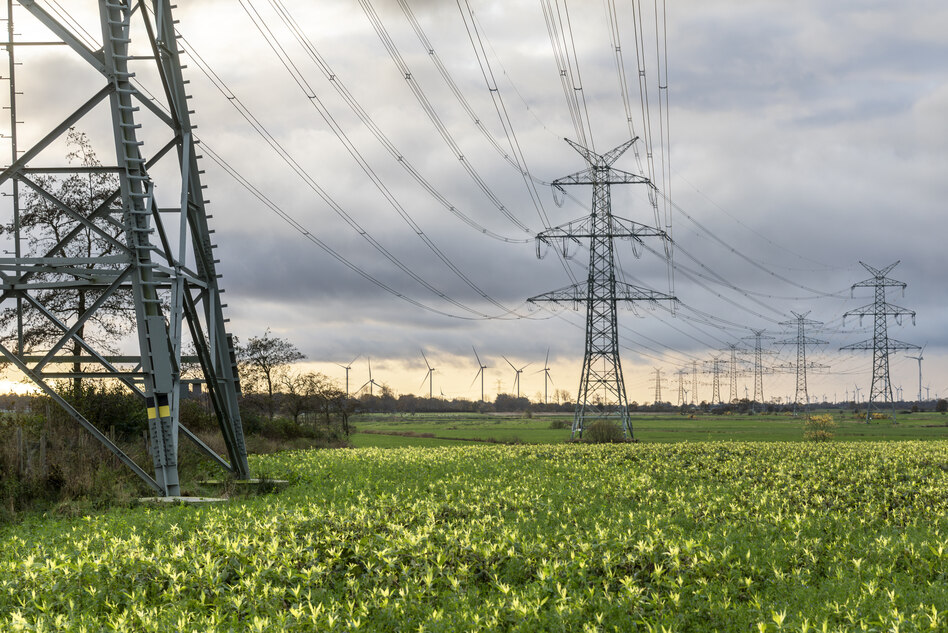
With wind power plants it is similar to an assembly line: If they stand still, there is no added value. Unlike the German auto industry, for example, there is no lack of demand for wind turbines in Germany: more and more heat pumps, more and more electric cars and, overall, more and more industrial processes that are being converted to electricity are causing the demand for electricity to rise. And because the Federal Republic is legally obliged to reduce its greenhouse gases by 65 percent from 2030 compared to 1990, renewable energies have priority in feeding into the German electricity grid.
Of course, wind turbines are still visibly standing still more and more often everywhere - despite stiff breezes and right-of-way into the grid: There is a lack of transmission capacity to transport renewables to the large consumption centers in the west and south of the Republic. For example, if there is a lot of wind in the north, the price of electricity on the stock exchange drops to zero.
If Bavarian medium-sized companies buy electricity, the gas power plants in the south have to go because there is too little line capacity from the north. But there the wind turbines then have to be taken off the grid, which is now flooded with fossil gas electricity. The producers of renewable energies, i.e. wind farm operators or the large solar power companies, will then be compensated for this standstill through no fault of their own.
Instead of accelerating network expansion, Federal Economics Minister Katherina Reiche (CDU) wants to reverse the network risk: This Thursday she introduced her draft to update the Renewable Energy Act to the Bundestag, which significantly reduces compensation in the event of forced shutdowns.
The taz is an independent, left-wing and opinionated daily newspaper. We have been arguing in our comments, essays and debate texts since the taz was founded in 1979. We often cannot and do not want to agree on an opinion. That's why you'll find some completely opposing positions here - all part of the very broad left-wing spectrum of opinions.
Reiche wants the expansion of renewables to adapt to the expansion of the grid and not the other way around. This protects the owners of the German transmission networks, such as the Dutch pension investor APG, the financial investors from M31 or sovereign wealth funds from Norway and Singapore. Nevertheless, the new EEG explicitly maintains the goal of producing at least 80 percent of our electricity from renewable sources by 2030.
But this bill cannot achieve that: Instead of pushing for network expansion, rich investors are putting new obstacles in the way. We are only at 58 percent and there are only three years left until 2030. The pace would have to be increased significantly instead of slowed down.
After all, there is a special feature of the EEG: it was not developed at the end of the 1990s by a ministry, but by a group of parliamentarians led by the pioneer Hermann Scheer. He also brought votes from the then opposition party CDU on board - a great moment for parliamentarism in united Germany. Times have indeed become tougher - the AfD introduced a bill in parliament that aims to abolish the entire EEG. But why shouldn't one dream that Parliament will join forces to repair Reich's terrible law?
Read the full story at the source
Source: taz