
Germany · taz · · 2h
Reform of energy laws: Reiche wants a rent cap for wind turbine areas
Deutsch (original) · Auto-translated to English
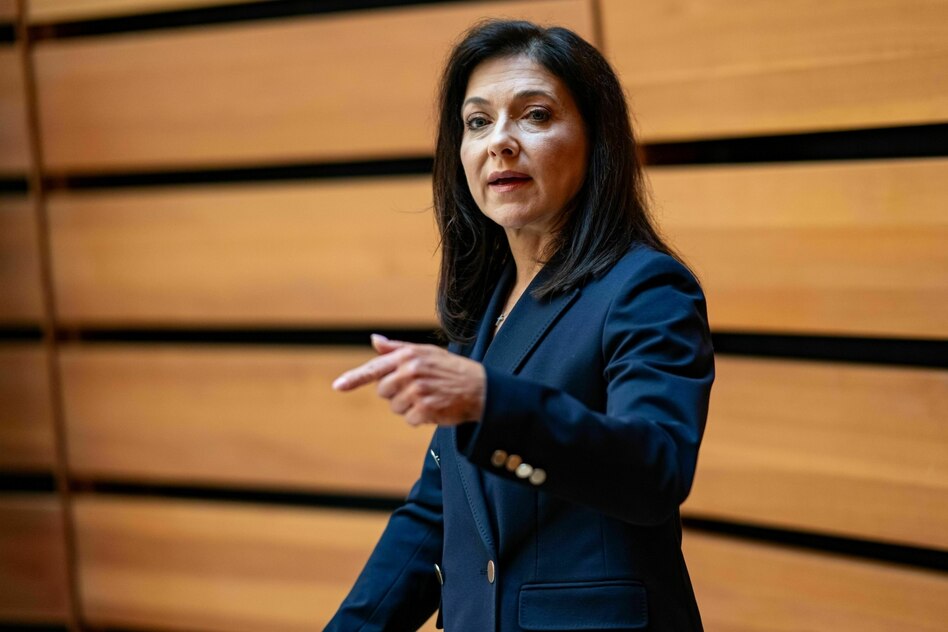
Federal Minister of Economics Katherina Reiche (CDU) wants to introduce a rent cap - not for apartments, but for wind turbines. This has met with strong criticism from banks, the renewables industry, landlords and the Federal Council. Critics fear that the lease limitation will prevent new projects.
The background: The Bundestag is currently discussing important energy policy projects with which Reiche says he wants to readjust the energy transition and make it more cost-effective. To this end, the Renewable Energy Sources Act (EEG) and the so-called network package are to be passed by mid-October. The expert hearings of the responsible economic committee of the Bundestag will take place this week.
Since the draft laws became known, critics have complained about a large number of proposed obstacles and new bureaucratic requirements that would make further renewable energy expansion more difficult. Among other things, Reiche wants to withdraw the funding for solar roofs, only allow a limited amount of electricity from renewable systems into the grid (“active power limitation”) and no longer fully compensate the operators if wind turbines are forced to shut down (“redispatch reservation”).
Another point that has met with strong criticism is the lease cap for areas on which wind turbines are located that receive funding under the EEG. This is surprising, because Minister Reiche is otherwise strictly against government interventions such as price limits. Her ministry does not want to comment on whether it is also in favor of a rent cap for apartments, citing the Ministry of Construction.
The basic idea of the rent cap for wind turbine areas: high rents are paid indirectly by the state via EEG funding. If they fall, it will also be cheaper for taxpayers. In fact, a few years ago, land owners were able to receive enormous amounts of money when they leased land for wind turbines. Because there was not enough space for these projects. However, that has changed. The former Economics Minister Robert Habeck (Greens) ensured that the federal states had to designate more areas for wind energy. As a result, the supply of space has increased and rental prices have fallen.
The Federal Ministry of Economics also admits this. It is true that due to the intense competition, a significant decrease in lease costs can already be expected, said a spokesman. “Nevertheless, according to our analyses, the rental costs that have been very high in the past offer considerable further potential for reducing the EEG funding costs and thus easing the burden on the federal budget.” The cap would also apply to projects for which lease agreements already exist but have not yet been implemented.
Banks doubt that the cap will reduce costs. The limitation would increase economic uncertainty, leading to additional financing costs, warn 18 credit institutions in an open letter to the rich. These additional costs would counteract the intended rent reductions. Compliance with the cover would have to be checked over the entire operating time of the wind turbine.
“This creates additional testing, documentation and monitoring costs for long-term financing,” says the letter, which was signed by, among others, Norddeutsche Landesbank, HypoVereinsbank, Commerzbank and various Volksbanks and savings banks. If the cap is not adhered to, drastic fines will be imposed. The banks warn that this is a cost risk that is difficult to control for wind turbine operators.
The draft law for the EEG reform proposes to limit the rental prices for wind energy properties for 20 years. The cap should be 3.5 percent of the gross annual income calculated before the start of operations; originally it was supposed to be 2.5 percent. The Federal Ministry of Economics raised the value after a hearing with associations and states.
Increasing the lease cap is not enough for the Federal Association of Renewable Energies (BEE). “The fact that this value applies across the board to both regions with low rental prices and those with high rental prices completely ignores the range of project conditions,” criticizes BEE President Ursula Heinen-Esser. There is no reason for owners to lease below market prices. “Wind energy projects, on the other hand, rely on suitable locations and cannot simply be avoided,” says the Christian Democrat, who was Environment Minister in North Rhine-Westphalia from 2018 to 2022. The lease cap intervenes in a market that has long since regulated itself.
According to the Federal Ministry of Economics, the maximum possible lease amount for an average wind turbine is around 35,000 euros per year. Violations should result in severe penalties. It is planned that the system operator will pay a penalty of 50 euros per kilowatt hour of installed capacity and year to the network operator. “Depending on the installed capacity, the annual revenue from wind turbines last year was between around 115 and 133 euros per installed kilowatt,” says Heinen-Esser. “In the worst case scenario, the additional payment would reduce revenue by almost half.”
The Association of Forest Owners also rejects the lease limitation. More and more wind turbines are being built in forests, with the rotors turning far above the treetops. The distance rules from residential buildings can be easily adhered to here. The association sees many projects at risk because, in its opinion, the rent limitation does not correspond to the use value of the land. “At the same time, a lease cap would impose additional burdens on the property owners and project managers and reduce the available space,” criticizes Andreas Bitter, President of the AGDW-The Forest Owners Association. “The federal government’s expansion goals for renewable energies and climate protection would be called into question under such conditions,” he says.
The Association of Forest Owners and the umbrella organization of family businesses Land & Forest have commissioned a report from former judge of the Federal Constitutional Court Udo di Fabio. After that, the lease cap is unconstitutional. “The careful examination of the draft law has shown that the lease cap with the planned provisions deeply encroaches on the freedom of contract and property and violates the principle of proportionality as well as the principle of equality,” said Di Fabio. And: The lease cap would also affect ongoing projects. Contractual partners often agree on leases for wind projects years before a system is operational. Di Fabio also considers this retroactive effect to be unconstitutional.
One of the few supporters of a lease cap is the Association of Municipal Companies (VKU), whose general manager was Reiche from 2015 and 2019. The association fears that municipal utilities will lose out in the competition for space if owners demand very high rents. “If landlords demand up to 30 percent of sales, it is neither sustainable nor economically sensible,” says VKU managing director Ingbert Liebing. “The energy transition must not fail due to excessive return expectations of individual property owners.”
However, the VKU imagines the cover to be different than it currently looks. He advocates a limit of three to five percent of annual revenue. He is also against the cap being uniform nationwide. In his opinion, regional differences must be taken into account.
Whether the lease cap comes as planned or with such changes depends on the outcome of the negotiations between the Union and the SPD, which should be completed by the decisive meeting of the responsible Bundestag economics committee on October 14th. Shortly thereafter, both proposed laws are to be passed by the Bundestag and the Bundesrat.
Read the full story at the source
Source: taz