
World taz
The US tech giants have merged with the MAGA state. But this development could soon be reversed, says scientist Quinn Slobodian. more...
Deutsch (original) ·Auto-translated to English
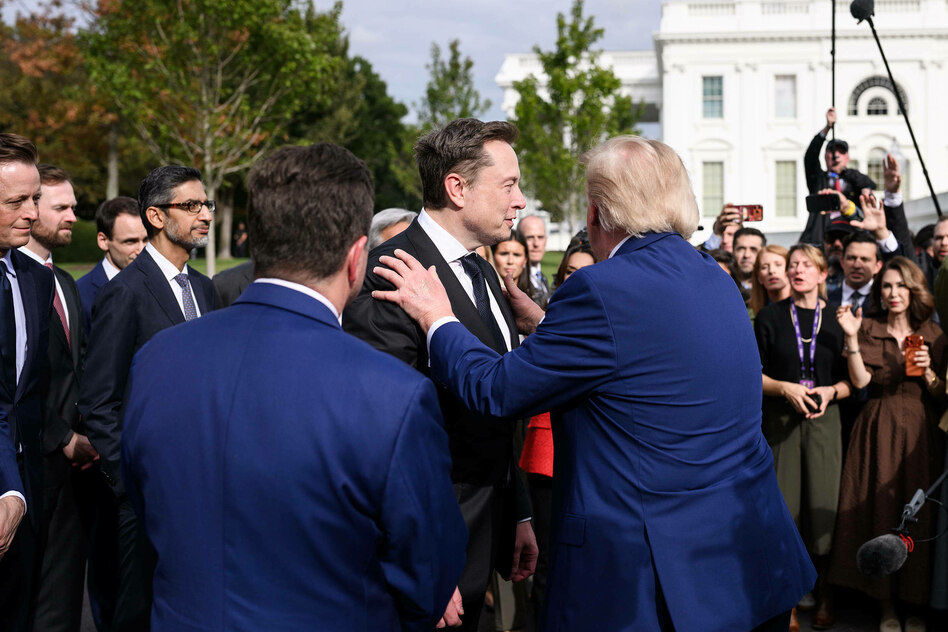
Quinn Slobodian: Unfavorable laws and regulations can significantly impact SpaceX's business model. This applies, for example, to approvals for rocket launches, to permission to place additional satellites in lower Earth orbits, to the granting of frequency licenses or to Musk's mobile communications plans. In addition, he repeatedly believes that the Democratic Party has been taken over by woke socialists who are stopping the progress of civilization - as Musk understands this progress.
is a professor of history at Boston University. His best-known books include “Crack Up Capitalism,” an analysis of post-neoliberal globalism, and “Muskism,” an approach to the global economic order in the age of technology giants.
taz: Which of these two explanations better describes his actual motives?
Slobodian: You can't separate the two. Musk is not an intellectual, but a capitalist. His business interests are also his intellectual ones. I don't think Musk is lying when he expresses his concerns about the so-called "woke mind virus." But that is because he sees this type of policy as endangering his economic interests.
taz: Would the overall system of Muskism, which you also call the “symbiotic state,” be at risk if the Democrats took back the Senate or the House of Representatives in the midterm elections?
Slobodian: SpaceX and Tesla are among the ten largest companies on the US stock market. The health of this market depends on investors viewing companies like Musk's as trustworthy investment targets. If the Democrats want to take action against Musk - and it looks like they do - they would have to be very targeted and provide credible assurances to other companies that they are not next in line.
Slobodian: That's right. I use the term Muskism the way others have used the term Fordism. It's about a system of making profits and the social structures that create consent for this system. The concentration of economic power is not limited to Musk. Many of the underlying dynamics that drove the tech industry into the arms of MAGA in 2024 still exist. And I have yet to hear a convincing explanation from Democratic politicians about how they want to achieve what they failed to achieve back then.
Slobodian: I wouldn't go that far. The term describes the current situation. Under the Trump administration, this connection will deepen and accelerate. But there are certainly opportunities to broaden the US economy again relatively quickly. After all, the technology industry is not the only strength of the USA. A sensible Democratic administration would seek to redirect investment toward other areas: renewable energy, but also traditional American strengths such as research and development.
taz: You mentioned the growing discontent among the population. Do you think that the population has now understood how this system of symbiotic connection between the state and technology companies works and what power the big tech companies have?
Slobodian: I think so. As the industry focused on the new growth promise of generative AI with the launch of ChatGPT in late 2022, virtually everything changed. Companies could no longer simply keep their distance from the federal government, as they had imagined in the era of Web 2.0 - the era of platforms.
taz: Because of the enormous need for data centers.
taz: The spread of data centers has made the power of this symbiotic connection between the state and the economy tangible for people, which is why their anger is directed at the entire system?
Slobodian: So far, people's anger has been directed primarily at elected politicians because they are allowing the expansion.
taz: In your book you talk about the three Rs that could help change the system - regulation, replacement and reimagination. The most important of these is “reimagination”, i.e. the ability to imagine something fundamentally new. How could we rethink the current system?
taz: So it's about using the technology for charitable purposes and real progress.
Slobodian: Yes, that is the core of the problem. People must be able to decide for themselves what is important in their lives and what is not.
taz: So in a sense it's about enabling a less cynical, more people-oriented life in this new technological environment?
Slobodian: Developments are forcing us to re-examine fundamental categories of our social life. For example, on the surface, the idea that we should defend work is a little strange. Why shouldn't we actually be happy about being freed from work? But that would of course be too short-sighted for a left-wing vision of the future. It is also about the dignity of work. In this respect, a new idea of society could actually consist of rethinking the meaning of work. We should be open to such considerations.