
World taz
Presidential election in Bulgaria: Kremlin friend is the clear favorite
Head of state Iijana Jotova is likely to win the first round of the presidential election on Sunday. The ex-socialist is clearly on course for Russia. more...
Deutsch (original) ·Auto-translated to English
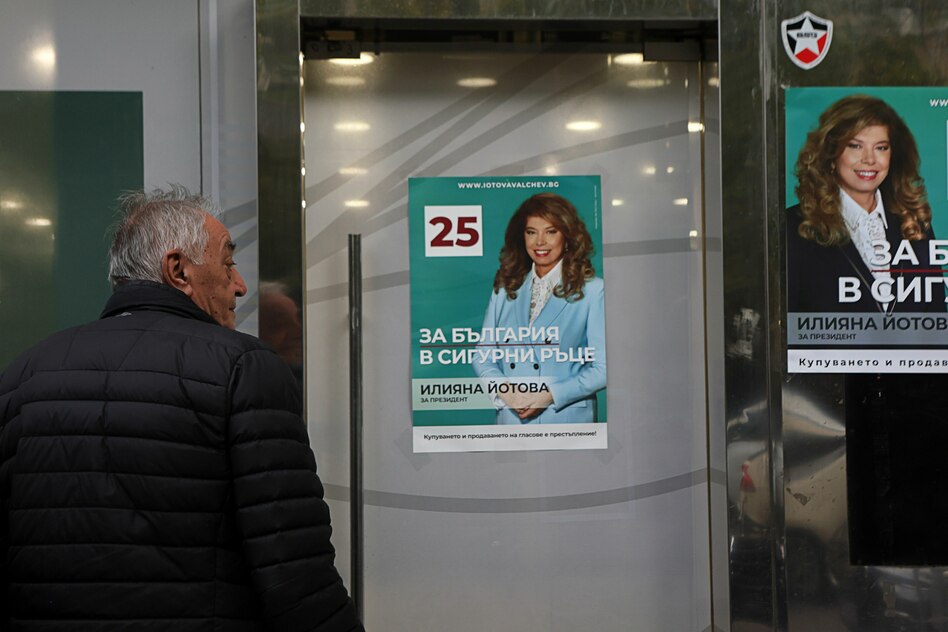
She is confident of victory, and the polls prove Ilijana Jotova right. This Sunday, a new head of state will be elected in Bulgaria, a member of the EU and NATO. The current interim president, who has been in office since January this year, is currently trading at 45 percent. Andrei Gyurov is likely to come in second, with a prediction of 25 to 30 percent. The remaining 25 candidates are staffage. If none of the applicants receives more than 50 percent of the vote, a runoff election will be held on November 1st.
Jotova, a former member of the Russia-friendly Socialist Party (BSP), was vice president alongside current Prime Minister Rumen Radev until last January. He resigned early, ran with his newly founded party “Progressive Bulgaria” in the parliamentary elections in April and immediately won 131 of 240 seats. It's almost pointless to mention that Jotowa has Radew's full backing. The banker Andrei Gyurov, interim head of government for a few months this year, is supported by the pro-European opposition parties “We Continue Change (PP)” and “Democratic Bulgaria (DB)”.
Although the head of state in Bulgaria primarily has representative tasks, he is commander in chief of the armed forces, concludes international treaties and has the ability to veto laws. And it is precisely these powers that could become important in the future.
During the election campaign, Jotova, in line with Radev, spoke out against the “coalition of the willing” when it came to supporting Ukraine. Instead, a coalition of peace is needed in which Bulgaria will have a stronger diplomatic voice to end the war. As long as she is president, no Bulgarian soldier will be sent to Ukraine, she said. This has not been and is not an issue in the public debate so far. There is also a statement from the Bulgarian Parliament in 2025, according to which Bulgarian troops will not take part in military operations on Ukrainian territory.
Last July, Radev withdrew from the “Coalition of the Willing” and the government also refused to take part in NATO’s drone defense initiative. The latter changed suddenly in mid-October. Because Russia's war of aggression against Ukraine, which violates international law, has now come threateningly close to the Black Sea bordering state.
On October 6th and 13th, merchant ships were repeatedly attacked by drones in the Bulgarian economic zone and just outside Bulgarian territorial waters. Just one day later, Defense Minister Dimitar Stoyanov announced that Sofia would join the initiative by the end of October.
What was significant, however, were the reactions of Jotowa and Radew. After the first drone attack, Jotowa convened the National Security Council. A subsequent statement made no reference to the originator of the threat. After the second attack, Radev also spoke out. "We lack solid, clear evidence to accuse a particular party. However, logic suggests that the result plays into Russia's hands," said the head of government and summoned the Russian ambassador.
“The escalation of the war by Russia and its aggressive actions on the territory of NATO member states require a united Bulgarian stance,” writes Bulgarian political scientist Daniel Smilow in a guest article for Deutsche Welle. And further: "The 'strategic ambiguity' displayed by Radev and Yotova regarding the war in Ukraine is increasingly becoming a serious burden for Bulgaria: Russia has declared us an enemy, while our partners in NATO and the EU are wondering what our real position is. They may even see us as the weak link, which is heavily imbued with Russian influence."
Apparently people in Bulgaria also see it that way. There have been several small protests in the capital Sofia against the government's slippery foreign policy course. Observers note a slight decline in Jotowa's approval ratings. But it is questionable whether Andrei Gyurov - he is considered a supporter of Ukraine and addresses a pro-European, liberal and urban electorate - can make political capital from this in the event of a runoff election.
“A victory by the government candidate would allow Bulgaria to follow the path of Hungary under Viktor Orbán – characterized by increasing authoritarian tendencies, protection of Russian interests and anti-European campaigns,” says an analysis on the Ukrainian website Ukrainska Pravda. “A victory for the opposition candidate, on the other hand, would not guarantee a quick change of course for Bulgaria, but it would offer the chance of this in the not too distant future.”