
Germany taz
Prediction markets in the US midterms: CNN and the business of gambling
Major US media companies used prediction markets like Kalshi before the midterms - despite concerns. The Democrats want to regulate the platforms more closely. more...
Deutsch (original) ·Auto-translated to English
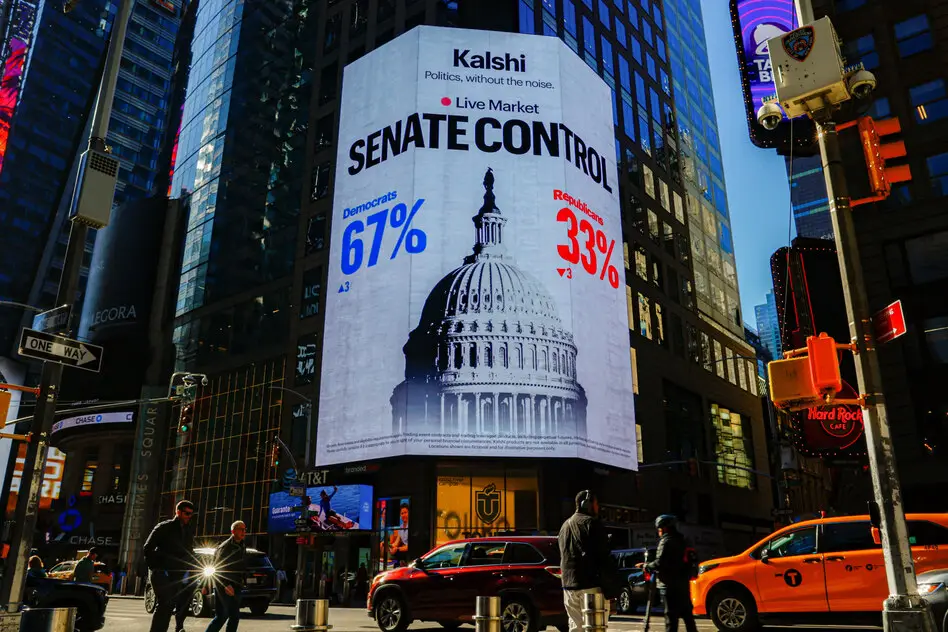
On prediction markets such as those run by US start-ups Kalshi and Polymarket, users can bet online on almost anything: the victory of their favorite football team, developments on the stock market, the overthrow of dictators and even election results. US media companies made intensive use of the platforms' data for their forecasts before the US midterms - despite considerable concerns and calls from Democrats for stronger regulation.
Before the Nov. 3 election, CNN and CNBC, among others, signed deals with Kalshi that gave them real-time access to the company's probability data. The data was used in web graphics, ticker tapes during live reporting and as comparison values to classic surveys in analyses.
According to US media reports, CNN did not pay any money to Kalshi, but signed an exclusivity clause that excluded other forecasting platforms. Under posts, the station advertised with the line “brought to you by Kalshi prediction market”.
The providers had previously advertised their products massively. Tarek Mansour, Kalshi's CEO, called the midterms "the first prediction markets elections." The results were ultimately mixed. The prediction markets predicted the blue wave quite accurately - but usually not much better than classic surveys, contrary to what was previously announced.
However, the bets were wrong in surprising Democratic victories in South Carolina and in the gubernatorial election in Texas. A survey by the New York Times showed that prediction markets sometimes predicted results more accurately than surveys, especially shortly before the elections.
Nevertheless, the accolade from established media may have given Kalshi a massive boost in popularity. Shortly before the election, the start-up had raised a billion dollars in investments and, according to its own information, was worth $40 billion.
The problem is that such prices do not necessarily reflect the opinion of the electorate, but rather the expectations of a small group of traders. A few wealthy market participants can significantly change the odds through high stakes. US election authorities reportedly warned against the use of prediction markets; Some critics speak of election influence.
In a number of US states, proceedings are underway against providers of prediction markets for tax avoidance. Kalshi is even facing criminal charges in Utah because his offer is considered illegal gambling there. The markets claim that they are simply offering a new way of trading financial products – similar to the classic stock exchange. Kalshi and Polymarket are banned in Germany and the EU.
After Prediction Markets has done extremely well over the past two years under President Trump, whose family has ties to the industry, the tide could now be turning. After the election, the victorious US Democrats announced that they wanted to regulate providers more closely.
“People are rightly concerned about dangerous betting on elections, wars, assassinations, terrorism and government actions that are contrary to the public interest,” Democratic Sen. Jeff Merkley of Oregon, a longtime critic of these markets, told Politico. "We must curb this gambling. With Democrats taking back control of Congress, now is the time for long-overdue legislative action."
Rep. Maxine Waters of California, who is running to chair the House Finance Committee, vowed Friday to curb “predatory platforms,” including prediction markets.