
Germany · taz · · 1h
Marlene Dietrich's private library: The reading legend
Deutsch (original) · Auto-translated to English
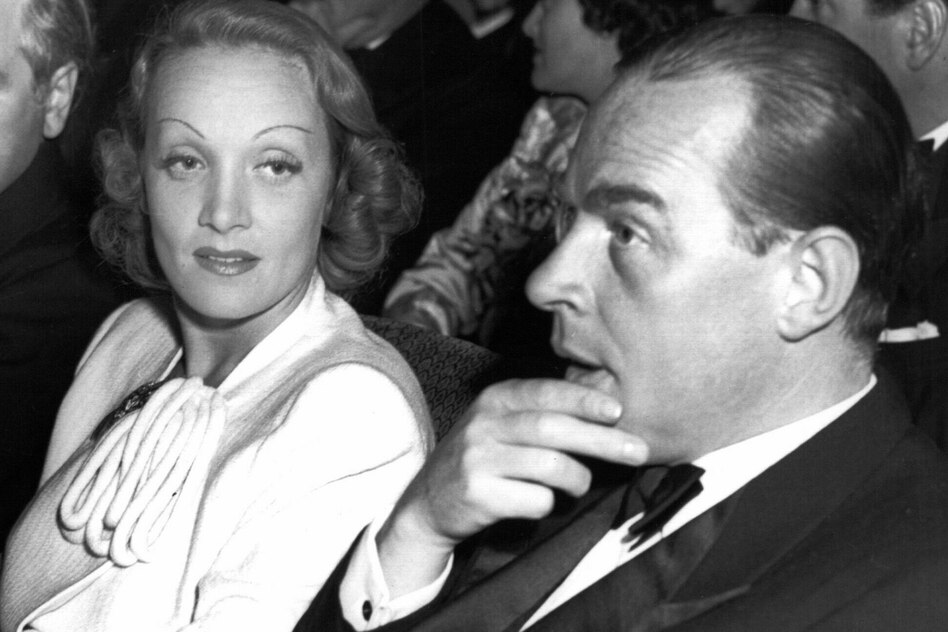
A huge trunk in the foyer of the elegant Kronprinzenpalais Unter den Linden points the way to the third floor. Marlene Dietrich was known for traveling with a lot of luggage. And then there is the song about the suitcase that remained in Berlin and after which the exhibition was named.
This is neither about travel nor about luggage. But about books: Dietrich was not only a singer and dancer, actress and troupe entertainer, German and American. She also had a small but fine library.
Her estate, kept in the Deutsche Kinemathek, includes 1,800 volumes from her private library. December 27th marks Dietrich's 125th birthday. The antiquarian book fair “rare books” took this as an opportunity last weekend to present examples of their reading, selected by bookseller Sibylle Kaldewey. Four showcases provided insight into what the world star read.
Much of Dietrich's reading is now considered world literature, such as the works of Rainer Maria Rilke, of which there are several volumes. It is known that Dietrich loved the poet. It wasn't just a love of books that connected her to another author: Erich Maria Remarque and Dietrich were lovers from 1937 to 1940, even though he lived in exile in Switzerland and she in the USA. There are five works by him in the small show, including his most famous, “Nothing New in the West” from 1928.
Their political fight was against the Nazis in Germany. Remarque did this using his typewriter, Dietrich later during the war with appearances supporting American soldiers. Dietrich turned down Nazi propaganda minister Joseph Goebbels' request to film again in Germany in exchange for high fees.
Remarque's books are not the only ones that refer to their anti-fascist struggle: the exile Egon Erwin Kisch stands next to Stefan Zweig, Ernst Toller is also represented, as are Alfred Döblin and Erich Kästner. He spent the winter in Berlin during the Nazi era. But his books could only be published in Switzerland. Not all writers survived the Nazi era. Even fewer have returned to Germany, and Marlene Dietrich also preferred to look for a new home in the face of accusations of treason in her old homeland.
This little book show underlines that she wasn't just a diva, style icon, screen legend, sex symbol and I don't know what else. But also a woman in resistance. Dietrich spent her last years until her death in 1992 in her Paris apartment, lonely but not alone.
She no longer allowed visitors, but the outside world came to her via the telephone. The frail woman had to struggle with money worries. "For money, I'll give my name to any product you want. Except for English hooded coats, of course," Dietrich is quoted as saying.
That was probably also the reason why, upon request, she wrote small handwritten reviews that she wrote in each book. Once, it is said, a female fan paid $15,000 for in-book reviews of three of Ernest Hemingway's novels.
Anyone who wanted to could purchase a few of the works refined in this way, completely independently of the Dietrich book show. After all, it was a side program to the antiquarian book fair. And of course Marlene Dietrich's star continues to shine, even 34 years after her death: Hemingway's "For Whom the Bell Tolls" with an entry by Marlene Dietrich were offered at the Elvira Tasbach antique shop for 1,500 euros.
Read the full story at the source
Source: taz