
Germany · taz · · 1h
Obituary for publisher Antje Kunstmann: She had a lot of faith in readers
Deutsch (original) · Auto-translated to English
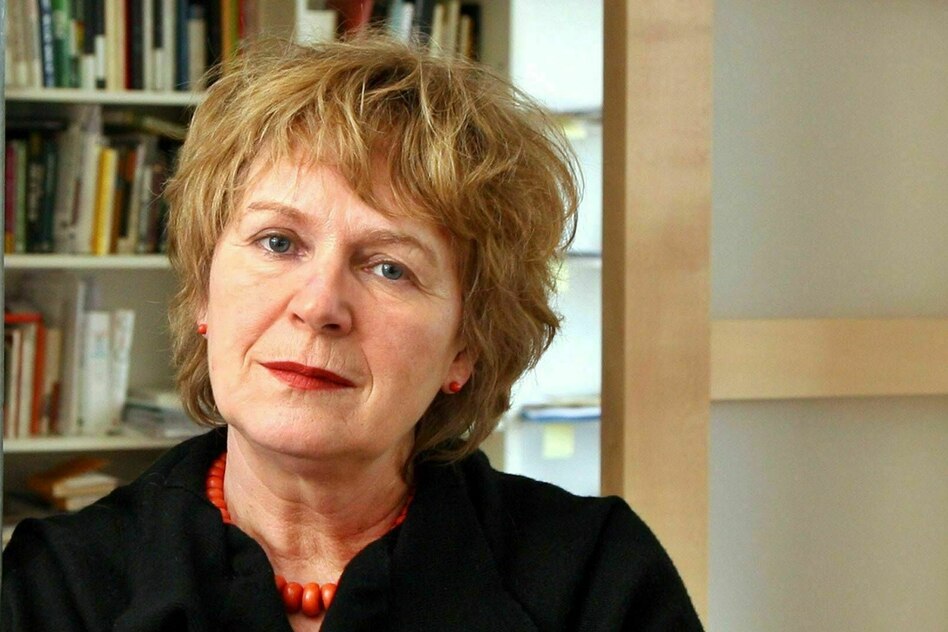
In some way we must have thought she was immortal. And she did everything to the end to keep us believing. Made us breakfast as always when we visited. With lots of cups of tea and the newspaper and the rolls from the Hofpfisterei.
The evenings weren't as long anymore, but one story followed another, one discussion led to another, her eyes and voice lit up when she talked about her trip to the accordion festival in Kissingen, to which she had gone in the spring. She had stopped making music a long time ago and now she couldn't do it anymore, but secretly, it was heard, she was perhaps thinking about trying again, playing with a small red instrument.
Immortal? She would have laughed and said, “Let’s see.” In any case, she told us – and herself – that she could go to the cinema again in 14 days: “Now the coughing is over.”
Make it enjoyable. To others and also to yourself. Be hospitable to everyone. Also to herself. Antje was the most tolerant, cosmopolitan, generous hedonist. She pampered and seduced her authors with meaning and all the senses. So they became a family, their family and also many new ones who were formed over spaghetti dinners at their long living room table.
At the very end of the long hallway in her apartment, which is lined with drawings, photos, pictures, silliness and gratitude, there are two large, long-lost sepia-toned photographs on the floor. Antje, perhaps fifty years old, all dressed up, made-up, white blazer, in an armchair: the beautiful publisher as a self-confident salon lady. So she could do that too.
Sharp contrast: A few meters away, the comic “68 Veterans Meeting” has been hanging there for decades: Chlodwig Poth's finely scribbled long-haired and bearded figures at beer tables, the survivors of a movement that he himself and Antje Kunstmann helped to shape. She had this love of self-irony, of comedy, of wisdom in small doses, of a strange look into the back rooms of world history, of world-weariness in a homeopathic dilution, or of humanity in the suburbs of high culture.
Antje was a woman of many genres. In life and, this is what this is about, in her role as a publisher. Her program was always a mixture of beautiful and necessary, political and private, humor and realism. She published books for children and political pamphlets in addition to documentaries, novels, scientific advice on health and gardens, as well as soup recipes, comics, caricatures and poems, such as those by Marie Marcks and Robert Gernhardt.
Books whose distinctive design was as important to her as the texts in them. Books from which she was able to learn something that she doesn't yet know - whether the language of plants or the causes of the financial crisis of 2008. Books that are necessary, but that no one else is doing because they don't immediately pay off, or, often enough, because it is supposedly too early for them or against the political trend, including the left-wing one.
Early on, Barbara Ehrenreich described the fear of male workers and the middle class of collapse, Mike Davies diagnosed urbanization and climate change, and the passionate parliamentarian Hermann Scheer published his criticism of existing parliamentarism and his designs for a solar global society. Enlightenment, the supposedly anachronistic one: Antje Kunstmann believed in this until the end, including, for example, with Gabriele Goettle's ground-level reports. What had to be easy didn't have to be worthwhile at Kunstmann Verlag: for example, the five thick volumes on the NSU trial, published almost in real time.
The mix of necessary and popular, cheerful and bulky made cross-financing possible. And it enabled Antje to persevere with difficult authors. Anyone who was once published here could expect that the next books would also be published by Kunstmann. Anyone who faced headwinds knew that she would stay by their side.
As an entrepreneur, she remained a realist. She had learned by doing. As a publishing intern at the Weisman women's book publisher, the education student from Bad Kissingen developed a series of women's books at the age of 21, a small emancipation canon for students, workers and "housewives" in the uptight 1970s. Shortly afterwards, she took over the publishing house herself so that it wouldn't go bankrupt. And successfully steers it through four decades in which the industry had to struggle with a lot: with more and more agents and auctions, the growing market power of a few large chains, with e-books, podcasts, social media and ever more marketing effort.
Antje Kunstmann asserted herself with stamina, defiance and a desire to take risks. “What should be?” She was also a realist in that she was able to let go despite all her passion. Her son Moritz Kürschner has been running the publishing house for a few years and, from the looks of it, with the Kunstmann mixture.
She was popular and highly recognized in specialist committees, associations and feature editors and in her hometown of Munich, not even though but because the Kunstmann Verlag's program reflects the publisher's literary preferences, curiosity and political stance in a fairly consistent manner. If you leaf through the publishing brochures of the last few decades, in their diversity but also in their continuities, then a pretty precise and beautiful picture of Antje Kunstmann as a person emerges: curious in many directions, from the brain to the stars; turned towards people, but also towards great theories; with a clear view of the state of the world, with a loving focus on flora and fauna.
Someone who likes to laugh. Very gladly. Who believes that children can think big things and adults can think stupid things. Someone to whom little that is human seems strange and to whom everything strange makes them curious. Someone who is just as happy to go to bed with a crime novel as with a treatise on post-fossil chemistry.
There are people who embrace all of life: the black and the white, the beautiful and the bad, the small and the mighty. These people have a secret reservoir from which they seemingly effortlessly draw the ability to infect others. There aren't many people like that.
We found the sentence in an old email from Antje: "As Pit Knorr from the new Frankfurt School once said: Death will be banned from now on! It would be nice if you could just do that." She died in Munich on September 16th.
Read the full story at the source
Source: taz