
Germany · taz · · 3h
Political participation in Liberia: Young country, old power
Deutsch (original) · Auto-translated to English
Africa is once again at the center of a global competition. The US and China are competing for critical minerals that will fuel the energy transition. Russia has expanded its presence in the Sahel. The Gulf states are investing enormous sums in African ports and infrastructure, while the EU is responding to China's New Silk Road with its Global Gateway Initiative.
Liberia has long been part of this competition. In January 2026, Liberia's government extended steel company ArcelorMittal's iron ore production concession until 2050, with the option of a further 25-year extension. The company's investments in Liberia grow to 3.5 billion US dollars. In the coming years, the steel company expects ore production to triple to 30 million tons
Liberia's rubber and timber have attracted foreign capital for a century. The location on the Atlantic gives the country strategic weight. Liberia's election as a non-permanent member of the UN Security Council for 2026 and 2027 gives the country the opportunity to have a say in major political debates today.
Colleagues from 16 African countries are taking part in the 5th Africa workshop of the taz panter foundation. A 64-page, elaborately designed magazine was also created. It can be ordered now by email to stiftung@taz.de with the subject “Afrika-Magazin” and your name and postal address. Thank you!
The magazine's texts also appear here on taz.de.
Would you like to support the taz Panter Foundation:
• or via the foundation’s account details:
But as Africa's governments sit across from Washington, Beijing and Brussels, they often avoid another important question: Who has power within African societies? A nation's sovereignty is measured not only by its ability to negotiate with foreign actors - but also by whether its own citizens have influence on decisions that determine their lives.
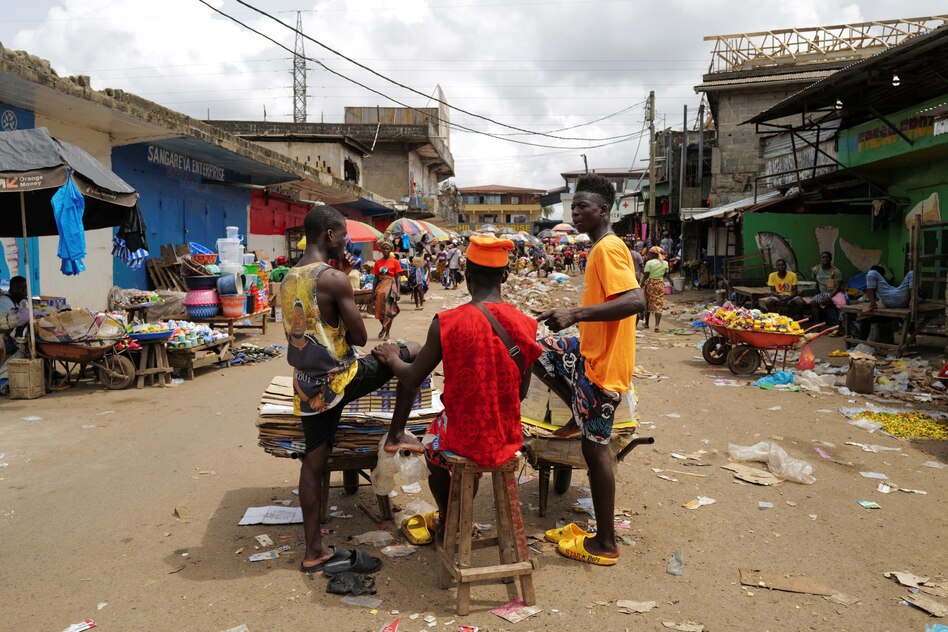
Three out of four people in Liberia are younger than 35 years old. The median age of the population is under 20 years. Young people make up the majority of the population. The parliament, the cabinet and the leadership of the major political parties are in the hands of a generation that makes up only a fraction of the population.
Support the taz panter foundation and its international projects with a donation. Learn more
Young Liberians are heavily involved politically: they organize election campaigns and provide the votes on which election victories are based. But after the votes are counted, others decide. “We are participating, but we are only on the sidelines,” says a youth activist.
In Liberia's House of Representatives, for example, the proportion of people under the age of 30 is only 1.4 percent - that is 94th place among the people's representatives of around 150 states that the International Parliamentary Union evaluated in 2025.
And although young people make an important contribution to the country's development, they face enormous challenges: over 80 percent of young people are affected by extreme underemployment, informal and precarious work or a lack of prospects. This also limits their ability to influence decisions and policies.
“The youth of Liberia do not ask for favors,” says Ernest Duku Jallah, president of the Federation of Liberian Youth. The youth of Liberia do not demand special treatment, but rather want to sit at the negotiating table and make suggestions for the future of Liberia. “We demand our rightful place in shaping our nation’s future.”
Foreign players mine our raw materials - most of the profits flow abroad. The Liberian state only received around $150 million from the extractive sector in 2023 - around 20 percent of its total income came from the sale of raw materials.
Local industries remain underdeveloped. Liberia's natural resources offer the opportunity to invest in creating new jobs for the country's future. Young people in particular benefit from this. "Voting is not just something we can do. It's a way to say: We won't wait for them to include us - we will go our own way," says Ernest Duku Jallah of the Federation of Liberian Youth.
It is not enough to invite young people to further conferences. A young person can be present in a room, but still has no ability to influence the decisions made there. Meaningful inclusion requires appropriate structures and binding opportunities for participation.
Young women deserve special attention. They are exposed to double exclusion – because of their age and their gender. Any youth agenda that does not consciously open doors for them will only reproduce old hierarchies.
The minimum age limits of 25 years for the lower house and 30 years for the Senate should be reviewed in light of demographic developments. Guaranteed paths to representation are needed, for example through reserved seats for young people or candidate quotas at party level. Such approaches have proven successful in other African democracies. Young business founders should be supported with capital; transparently managed financing instruments can help.
It is important that Liberia listens to its youth right now while it holds the seat on the UN Security Council. As a member of this body, the country can participate in important decisions on peace and security. At the same time, Liberia's own youth are hardly given a voice in decisions about what happens in their own country. This is a major contradiction: Liberia is allowed to help shape the global security order, but does not give its own young citizens a voice in national affairs.
Read the full story at the source
Source: taz