
Germany · taz · · 2h
Philip Manow on party systems: Is it the economy?
Deutsch (original) · Auto-translated to English
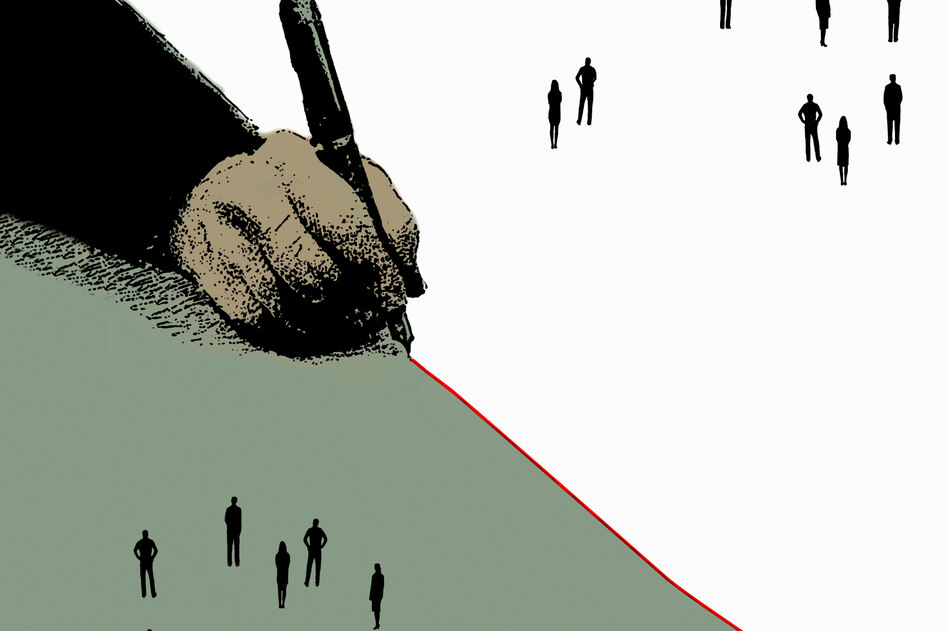
Since the state elections in Saxony-Anhalt, the middle class in Germany has been holding its breath. But the trend was also confirmed in Mecklenburg-Western Pomerania and Berlin: the edges are winning, the center is falling. Among the many analyzes of this phenomenon, ranging from a crisis of democracy to the fascization of society, Philip Manow's book “Division Lines” is certainly one of the most interesting.
On 141 pages, the author questions the prevailing paradigm of populism research. With biting irony, Manow demonstrates the common cultural interpretations according to which the electorate of particularly right-wing populist parties does not understand their own economic interests and is also guided by narrow-minded prejudices.
According to Manow, this paradigm primarily serves the “bourgeois left,” which “seems to be in fact and practical agreement with the late capitalist conditions that it believes it is criticizing so fundamentally.” Instead of recognizing the conflict of interest with the working class, she moralizes it. “The claim that our conflicts are exclusively cultural makes it easier for those with the ‘wrong interests’ to claim that those with the wrong values are to blame.”
Manow counters this with the thesis that there are economic motives behind the triumph of populist parties. For example, the migration issue has obvious distribution policy consequences that affect housing, jobs and social benefits. The workers would not vote for the AfD because they are more racist, but because they are more affected by the socio-economic consequences of migration.
The new main axis of political conflict no longer runs between left and right, but between the winners and the losers of the disempowerment of the nation state. Both left- and right-wing populist parties agree on one crucial thing: their skepticism towards the supranational project.
Manow primarily refers to the economic consequences of this development. The new freedom of movement in Europe made it easy for companies to change their location. As a result, the member states have been engaged in a competition to undercut each other since the 1990s, which has led to historically low corporate tax rates.
Due to EU legislation, it is often no longer possible for the parties in the nation states to make employee-friendly economic policies. Supranational regulations led to the de facto disempowerment of national politics. And even this disempowerment itself is not an option because all established parties take the same position on the crucial question of European integration.
If the new dividing line runs between EU supporters and opponents, this also means that the left and the right find themselves on the same side of the political divide. And so Manow logically claims that the edges are getting closer to each other. Not only are left-wing parties moving to the right in terms of cultural policy (see BSW), but the economic policy program of right-wing populist parties is also increasingly moving to the left - that is, towards employees, at least as long as they do not have a migration history. Here, however, the empirical evidence doesn't seem to fit his otherwise convincing theory.
Not only do Manow's own figures show that the Front National, for example, had temporarily moved to the left in terms of economic policy, but is now more right-wing again than it was in 2007. Le Pen's demand for a pension at 60 turned out to be not very long-lasting. The question also arises as to which party should have moved further to the right in terms of economic policy in the years of the financial crisis and Corona aid?
A look at the AfD's election program also shows that neoliberalism has by no means “largely disappeared”. “Government intervention in the market should be reduced to a minimum,” it says right at the beginning.
On closer inspection, most of Manow's examples of left-wing economic policy turn out to be promises that can be easily made by the opposition bank, as long as there is no need to explain where the money will come from. The AfD advocates higher pensions, a longer benefit period for unemployed people who have paid in for a long time, or more daycare places. All measures that would mean more net money for their electorate, but do little to change the actual distribution of wealth in the country.
However, if you look at tax policy, which could have a more fundamental effect, a different picture emerges. The AfD wants to abolish all forms of wealth or inheritance tax. And “corporate taxes are too high in international comparison,” it says in the election manifesto.
Manow cannot completely explain away the fact that many AfD voters vote against their economic interests. This cannot be achieved by repeating the question of why the right-wing populists should pursue an economic policy that goes against the interests of their own clientele.
The fact is that they do it and it is precisely because of this that they often become socially acceptable. Jordan Bardella from the Front National is openly courting the conservative center with economically liberal positions. If you turn a blind eye, however, the possible coalition of right-wing cultural politics and neoliberalism that characterizes the second Trump era risks being lost from view.
As refreshing as the focus on the economic is, it threatens to take over the neoliberal narrative that declares our decisions a priori to be identical to our interests. Accordingly, in the absence of clear external coercion, we cannot actually act against our interests. However, this narrative ignores other influences on our decision-making. For example, the really limited options, or that we are taught as children to identify as small business owners, or that microtargeting on the Internet specifically manipulates our voting behavior.
Other questions also remain unanswered in Manow's essay. For example, whether greater integration towards a common European fiscal policy could also have advantages for workers. Companies could hardly escape an EU corporate tax without losing the entire European sales market. On the other hand, freedom of movement and the promotion of competition would remain the essence of the EU, even if a common fiscal policy were politically possible. The companies that benefit most from this are the well-educated classes who are neither economically nor professionally tied to a specific location.
Despite the open questions, Manow achieves an urgently needed change of perspective on populism. His analysis of the economic and political problems that the disempowerment of nation states brings with it is illuminating. We can learn from this to take political opponents seriously again. The fact that he sometimes oversteps the mark is forgivable: anyone who takes on a paradigm has to make a start.
Read the full story at the source
Source: taz