
Germany taz
Parliamentary election in New Zealand: Conservative coalition in the cost crisis
The economy is weakening and high living costs are putting a strain on households. The smaller parties could be decisive in the election. more...
Deutsch (original) ·Auto-translated to English
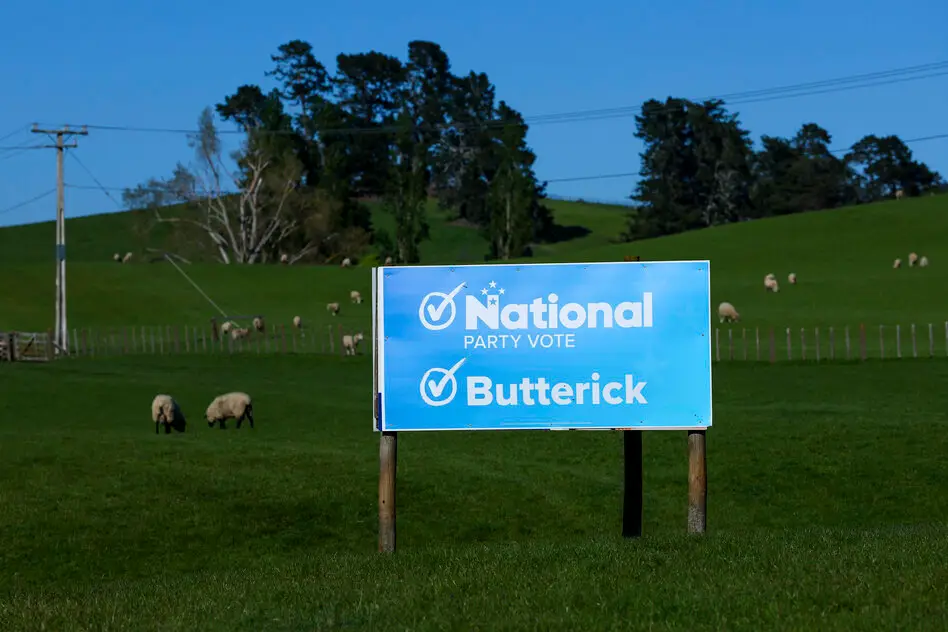
The New Zealand general election on November 7th could produce a political constellation that is increasingly becoming the norm there: a coalition government made up of three or even four parties. The polls show a tight race between Prime Minister Christopher Luxon's conservative National Party and Chris Hipkins' opposition Labor Party. Neither side can be sure that it will be able to govern alone after the election.
Economic concerns dominated the election campaign. Located on the edge of the world and still faced with high transport costs, New Zealand is still feeling the consequences of the Covid pandemic to this day. Weak growth, high inflation and the cost of living dominate the everyday life of the population. Luxon defends his government's reforms, arguing that economic recovery takes time. Hipkins promises to reduce the financial burden on households more quickly.
In the latest poll by 1News Verian, National is ahead with 30 percent, ahead of Labor with 29 and the Greens with 16. The election is based on a German-inspired mixed system of proportional representation from party lists and direct mandates from constituencies, including a five percent threshold. There are also seats reserved specifically for Māori.
The National Party has been in government since November 2023 together with the neoliberal ACT party of David Seymour and New Zealand First under Winston Peters. The three parties represent different interests, from tax cuts and a leaner government to more restrictive immigration policies.
The 78-year-old political veteran Peters, the son of a Māori father and a Scottish mother, has made a name for himself over the decades as a critic of immigration. In July, he urged a Chinese-born lawmaker to “go back to where you came from.”
The previous cooperation in the coalition was characterized by conflicts. Luxon has had to face confidence votes within his own party twice this year. Labor, on the other hand, is committed to easing the burden on health and transport, investing in housing and infrastructure and strengthening public services.
The dispute over Māori rights is likely to shape the next legislative period. 19 percent of New Zealanders identify as Māori. The conservative Luxon has significantly reduced their institutional influence.
This was particularly clear in the healthcare sector. In 2024, his government dissolved the independent Māori Health Authority. It should focus health care more closely on the needs of the indigenous population. The government said this would not affect Treaty of Waitangi obligations. The 1840 agreement between Māori chiefs and the British Crown is considered the basis for relations between the state and the indigenous population.
But the English and Māori versions differ in one crucial point: while Britain claimed transfer of sovereignty, many Māori assumed they could largely retain their own authority. The different interpretations continue to shape conflicts over land rights, self-determination and political participation to this day.
The educational sector was also affected by the Luxon government's realignment. In 2025, school boards' explicit obligation to implement the Treaty of Waitangi was removed. Targets to improve educational outcomes for Māori students and access to education in the Māori language Te reo Māori remained in place. However, the fundamental responsibility to implement the contract in one's own work has been narrowed down.
In local politics, the question is whether Māori should be allowed to keep their own electoral districts. A 2024 change in the law required many municipalities to vote on the continued existence of such districts. They are intended to enable independent representation of Māori in local councils. Opponents see this as an unjustified special regulation; Advocates counter that without such seats, Māori often remain underrepresented.
The greatest resistance was provoked by a move by the right-wing conservative ACT Party to legally redefine the principles of the Treaty of Waitangi. The draft, introduced in November 2024, sparked a nationwide protest movement. According to the Justice Department, around 270,000 comments were received. In April 2025, Parliament rejected the bill by 112 votes to 11.
What is interesting is the rise of the Opportunity Party (TOP), a centrist party founded in 2016 that proposes, among other things, a land value tax and a comprehensive basic income model. In the polls, the party is now just above the five percent threshold for the first time. Their arrival could complicate the formation of a majority - especially since National has ruled out cooperation with TOP.
The Greens, in turn, could become indispensable for Labor, while New Zealand First plays a key role in the continuation of the conservative government. Until 2000, the party was part of the Labor-led government of Jacinda Ardern, who now lives in Australia like a growing number of her compatriots.