
World taz
Palestinians from Gaza in the West Bank: Stranded harvest workers
Until October 7, 2023, around 20,000 Palestinians lived legally in Israel. Fearing deportation, some fled to the Israeli-occupied West Bank. more...
Deutsch (original) ·Auto-translated to English
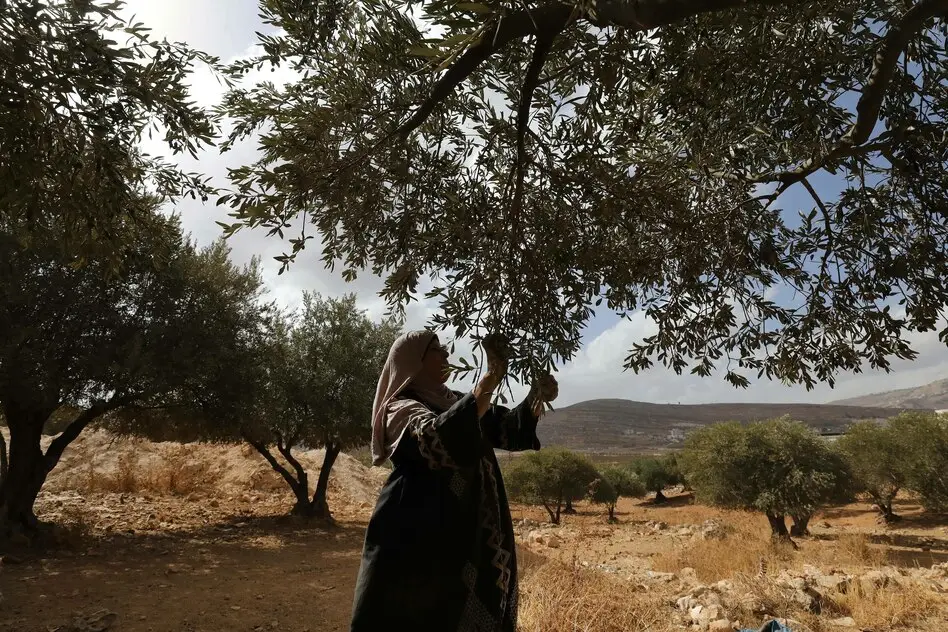
Under the curved roof of the greenhouse, Ibrahim leans over the plant boxes and presses seedlings into the moist substrate with his fingers. His colleagues Ahmed and Younis bring supplies in cardboard boxes. While on the slopes of the West Bank, like here near the city of Nablus, the olives hang heavily on the trees in early October, waiting to be harvested, the three men are already planting for the winter.
In a few weeks the strawberries in the boxes should be ripe, plump and sweet. The three men remember that they used to call the fruit “the red gold”. Back then, at home in the Gaza Strip, from where strawberries were sometimes even exported to Europe. “We people in Gaza were proud of that,” says Ibrahim.
Today all that seems far away. The Gaza Strip is only less than a hundred kilometers away as the crow flies. For Ibrahim, Ahmed and Younis, who actually have different names, their home in the south of the coastal strip is still inaccessible. For security reasons, the taz has changed its name.
Until the Hamas attack on Israel and the start of the Gaza war, 66-year-old Ibrahim and 35-year-old Younis had worked in Israel - not as farmers, but as salespeople and in a car wash. “We were able to earn more money there than in the Gaza Strip,” says Ibrahim. Like them, around 18,500 Palestinians from Gaza had work permits for Israel before the start of the war, according to human rights organizations.
Ahmed, 46, was in the country at the time for a different reason: “A liver problem,” he says. Before the war, according to the World Health Organization, more than 1,500 patients from Gaza applied for permission to be treated in Israel, East Jerusalem or the West Bank every month.
But with the outbreak of war, Israeli authorities canceled permits for Palestinian workers and sealed off border crossings into Gaza. At the same time, numerous people from Gaza were arrested in Israel and thousands were deported to the coastal strip.
To avoid this, the three men secretly fled to the Israeli-occupied West Bank a few days after the start of the war. Here, they hoped, they would be able to find work for a while and support their families financially. They could never have imagined that three years later they would still be stuck, separated from their relatives, while the Gaza Strip lies in ruins.
The men show photos from their previous lives on their cell phones. All three come from the area around Chan Junis. Ahmed had only completed his house three months before the war began, he says. The pictures show new furniture and freshly painted walls. “The top floor should one day belong to my youngest son,” he says. This one is 16 today. Ahmed continues wiping: In the next pictures you can only see rubble. “Everything was destroyed.”
Younis' home also fell victim to the bombing. His wife and their three children now lived in a tent in Mawasi. In one photo, the youngest daughter, now six years old, stands smiling in the middle between her brothers. “Sometimes I lie to my children,” says Younis. “I’ll tell them I’ll be back soon.” He doesn't know whether he can keep this promise, even if he's very worried.
Just a month ago, one of his brothers was killed in an Israeli airstrike while fetching water. Although a ceasefire came into effect in Gaza last October, attacks continue. According to the Palestinian Health Ministry, around 1,400 people have been killed and nearly 4,900 injured since the ceasefire began.
The three men say that the West Bank is safer compared to Gaza. But here they live in a legal vacuum and are dependent on the goodwill of the Palestinian authorities. They found shelter in a stadium in Nablus. In four converted changing rooms they live close together with around three dozen other stranded people from Gaza. “There is no privacy,” complains Younis: “We sleep there on mattresses on the floor.” However, mostly during the day: the Israeli army regularly raids the stadium in the evening and at night and takes people away.
Her plan to earn money with odd jobs in the West Bank also hardly worked. Since the Gaza war, the already ailing Palestinian economy has been in deep crisis. The Israeli authorities have severely restricted access to the labor market in Israel and Israeli settlements in violation of international law for the majority of Palestinian workers from the West Bank since October 2023. Hundreds of additional roadblocks, checkpoints and gates further restrict freedom of movement. And increasing settler violence and Israel's withholding of Palestinian taxes are also exacerbating the imbalance.
Ibrahim, Ahmed and Younis have found distraction and at least a small income for several months in the small agricultural cooperative, for which they are now growing strawberries in the greenhouse. They receive the equivalent of 500 euros for their work ten days a month. The funding comes from the Popular Art Center (PAC), which supports social projects in addition to cultural work, and from its German partner, the aid organization medico international. Because money transfers to Gaza are complicated and expensive and prices have risen sharply, there is only limited support for their families.
Despite the harsh reality in Gaza, the three men say they want to go back. Then at least the separation from their families would come to an end. But that is difficult. The Israeli human rights organization Gisha, which supports those wishing to return from Gaza in coordinating with the Israeli authorities, reports to the taz about a growing number of people seeking help. By the end of August, she had helped more than 300 people, including children, return. However, the process is slow and is characterized by long delays, arbitrary baggage restrictions and degrading treatment. More than 600 people are currently on the waiting list.
“If the pace remains the same, it could take months or even years before everyone can return to Gaza,” said a Gisha press spokeswoman. Some people are now so desperate that they turn directly to the Israeli authorities and are then arrested. They sometimes have to wait for weeks in detention under inhumane conditions until they return.
So far, Ibrahim, Ahmed and Younis are shying away from this risk. They want to wait and hope for an opportunity to return to their families without having to risk their freedom or health. If everything goes according to plan, they will harvest the strawberries in the greenhouse in December. They would now like nothing more than to no longer be in the West Bank.