
Germany · taz · · 2h
Nazi profiteer Kühne+Nagel: No grass should grow over the past
Deutsch (original) · Auto-translated to English
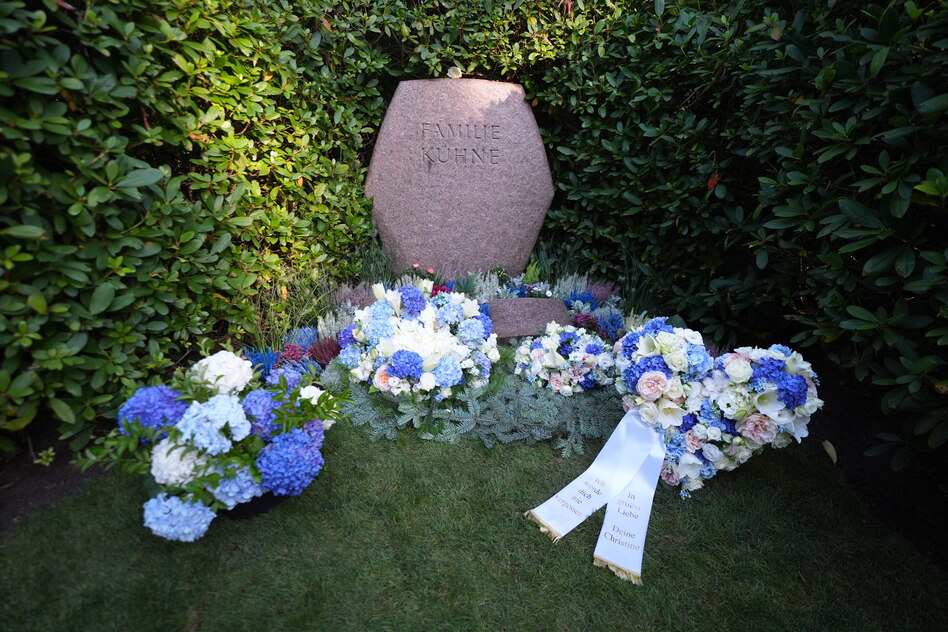
Kühne+Nagel will have its Nazi history researched. Jörg Dräger, managing director of the Kühne Foundation, announced this on Tuesday on NDR. The foundation inherits the company shares from Klaus-Michael Kühne, the majority shareholder of the world's second-largest logistics group, who died in August. Therefore, Dräger can actually create facts.
Kuehne+Nagel would thus be complying with a demand that has been made publicly again and again since at least 2015. At that time, the company celebrated its 125th founding anniversary in Bremen - with extremely incomplete history marketing. When asked by taz, the company explained at the time: The 1930s and 1940s lacked “relevance” for the company’s history. A more precise description is therefore unnecessary; incidentally, all historical company documents were burned.
Kühne+Nagel stuck to this position - and left it to others, according to the taz, to undertake the arduous search for the far-flung sources of their business activities in the "Third Reich". Widely scattered because Kühne+Nagel transported stolen Jewish property across Europe and with great commitment opened up other business areas: art theft, library looting, Wehrmacht logistics and much more.
It was always clear that the taboo nature of the topic came directly from the company patriarch. Other signals could be heard from management behind closed doors. Kühne, however, felt obliged to his father Alfred throughout his life. He recently attested to this: "He brought his family through the Second World War and the post-war period wisely and prudently. I owe him great respect for that."
Kühne, although the majority shareholder of a global player, remained in a typical medium-sized company mentality: company and family success are considered inseparable, and the reputation of both must be unconditionally protected. The fact that you can improve your reputation through honesty rather than concealment - this simple logic is apparently easier for employed management than for many family business owners. Because they would have to put the behavior of their direct ancestors to the test.
Wisely, Dräger now makes a clear distinction between the company and the person Kühne: "It wasn't Mr. Kühne himself who was affected. He was seven years old during the war. It concerns the history of the company, what he made great." Nobody could ever claim that Klaus-Michael Kühne was responsible for the actions of his father - who made the company “big” back then. But of course Kühne had responsibility for dealing with history. He didn't accept it.
The course correction that has now been made is also intended to counteract the ongoing criticism of the “Kühne Opera”. This is planned in the port of Hamburg, of all places, where Kühne+Nagel stored Nazi-looted goods. What is remarkable is the speed with which Kühne's heirs are doing this. Dräger made his statement on the day of Kühne's funeral at the Ohlsdorf cemetery.
And the weekend before, it had leaked from the board of trustees that they were thinking about “having independent historians examine the dark past of the Kühne+Nagel shipping company during the Nazi era.” The word “independent” is crucial here – there are already too many sugar-coated corporate chronicles that only appear to take historical enlightenment into account. After its long history of repression and brushing off, Kuehne+Nagel can only gain credibility if the will to comprehensively present things is unquestionable.
The first step would be to open the company archives, which were allegedly completely burned. During the war, Kühne+Nagel moved its central office to bomb-proof Konstanz; the directory of the German economic archives lists a historical inventory of company documents at Kühne+Nagel. It's not very big, since the company's buildings in Bremen and Hamburg were actually destroyed.
The documents can still provide information about a significant portion of Nazi business. The denial of historical material is all the more nonsensical since the archive directory is based on information provided by the companies themselves. They were collected in 1990 - at that time, nobody at Kühne+Nagel apparently thought that their own history could become a problem again.
A serious analysis would have to include the separation from Jewish co-owner Adolf Maass in 1933 as well as the takeover of companies and real estate by the Kühnes as “Aryanization” profits. The company's business in Italy and Eastern Europe - especially in the Baltics - would have to be presented, each in its context, as well as the cross-system cooperation with secret services. Art theft and the transfer of assets to Switzerland on behalf of various Nazi figures are other areas in which research is already underway. Despite the current blockade of Kühne+Nagel, a lot of research work has already been carried out - which could now be made significantly easier.
The long-standing works council chairmen of Kühne+Nagel have been demanding this for a long time. In 2023, at the inauguration of the "Aryanization" memorial initiated by the taz opposite the K+N company headquarters, they emphasized: "We tried several times to get the respective German management, but also the headquarters in Switzerland, to deal more actively with the company's history. We also contacted Klaus-Michael Kühne several times about this, but without achieving a change in his attitude."
The works councils were all the more pleased about the persistent impetus from outside - which now finally seems to be working.
Read the full story at the source
Source: taz