
Germany · taz · · 3h
NRW Prime Minister in Turkey: Wüst “grateful” for exchange with Erdoğan
Deutsch (original) · Auto-translated to English
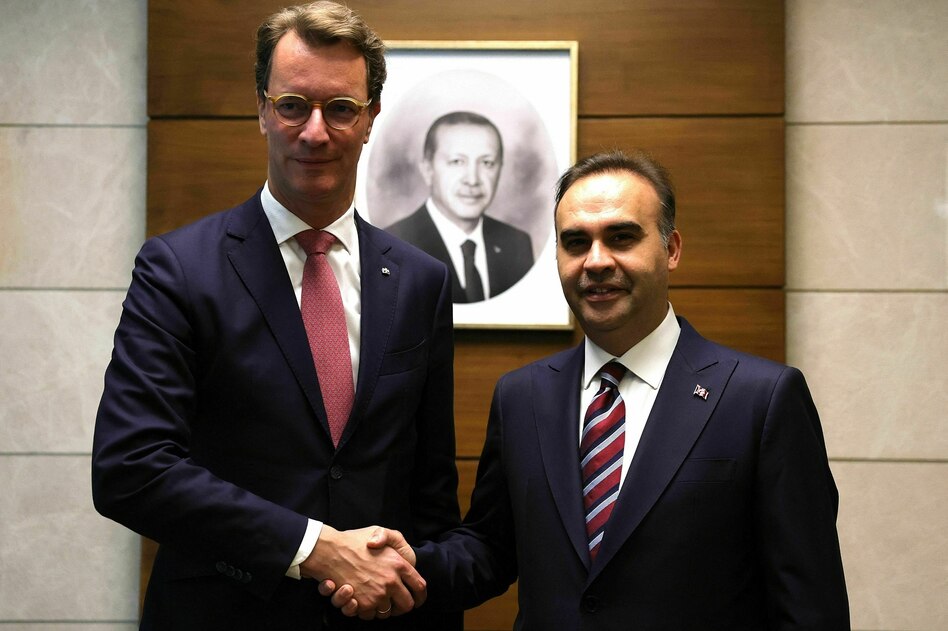
Hendrik Wüst can manage expectations better than the Chancellor: The North Rhine-Westphalian CDU Prime Minister, who would probably like to be Merz's successor, first sets the bar low and then jumps higher. From Monday to Wednesday he will be in Turkey with a business and press delegation. Officially on the 65th anniversary of the recruitment agreement and as a representative of the interests of North Rhine-Westphalia.
But on Monday in Ankara he was immediately received by President Recep Tayyip Erdoğan. The meeting lasted around 90 minutes. Wüst reported afterwards that Erdoğan was very interested in the domestic political situation in Germany and in the recent election results. “So I was very happy about it and grateful for the exchange.”
This was a surprising upgrade for a provincial prince's visit. In advance, the State Chancellery had only announced that Wüst was meeting business representatives, the footballer İlkay Gündoğan and possibly one or two politicians. On Tuesday, after Erdoğan, the Foreign Minister, the Industry Minister and the Finance Minister also honored him. All from the ruling AKP.
Wüst's delegation is also surprisingly large: of the 30 or so media representatives accompanying the trip, most of them otherwise observe federal politics and the Chancellery. It is said that the trip had been planned for a long time and thoroughly prepared.
It is not the first time that Erdoğan has received the Prime Minister of a German state - in 2014, Lower Saxony's SPD state leader Stephan Weil was in Ankara, albeit in his role as President of the Federal Council, the fourth-highest office in the state in terms of protocol.
Wüst, who is seen as a possible successor to the current number three in Germany, Chancellor Friedrich Merz, sees his visit as his job as head of the country. In order not to seem like a Chancellor killer, he says things like: "For the first time a Prime Minister of North Rhine-Westphalia is in office in Turkey. And it is high time for such a trip to take place," said Wüst.
He lays a wreath at the memorial of the controversial Turkish state founder Mustafa Kemal Atatürk, something German politicians often do. He also meets members of the families of Turkish origin who were killed and injured in a right-wing extremist attack in Solingen in 1993. The then CDU Chancellor Helmut Kohl did not come to the funeral service, his spokesman explained that they wanted to avoid “condolence tourism”.
North Rhine-Westphalia and Turkey have a special relationship - around a million people with Turkish roots live in North Rhine-Westphalia - and Wüst is trying to heal the still open wounds. "These people worked in the mines to supply the economically growing Germany with energy, worked in steel mills, in textile companies, in road construction. And their children, grandchildren and great-grandchildren are now North Rhine-Westphalians," praises Wüst.
In doing so, he criticizes a discourse that his CDU played a key role in shaping. For far too long, these people have been viewed by their deficits and as a challenge and not seen as an opportunity. “Many well-educated young people who know both cultures, often speak both languages as their mother tongue – if that’s not a chance,” emphasizes Wüst. And it is certainly not a coincidence that he sets himself apart from Merz, who, as Chancellor, spoke of “problems in the cityscape” and “little pashas”.
However, when it comes to the political situation in Turkey and the situation of the opposition, Wüst becomes monosyllabic. “Difficult things” were also discussed in the conversation with Erdoğan, he reported after his visit. When asked how he assessed the domestic political situation in Turkey and whether he would also meet the representatives of the opposition, he initially only answered vaguely that they had spoken to each other in a spirit of trust.
Not only the most promising opponent for the presidential election that will take place in 2028, Istanbul Mayor Ekrem İmamoğlu, was arrested over a year ago on flimsy reasons and has been in prison ever since. The autocratic president had also previously persecuted many elected Kurdish mayors.
During Wüst's trip, it was said that he wanted to meet with representatives of Turkish opposition parties for an exchange, including from Özgür Özel's Yeni Parti, which was founded in July, as well as with long-time CHP MP İlhan Uzgel, who describes himself as the "shadow foreign minister", and with political advisor Şule Bucak, the former deputy general secretary of the CHP. Wüst wants to meet Mithat Sancar from the pro-Kurdish DEM party as well as members of the so-called İmralı delegation.
The Christian Democrats do not want to travel around the world with the “moral club” like the former Green Party Foreign Minister Annalena Baerbock, who they reviled. But not everyone in Turkey understands the fact that German politicians are using such pressure to blatantly restrict democratic rights.
In the past, human and civil rights were clearly addressed, which strengthened the opposition's back, says a taz scientist on the sidelines of Wüst's visit. Now no one seems to be interested in it anymore. The freedom of research and teaching is also being increasingly restricted - academic staff at universities have recently been banned from distributing videos and podcasts. “We feel like Orwell here,” says the person, who did not want to be quoted by name because of the repression.
Instead, Wüst prefers to praise the good relations between North Rhine-Westphalia and Turkey. He wants to open a new chapter in relationships. Bosses of large German companies – Uniper, Rewe, Henkel – who accompany him also want this; they, like Turkey, hope for customs and visa relief. The motto here seems to be: trade instead of change.
The economic relations between Düsseldorf and Ankara were the focus of the conversation between Erdoğan and Wüst. The mutual trade volume amounts to 11 billion euros, the third largest outside the EU after the USA and China, according to Wüst. “But of course you can do more with it.” For example, mutual cooperation on armaments projects should be deepened. He did not name any specific plans.
Read the full story at the source
Source: taz