
Germany · taz · · 42m
Referendum in Bavaria: “Söder is a selling point – for a shorter term of office”
Deutsch (original) · Auto-translated to English
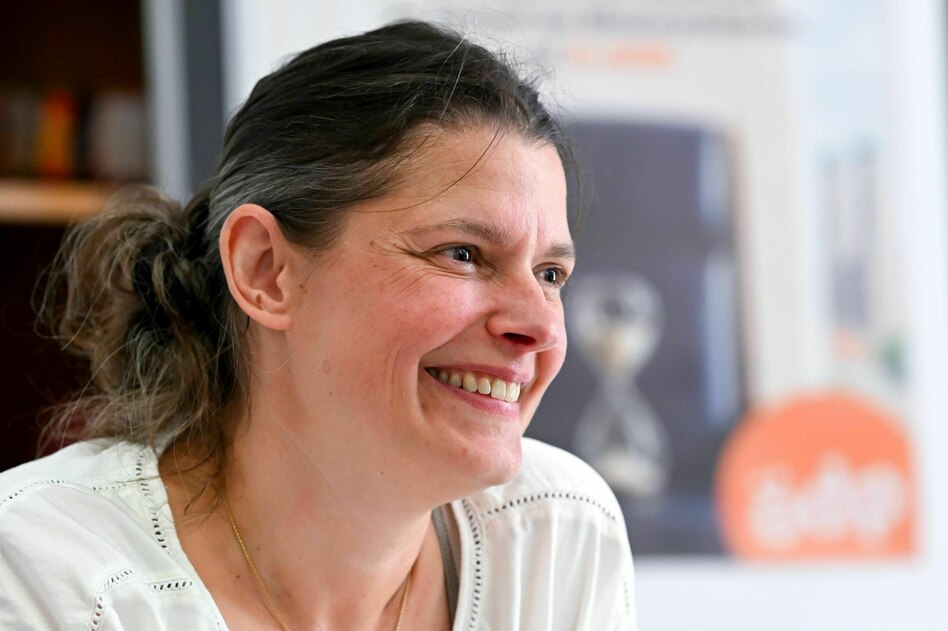
taz: Ms. Becker, you are currently collecting signatures for a referendum against Markus Söder...
Agnes Becker: Wait, that's not true. Our referendum is not directed against him. It's about a constitutional change that ensures that the Bavarian Prime Minister has to hand over the office after a maximum of two legislative periods. I admit, however, that the current incumbent and his way of governing are a strong selling point at our information stands.
taz: But the idea for the limitation didn't come from you.
Becker: That's true. The proposed law was introduced into the state parliament in 2018 by the CSU on Söder's initiative. Unfortunately, the constitutional amendment failed at the time because of the Greens and the SPD, whose votes would have been necessary for a two-thirds majority.
taz: Why are you bringing the referendum back into play now?
Becker: We had been thinking about it for a while, but Söder actually made the difference when he announced that he wanted to compete again. After all, he would have had it within his power to limit his term of office, at least for himself – without changing the constitution. And then we thought: Maybe this good idea deserves a second chance.
Becker: Term limits would have great advantages for a democracy. After the experience with Orbán, Hungary has just limited the head of government's term of office to eight years. Democracy thrives on change. It doesn't do her any good when someone is in office for too long. Then at some point the new ideas start to run out. In addition, incumbents may be a little freer and bolder in their second term if they are not looking to be re-elected. And then there is also the problem of succession: incumbents all too often miss the right time to step down. So others can often only take over by becoming a regicide. In Bavaria in particular, we have seen prime ministers ingloriously kicked out of office a few times.
46, is chairwoman of the ÖDP Bavaria. In 2019 she initiated the species protection referendum “Save the Bees”, which is considered the most successful referendum in Bavaria.
taz: You adopted the exact wording of the proposed law from the CSU.
Becker: On the one hand, we are putting the CSU in an argumentative mess. You can see this clearly in Joachim Herrmann, who, as Interior Minister, is responsible for referendums. He is already raising constitutional concerns about something he praised eight years ago as a “strong signal” for democracy. On the other hand, there are very pragmatic reasons: it is very difficult to write a legal text in such a way that it is legally watertight and can survive examination by the Ministry of the Interior. If you have a text that has already been submitted by the state party, then you know that many clever minds have already weighed in on it.
taz: So you let the CSU do the legal preparatory work for you.
Becker: Exactly. But I also think the text is really good. For example, it ensures that the election of the state parliament and the prime minister are not decoupled from one another. If a Prime Minister has already served his tenth term before the end of a legislative period, he can still complete his term of office.
taz: Does the CSU no longer want to hear about its chatter from yesterday?
Becker: I think it's one person in the party in particular. And those around him who depend on him don't dare to contradict him. At the information stands, however, I get the impression that there is particularly great sympathy for term limits at the CSU. Many people wouldn't be unhappy if that happened. And in fact, even before we went public with our plans, we received a call from the CSU state group in the Bundestag suggesting that we initiate just such a referendum.
taz: Söder argued at the time: “If you can’t do it in 10 years, it won’t be possible later.”
Becker: I see it the same way. I often observe this at the local level, for example: in the first term of office, the newly elected mayor or district administrator is approachable and seeks dialogue in order to find the best compromises. This is of course difficult. Therefore, the willingness to do so is less in the second period. In the third, it can degenerate into a kind of monarchism, where one is only allowed to humbly present one's ideas in a stooped position.
taz: Your arguments could be applied to many offices - from mayor to chancellor.
Becker: I would also be in favor of office limits here. I still remember how Carsten Linnemann called for the Federal Chancellor's term of office to be limited to eight years in 2021. Unfortunately nothing has been heard from him since then.
taz: You need 25,000 signatures for the referendum. After that, 10 percent of those eligible to vote would have to register at the town halls, only then would there be a referendum - unless the state parliament goes along with it beforehand. Until when could the law be in place?
Becker: The plan is for the referendum to take place next summer. However, the Interior Minister has already made it clear that he sees constitutional problems. If the Constitutional Court has to decide, that could of course delay the matter even further.
taz: Now the common objection to term limits is: Can't you let the voters decide? They can vote out the incumbent.
Becker: You can't. That would at least be an argument for mayors and district administrators. But the Prime Minister is not directly elected. Citizens can vote out the incumbent's party, but perhaps they want it to continue to govern - just with a different prime minister. In general, the argument that term limits are undemocratic does not hold water at all. A referendum is maximally democratic. If people don't want that, that's okay.
taz: No party in Bavaria is as experienced when it comes to referendums as the ÖDP. They pushed through non-smoking protection and abolished the Bavarian Senate. But this time they have no comrades-in-arms from other democratic parties. The Greens and SPD are against your plan. Only the AfD likes it.
Becker: In a democracy, I can't choose who supports my position. But there will definitely be no cooperation of any kind with the AfD. As far as possible comrades-in-arms from the democratic spectrum are concerned: I actually find the attitude of the Greens and the SPD very regrettable and also incomprehensible. However, we had no support at all in this phase of the species protection referendum. This only came when the other parties realized that the issue was successful.
Read the full story at the source
Source: taz